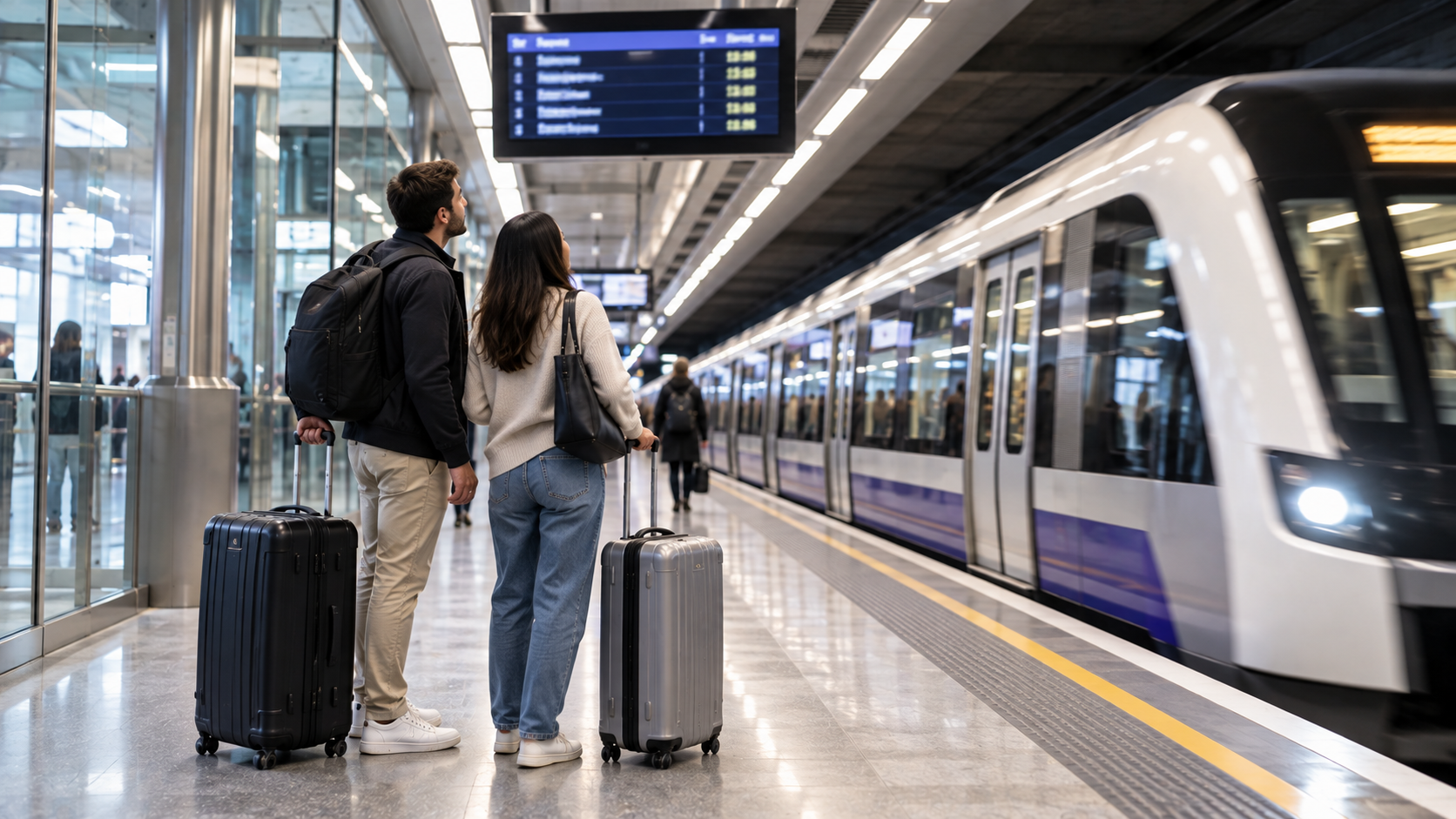
The Elizabeth Line Explained: Everything First-Time Visitors Need to Know
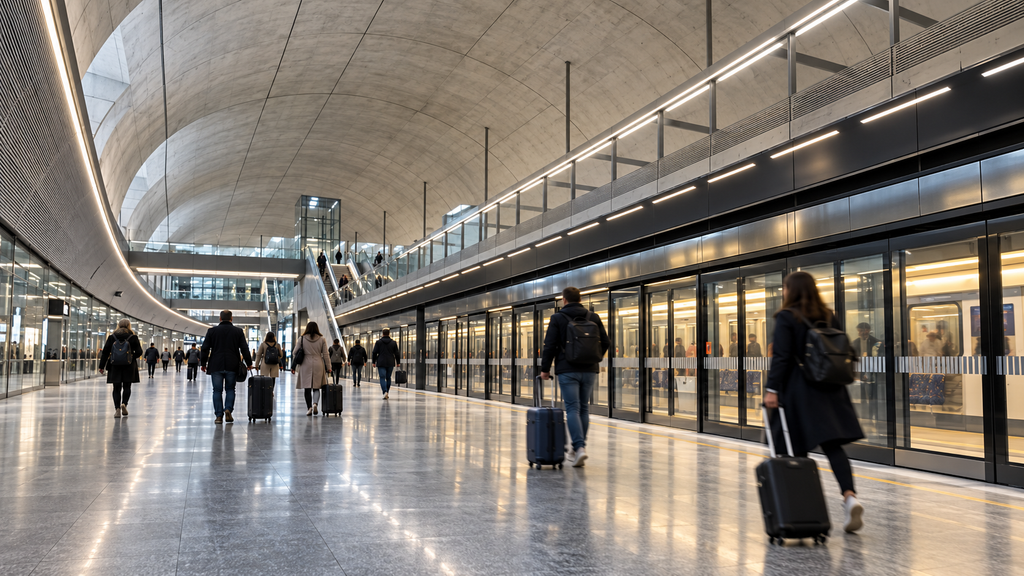
If you’re landing at Heathrow, staying near Paddington, or heading out to Canary Wharf, there’s a good chance the Elizabeth line will be the first train you take in London. It’s also the one that confuses visitors most. It’s purple on the Tube map, but it isn’t technically a Tube line. It feels like the Underground, but it runs all the way out to Reading. And its Heathrow fare doesn’t follow the usual rules.
This Elizabeth line guide for tourists covers what you need to know before you tap in: where it goes, how much it costs in 2026, how to use it from the airport, and the stops worth getting off at.
What is the Elizabeth line?
The Elizabeth line opened in May 2022 after years of construction under the project name Crossrail, and it was named in honour of Queen Elizabeth II. It runs east to west across London through brand-new twin tunnels beneath the city centre, linking Reading and Heathrow in the west with Shenfield and Abbey Wood in the east.
It’s since become one of the busiest railways in the country. Since opening in 2022, it has become the UK’s single busiest railway line, with an average of 800,000 journeys made on it each day. timeout
Is the Elizabeth line part of the Tube? Not officially. It’s a TfL rail service rather than a London Underground line, which is why it has its own purple colour and its own roundel-style branding. For visitors, though, the difference barely matters: you tap in with the same contactless card or Oyster, it shows up on the Tube map, and it connects directly with Underground stations along the route.
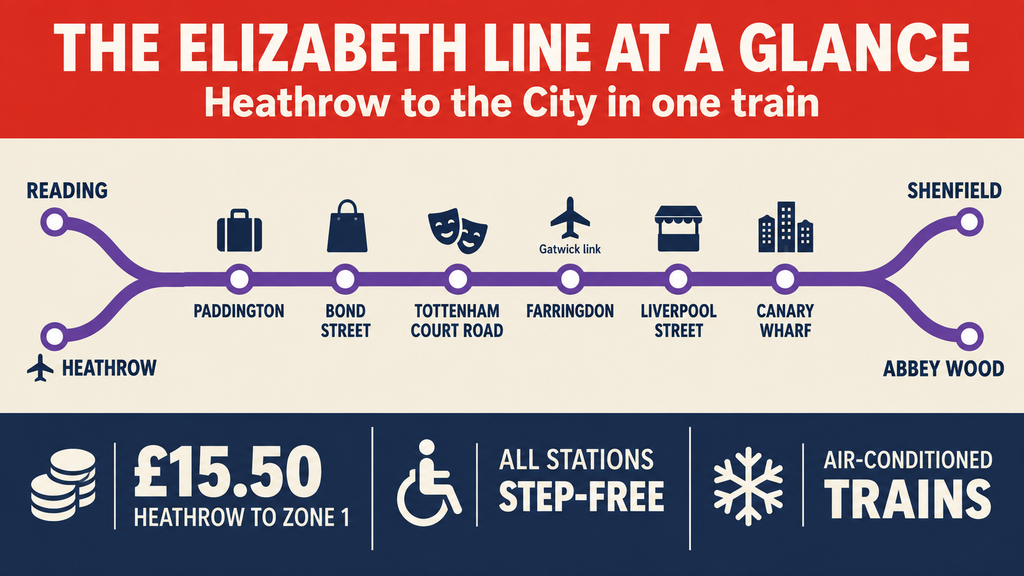
The Elizabeth line at a glance
The line has three sections, and understanding them is the key to using it without confusion.
The western branches run from Paddington out to Reading (through Ealing Broadway and Slough) and to Heathrow Airport. Heathrow trains split near the airport: every Heathrow train calls at Terminals 2 & 3, then continues to either Terminal 4 or Terminal 5.
The central section is the new tunnel between Paddington and Whitechapel, and it’s where most visitors will spend their time. Trains are very frequent here: the central operating section currently runs 20–24 trains per hour at peak times. In practice you’ll rarely wait more than a few minutes. ianvisits
The eastern branches split at Whitechapel. One heads north-east through Stratford to Shenfield in Essex; the other runs south-east through Canary Wharf, Custom House (for ExCeL London) and Woolwich to Abbey Wood.
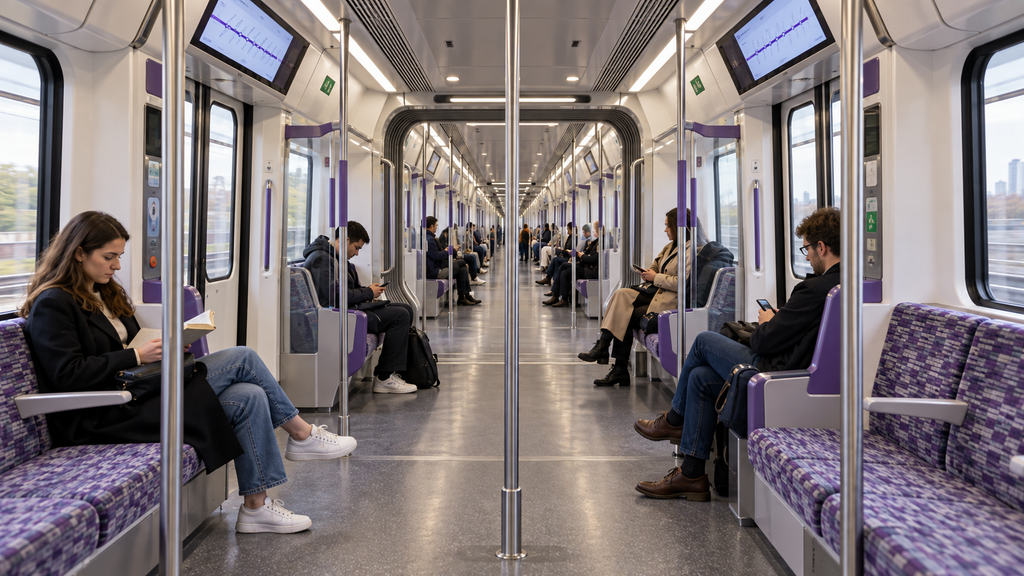
The trains themselves are the other thing people notice. They’re long, air-conditioned, and fully walk-through, so you can move between carriages to find space. On a hot summer afternoon, that air conditioning alone is a reason to choose it over some of the older Tube lines.
Key central stations for visitors
These are the stations first-time visitors are most likely to use, from west to east.
Paddington is the main western hub. It’s where the line meets the Bakerloo, Circle, District and Hammersmith & City lines, as well as mainline trains to the west of England. There’s plenty of mid-range hotel stock nearby, which makes it a practical base if you’re arriving from Heathrow.
Bond Street puts you at the western end of Oxford Street, a short walk from Mayfair, Marylebone High Street and Selfridges. It connects with the Central and Jubilee lines.
Tottenham Court Road is the gateway to Soho, Covent Garden, the British Museum and the West End theatres. It links with the Central and Northern lines, which makes it one of the most useful interchanges on the whole network.
Farringdon connects with Thameslink, which runs direct trains to Gatwick and Luton airports, plus the Circle, Metropolitan and Hammersmith & City lines. It’s handy for Clerkenwell’s restaurants and Smithfield. Its Elizabeth line platforms are so long they have a second entrance at Barbican.
Liverpool Street serves the City, Spitalfields Market and Shoreditch, and links with the Central, Circle, Metropolitan and Hammersmith & City lines. As with Farringdon, the platforms stretch far enough that the western exit comes out near Moorgate. See our full Liverpool Street station spotlight for what to do nearby.
Whitechapel is where the line splits east, and it connects with the District, Hammersmith & City and London Overground. It’s a good jumping-off point for Brick Lane and East London’s street art.
Canary Wharf is the stop most visitors don’t expect to enjoy. The station itself is striking, and the rooftop garden above it at Crossrail Place is free to visit. See our Canary Wharf by Tube guide.
How much does the Elizabeth line cost in 2026?
For most journeys within London, Elizabeth line fares match Tube fares. You pay the same pay-as-you-go price you’d pay on the Underground between the same zones, and journeys count towards the same daily and weekly caps.
Heathrow is the exception. Since 1 March 2026, an Elizabeth line journey between Heathrow and any Zone 1 station costs £15.50 at all times of day, or £14.60 between Heathrow and Paddington. The old cheaper off-peak airport fare has gone, so any guide quoting £12 or £13 is out of date. airportcosts
The daily cap is your friend here. Contactless and Oyster journeys across zones 1 to 6 cap at £16.30 a day, so a same-day return to the airport costs only 80p more than a single. That makes the Elizabeth line surprisingly good value on your arrival day if you’re planning to explore afterwards: everything after the cap is effectively free. heathrowairport-info
Children travel free if they’re under 11 and with a fare-paying adult. Older children can get discounted fares with a Zip Oyster photocard, which is worth ordering before your trip if you’re visiting for more than a few days.
For the full breakdown of zones, caps and Travelcards, see our Complete Guide to London’s Tube Zones, Fares & Oyster Card in 2026, and if you’re weighing up payment methods, our Oyster Card vs Contactless comparison.
Heathrow to central London on the Elizabeth line
For most visitors, this is the Elizabeth line’s biggest selling point: a direct, comfortable train from the airport into the heart of the West End and the City, with no changes.
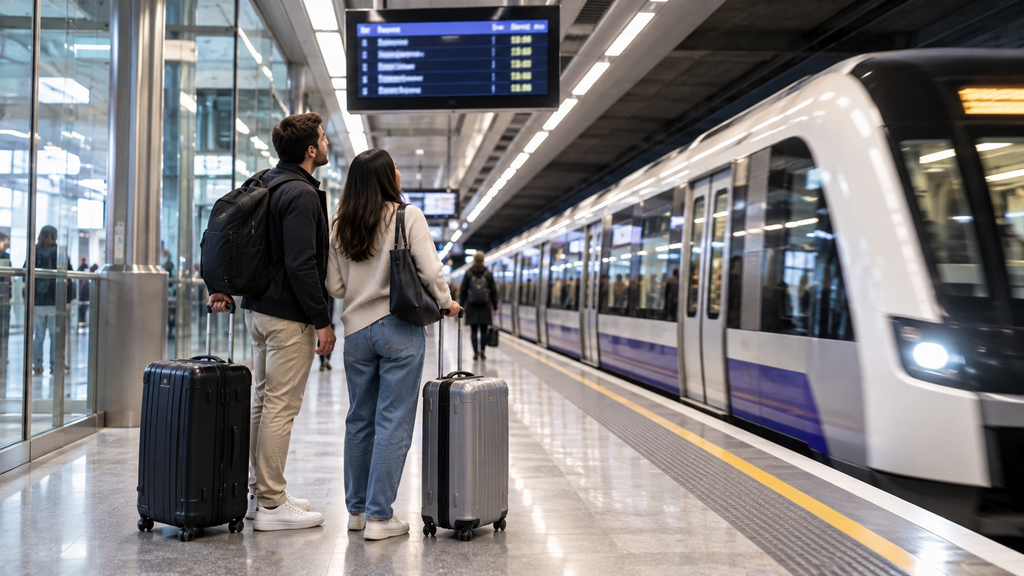
How long does it take? Around 29–30 minutes from Terminals 2 & 3 to Paddington, and longer from Terminals 4 and 5. From there, trains carry straight on to Bond Street, Tottenham Court Road, Farringdon, Liverpool Street and beyond. beyondtheairport
How does it compare with the alternatives?
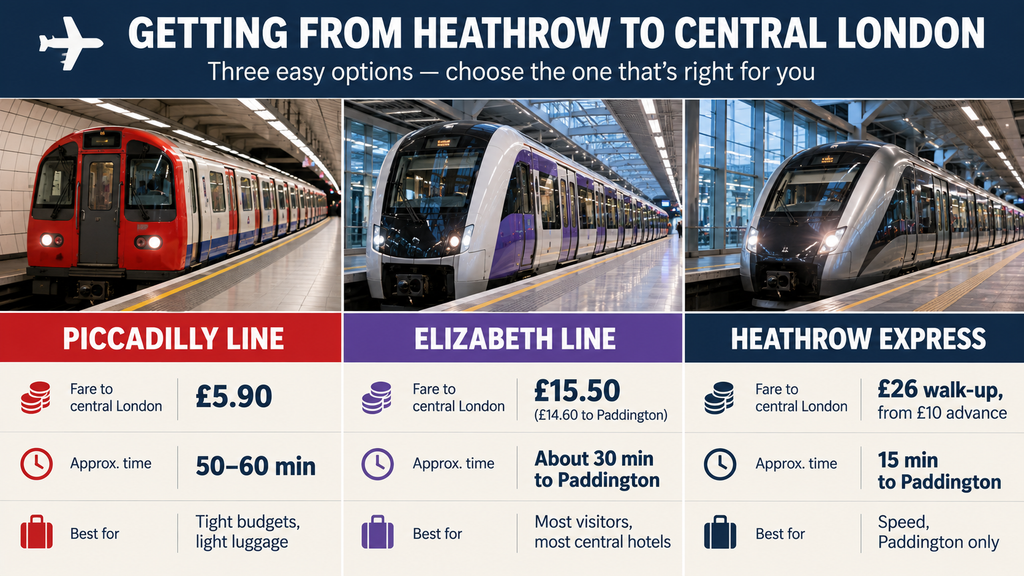
Sources for this table: Piccadilly line £5.90 at 50 to 60 minutes; Heathrow Express £26 walk-up or from £10 in advance, 15 minutes to Paddington only, with a change and second fare needed to travel further into London. airportcosts
The big advantage over the Heathrow Express is that the Elizabeth line doesn’t stop at Paddington. If your hotel is near Tottenham Court Road or Liverpool Street, you’re there without changing trains or paying twice.
Three Heathrow tips first-timers miss:
- Check which terminal your train serves. All Heathrow trains stop at Terminals 2 & 3, but they then go to either Terminal 4 or Terminal 5, not both. Look at the destination on the platform screens before boarding.
- Tap the same card at both ends. If you tap in with your phone and out with a physical card, you’ll be charged a maximum fare on both.
- Groups should do the maths. At four adults, a fixed-price transfer can work out cheaper than four Elizabeth line fares, especially with heavy luggage.
Our dedicated How to Get from Heathrow to Central London by Tube guide compares every option in more detail.
Is the Elizabeth line step-free?
Yes, and this is one of its biggest advantages for families with buggies, travellers with heavy luggage and anyone with limited mobility. Every station on the line has step-free access from street to platform, with lifts throughout the new central stations.
In the central tunnel section, platforms are level with the train floor, so you can roll straight on. At some older stations on the outer branches there may be a small gap or step, and staff can provide a ramp if you ask. The one thing to watch is the interchange: changing onto an older Tube line at the same station isn’t always step-free, so check the specific route before you travel.
For more detail on planning an accessible trip, read our Step-Free London by Tube guide.
Elizabeth line tips for first-time visitors
Walk to the ends of the platform. Trains are much longer than Tube trains, and the middle carriages fill up first. Heading towards either end almost always gets you a seat.
Use the “hidden” second exits. Several central stations have two entrances some distance apart. Farringdon’s platforms link to Barbican, and Liverpool Street’s link to Moorgate. Picking the right exit can save you a ten-minute walk above ground.
Don’t expect it to run all night. Unlike some Tube lines on Friday and Saturday nights, the Elizabeth line doesn’t run a regular 24-hour service. If you’re out late, check your last train or plan a Night Tube or night bus alternative.
Check for weekend engineering works. Parts of the line, particularly the western branches around Paddington and the eastern stretch towards Shenfield, often close or run a reduced service at weekends and on bank holidays. Check the TfL website or app before travelling. For example, TfL’s planned closures list shows no Elizabeth line service on the entire line on Saturday 26 December, which matters if you’re visiting over Christmas. tfl
It’s a useful backup during Tube strikes. Because the Elizabeth line isn’t part of London Underground, it doesn’t always shut when Tube staff strike. It gets very busy on strike days, but it’s often your best cross-London option. Our How to Navigate London When There’s a Tube Strike guide has more.
What to see along the Elizabeth line
The Elizabeth line makes it easy to string together a full day out without changing trains. A few highlights:

Crossrail Place Roof Garden (Canary Wharf): A free garden under a sweeping timber lattice roof, sitting directly above the station. It’s planted with species connected to the places ships sailed to from the old West India Docks.
Spitalfields Market and Brick Lane (Liverpool Street or Whitechapel): Markets, vintage shops, street art and some of London’s best-known curry houses and bagel bakeries.
The British Museum (Tottenham Court Road): Free, world-class, and about a ten-minute walk from the station.
Oxford Street and Marylebone (Bond Street): Big-name shopping on one side, independent boutiques and cafés on the other.
The Olympic Park (Stratford): Parkland, the ArcelorMittal Orbit, and the new East Bank cultural quarter, plus Westfield if the weather turns.
Windsor (via Slough): Change at Slough for the short branch line to Windsor, and you can reach Windsor Castle as an easy day trip.
If food is your priority, our A Foodie’s Day on the Elizabeth Line: From Paddington to Canary Wharf itinerary maps out the best eating stop by stop.
What’s changing on the Elizabeth line
More trains are on the way, but not more frequent services just yet. The first of ten new Elizabeth line trains entered passenger service in late August 2026. Initially, they won’t increase frequency, as they’ll cover for existing trains going through mid-life maintenance; TfL expects to look at increasing services once that’s done, probably towards the end of 2027. ianvisits
For visitors in 2026 and 2027, that means the service you see now is the service you’ll get, but it’s one to watch if you’re planning a longer stay or return trip.
Where to stay on the Elizabeth line
Staying near an Elizabeth line station gives you a direct airport link and a fast route across the city. Good bases include:
- Paddington: best for Heathrow convenience and mid-range hotels.
- Tottenham Court Road / Farringdon: best for the West End, theatres and nightlife.
- Liverpool Street / Whitechapel: best for East London, markets and food.
- Canary Wharf: often the best value on weekends, when business hotels drop their rates.
Elizabeth line FAQs
Is the Elizabeth line part of the London Underground?
No. It’s run by TfL as a separate rail service, but you use the same contactless card or Oyster, it appears on the Tube map, and fares within London mostly match Tube fares.
Can I use contactless on the Elizabeth line?
Yes, across the whole line, including Heathrow and Reading. Always tap in and out with the same card or device.
How much is the Elizabeth line from Heathrow to central London?
£15.50 from any Zone 1 station, or £14.60 to Paddington, at all times of day in 2026.
Does the Elizabeth line have air conditioning?
Yes. All trains are air-conditioned, which makes it one of the most comfortable ways to cross London in summer.
Does the Elizabeth line run on Sundays?
Yes, including through the central tunnel. Weekend engineering works are common on the outer branches, though, so check before you travel.
Is the Elizabeth line step-free?
Every station is step-free from street to platform, with level boarding in the central section.
Can I reach Gatwick using the Elizabeth line?
Not directly, but you can change at Farringdon for Thameslink trains to Gatwick.
Planning your first trip? Our London for First-Time Visitors: The Ultimate Tube-Based 3-Day Itinerary uses the Elizabeth line on Day 2.