London for First-Time Visitors: The Ultimate Tube-Based 3-Day Itinerary
Planning your first trip to London is genuinely overwhelming. The city has more world-class attractions than you could see in a month, every blog tells you something different, and the sheer size of the place — 32 boroughs, 9 million people, roughly 40 miles across — makes it hard to know where to even start.
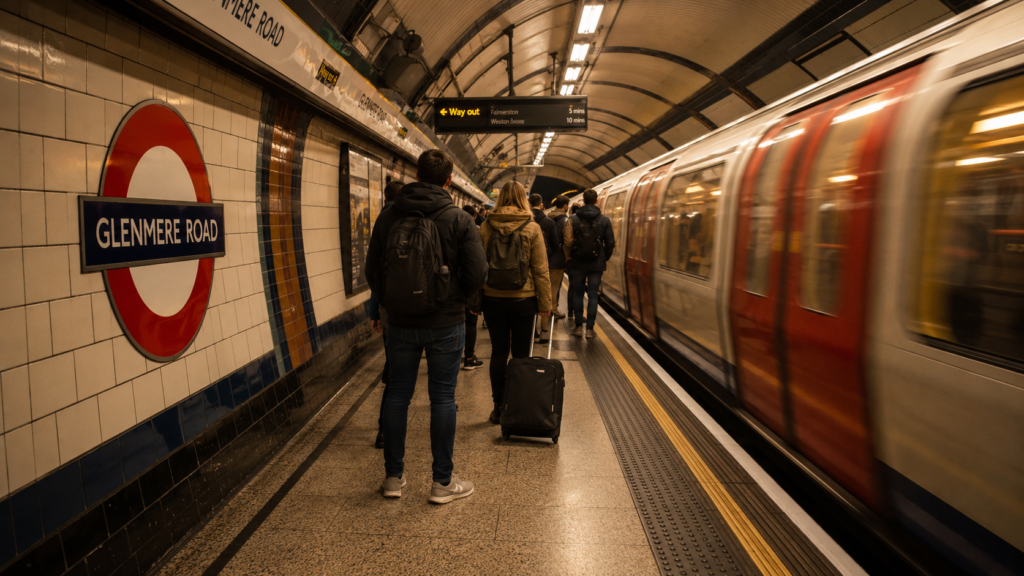
Here’s the secret that most first-timer guides miss: you don’t plan London by attraction. You plan it by Tube line.
The London Underground isn’t just how you get around — it’s the best organising principle the city has. Group your days by line and everything clicks into place: you stop zigzagging across town, you waste less money on fares, and you see more in three days than most visitors manage in five.
This itinerary gives you three full days, each built around one or two Tube lines. Every day includes a suggested route, realistic timings, honest cost estimates, and the practical details (which exit to take, when to arrive, where to eat) that make the difference between a smooth day and a stressful one.
Let’s tap in.
Before You Start: The 10-Minute London Transport Setup
If you only read one section of this guide before you land, make it this one.
You don’t need to buy anything in advance. No paper tickets, no Oyster card queue, no tourist travel pass (with one exception below). If you have a contactless bank card or a phone with Apple Pay or Google Pay, you already have your ticket. Tap in at the yellow reader when you enter a station, tap out when you leave, and TfL charges you the correct fare automatically.
Daily caps are your best friend. Once you’ve spent a set amount in a day (around £8–9 for Zones 1–2, where this entire itinerary takes place), every additional journey that day is free. You literally cannot overspend. This is why we don’t recommend a Travelcard for a 3-day trip — the contactless cap almost always works out cheaper.
Using Contactless Payments on the London Underground: A Complete Guide
Use the same card every time. The caps only work if every tap is on the same card or device. If you tap in with your phone and out with your physical card, you’ll be charged two incomplete journeys — the most common (and most avoidable) mistake first-timers make.
Stand on the right. On escalators, the left side is for walking. This is not a suggestion. This is the closest thing London has to a sacred law.
Download two apps: the official TfL Go app (live departures, step-free routes, line status) and Citymapper (the best door-to-door journey planner in any city, and it was built for London).
Three quick planning notes before Day 1:
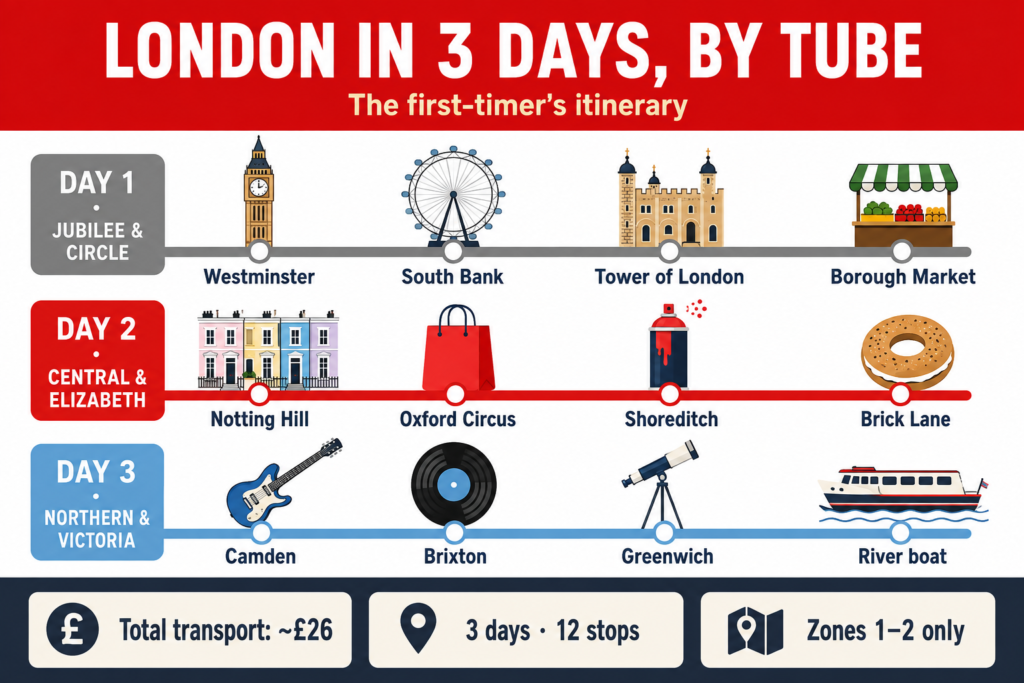
- This whole itinerary stays in Zones 1–2, so your transport cost for three days will be roughly £25–27 total.
- Check for strikes and closures a few days before you travel — weekend engineering works are common.
- If you’re planning to visit several paid attractions (Tower of London, The Shard, Westminster Abbey, a river cruise), price up the London Pass before you go. It’s not right for everyone, but for a fast-paced 3-day trip hitting big-ticket sights, it often pays for itself by the end of Day 1.
Day 1: The Classic London Day — Jubilee & Circle Lines
Theme: The postcard London — Westminster, the South Bank, and the Tower. Lines used: Jubilee (grey), Circle (yellow), with one short District line overlap. Walking level: Moderate — around 4–5 miles across the day, mostly flat and riverside. Rough cost: £0 transport beyond your daily cap; £35–70 in attractions depending on choices.
Morning: Westminster (arrive 9:00–9:30am)
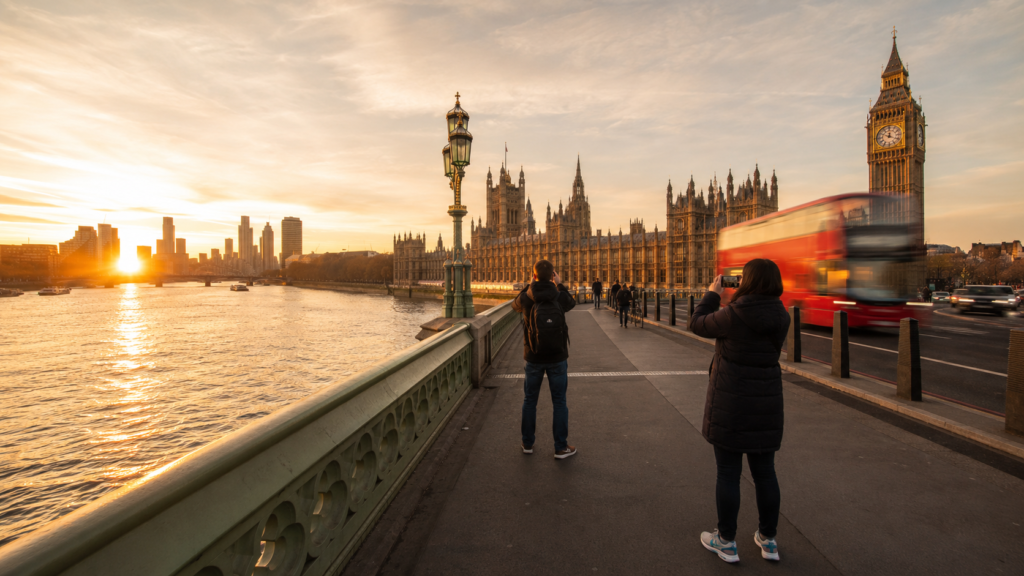
Start at Westminster station (Jubilee, Circle and District lines). Take Exit 4. This is not negotiable, because Exit 4 delivers one of the great arrival moments in world travel: you climb the steps and Big Ben fills the sky directly above you. Half the people around you will be filming their reaction. Let them. You’ll want to as well.
From here, everything is on foot for the next two hours:
- Big Ben and the Houses of Parliament — admire from the outside; tours run on Saturdays and need booking well ahead.
- Westminster Abbey (5-minute walk) — a thousand years of coronations, royal weddings and the tombs of monarchs, scientists and poets. Book a timed ticket in advance; the queue without one can eat an hour of your morning.
- Parliament Square — statues of Churchill, Mandela, Gandhi and Millicent Fawcett in one small green square.
- St James’s Park (10-minute walk) — cut through London’s prettiest royal park towards Buckingham Palace. If you time it right, the Changing of the Guard happens at 11:00am on scheduled days (check the official calendar — it’s not daily).
Midday: Cross the river to the South Bank (12:30pm)
Walk back to Westminster Bridge and cross to the south side of the Thames. The view back towards Parliament from the middle of the bridge is the single best free photo opportunity in central London.
You’re now on the South Bank, London’s riverside cultural mile. Options for lunch:
- Southbank Centre Food Market (behind the Royal Festival Hall, Fri–Sun) — street food from a dozen cuisines, most dishes £8–12.
- The riverside chain restaurants are fine but unremarkable; the food market is the better call if it’s open.
After lunch, pick your South Bank experience:
- The London Eye — yes, it’s touristy; yes, the views are worth it on a clear day. Book online for a decent discount on the walk-up price.
- Tate Modern (20-minute riverside walk east) — one of the world’s great modern art museums, and completely free. Even if art isn’t your thing, the Turbine Hall and the free 10th-floor viewing level are worth the walk.
- Simply walk the river path east — past the Globe Theatre, the buskers, the book market under Waterloo Bridge. This walk is many Londoners’ honest answer to “what’s your favourite thing in London?”
Afternoon: The Tower of London (2:30–3:00pm)
From the South Bank, walk across the wobble-free Millennium Bridge (St Paul’s dead ahead — another classic photo) and hop on the Circle line at Mansion House or simply continue the riverside walk to Tower Hill (about 25 minutes on foot via London Bridge, and worth it).
The Tower of London needs 2–3 hours to do properly. Priorities: the Crown Jewels first (the queue only grows), then a free Yeoman Warder (“Beefeater”) tour — genuinely funny, genuinely informative, included in your ticket.
As you leave, walk onto Tower Bridge — the bridge everyone accidentally calls London Bridge. Crossing it costs nothing and the view of the Tower and the City skyline at golden hour is spectacular.
Evening: Dinner near London Bridge
You’re a 15-minute walk (or one stop on the Jubilee line from London Bridge) from Borough Market. The full market closes by 5pm, but the surrounding streets — Bermondsey Street especially — have some of the best-value dinner options in Zone 1. Padella (fresh pasta, expect a queue, worth it) is the local’s pick.
End the day at a riverside pub — The Anchor Bankside or The Founder’s Arms — with the lit-up dome of St Paul’s across the water. Day 1 complete.
Staying near here? See the “Where to Stay” section below — London Bridge is one of our top picks for first-timers. For more on this area, read our London Bridge station spotlight .
Day 2: East Meets West — Central & Elizabeth Lines
Theme: Two Londons in one day — Notting Hill’s pastel west and Shoreditch’s street-art east — connected by the city’s oldest and newest railways. Lines used: Central (red), Elizabeth (purple), one Overground hop. Walking level: Moderate — 3–4 miles, broken into short bursts. Rough cost: £0 transport beyond cap; this is your cheapest attraction day (most of it is free).
Morning: Notting Hill & Portobello Road (arrive 9:30am)
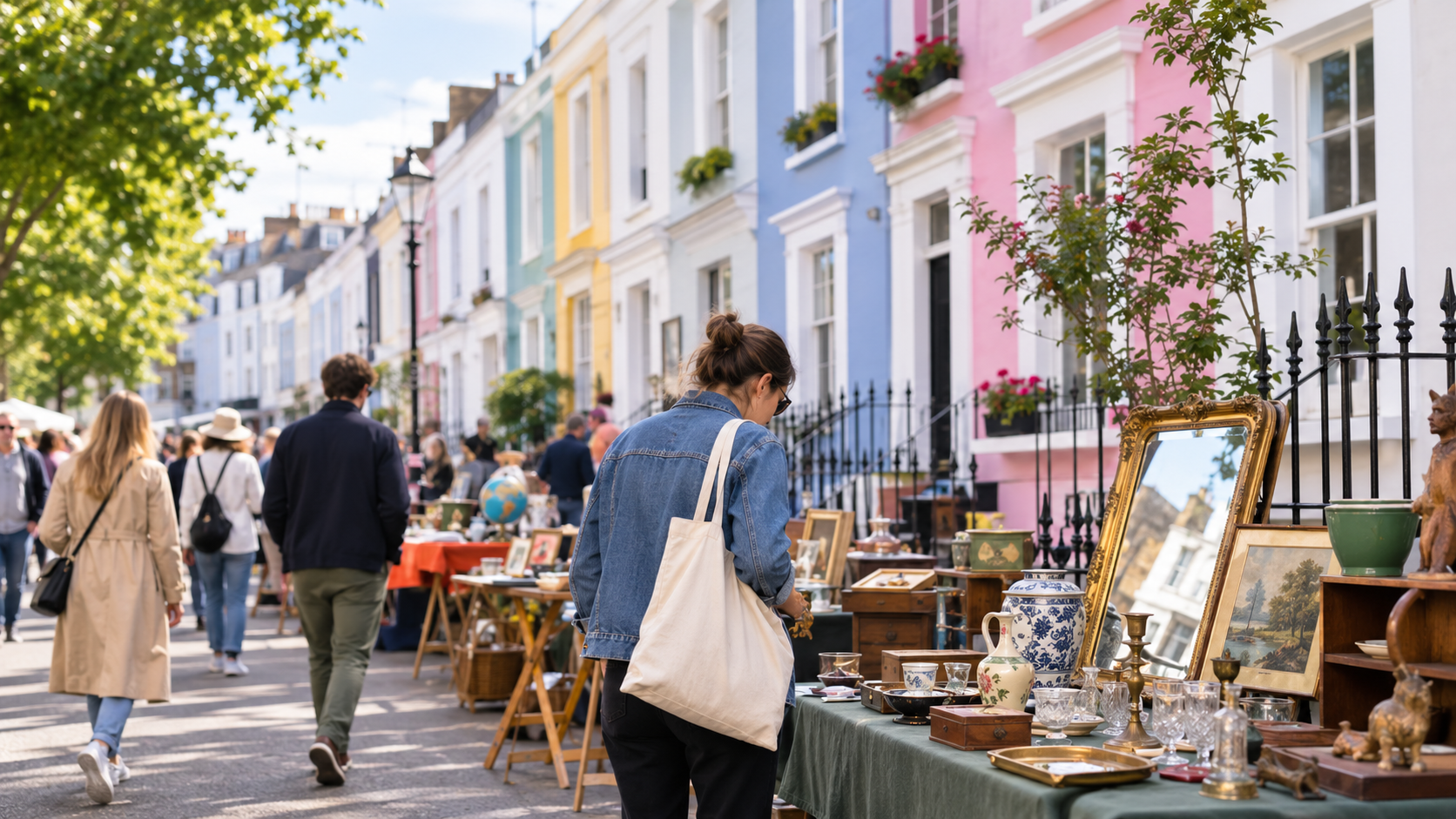
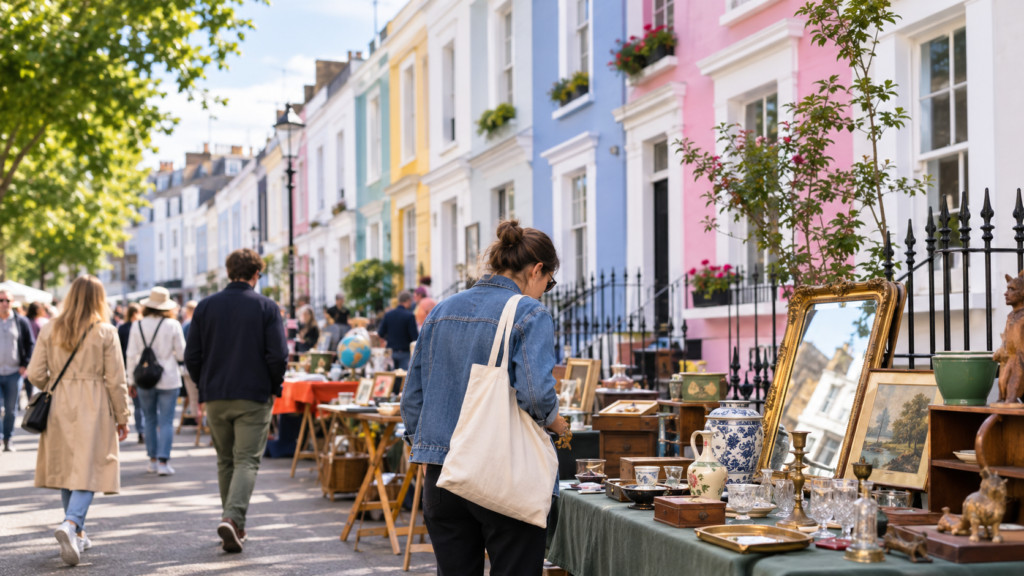
Take the Central line west to Notting Hill Gate. Follow the signs (and the crowd) north to Portobello Road — the famous antiques market, the pastel-coloured terraces, the setting of approximately one thousand Instagram posts and one Hugh Grant film.
Timing matters here. Saturday is the full antiques market and it’s glorious but heaving — arrive by 9:30am or expect to shuffle. Friday is the sweet spot: most stalls, half the crowd. Sunday is quiet, with just the vintage clothing end active.
Do: browse the antiques arcades at the southern end, grab a pastry from Gail’s or a coffee from one of the independents, walk the full length of the road to the vintage market under the Westway. Budget 2–2.5 hours.
Notting Hill and Portobello walking tour via Viator — a good option if you want the history behind the houses.)
Midday: Oxford Street & the West End (12:30pm)
Back on the Central line eastbound, four stops to Oxford Circus. You’re now standing at the crossroads of the world’s most famous shopping street.
Honest local advice: Oxford Street itself is skippable unless you want the flagship stores (Selfridges is the one genuinely worth your time — the food hall alone justifies the visit). The better move is to walk 5 minutes south into Soho or Carnaby Street for lunch — smaller streets, better food, more character. Kingly Court off Carnaby is a three-storey courtyard of restaurants with something for every taste and budget.
If shopping is your thing, this is your window — see our Oxford Circus station spotlight for the full breakdown.
Afternoon: Ride the Elizabeth Line east to Shoreditch (2:30pm)
Now for a genuine “only in 2026” London experience. Walk to Bond Street or Tottenham Court Road and take the Elizabeth line — London’s newest railway — east to Liverpool Street. The Elizabeth line’s stations are cathedral-sized, air-conditioned and quietly futuristic; the contrast with the 1900-built Central line you rode this morning is the whole history of London transport in one afternoon.
From Liverpool Street, walk 10 minutes north into Shoreditch — London’s street art and creative quarter. The route: Brick Lane (curry houses, vintage shops, the famous beigel shops at the north end — Beigel Bake’s salt beef beigel is a London institution and costs about £7), then the streets around Shoreditch High Street for the best murals and street art in the city.
If markets are your thing, Old Spitalfields Market (covered, daily) sits right between Liverpool Street and Brick Lane and makes an easy detour. Shoreditch street art walking tour via GetYourGuide — the guided tours here genuinely add a lot, because the best pieces are down alleys you’d never find alone.)
For the deeper version of this area, see our Shoreditch & Old Street creative quarter guide.
Evening: Dinner and drinks in Shoreditch
Stay east for the evening — this is where London eats and drinks now. Boxpark for casual street food, Brick Lane for a curry, Hoxton for cocktail bars. If you want a big finish, book a table at a rooftop bar (Queen of Hoxton or Aviary) for skyline views without Shard prices.
Getting home: Shoreditch High Street (Overground) or Liverpool Street (Central, Elizabeth, Circle) connect you back to anywhere in this itinerary within 25 minutes.
Day 3: Off the Beaten Track — Northern & Victoria Lines (+ DLR)
Theme: The London that Londoners actually love — Camden’s markets, Brixton’s energy, Greenwich’s views. Lines used: Northern (black), Victoria (light blue), DLR to finish. Walking level: Higher — 5+ miles if you do the Greenwich climb. Wear the comfortable shoes. Rough cost: £0 transport beyond cap; £0–20 attractions (almost everything today is free).
Morning: Camden Town (arrive 10:00am)
Northern line to Camden Town. Camden is loud, chaotic, touristy and completely worth it — the markets around Camden Lock are London’s alternative culture distilled into half a square mile.
The plan: start at Camden Market by the lock (the stables and the canal-side stalls are the best bit), browse the vintage, the crafts and the genuinely excellent street food (arrive hungry — this is brunch), then walk the Regent’s Canal towpath west towards Primrose Hill. The 20-minute canal walk from Camden Lock is one of London’s most underrated strolls.
Optional detour: climb Primrose Hill for a skyline view that costs nothing and comes with the city’s most charming picnic crowd.
Midday: Victoria Line south to Brixton (1:00pm)
Walk (or one Northern line stop) to Euston, then take the Victoria line — London’s fastest — south to its final stop: Brixton. Ten stops, about 18 minutes, and you emerge into a completely different London.
Brixton is the heart of Black British culture, the home of Electric Avenue, and one of the best food destinations in the city. Head straight into Brixton Village and Market Row — covered arcades packed with tiny restaurants spanning Caribbean, Colombian, Japanese, Ethiopian and everything between. Lunch here is the day’s highlight: most plates £8–14, quality that would cost double in Zone 1.
Walk it off along Electric Avenue (yes, the song) and the surrounding market streets. If time allows, the Brixton Windmill — an actual working 1816 windmill in south London — is a 15-minute walk and a genuine “wait, what?” moment. Our Brixton station spotlight has the full guide.
Afternoon: Greenwich (3:00pm)
The finale. From Brixton, Victoria line back north to Stockwell, change to the Northern line to Bank, then take the DLR (Docklands Light Railway — driverless, sit at the very front, you have our permission to feel like a child) to Cutty Sark for Maritime Greenwich. It’s about 40 minutes total, and the DLR ride through Canary Wharf’s skyscraper canyon is an attraction in itself.
Greenwich delivers a stacked final afternoon:
- The Cutty Sark — the great Victorian tea clipper, dramatically raised above her dry dock.
- The Old Royal Naval College — Wren’s baroque masterpiece; the Painted Hall is jaw-dropping and cheap to enter.
- Greenwich Market — covered crafts and food market, perfect for last-day souvenirs that aren’t Union Jack tat.
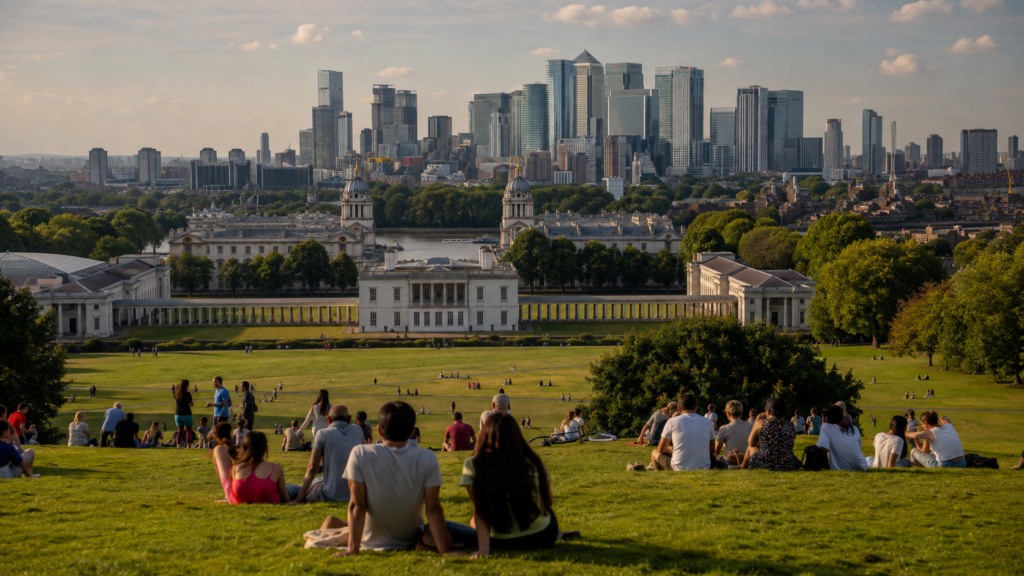
- The climb: walk up through Greenwich Park to the Royal Observatory. Stand on the Prime Meridian with one foot in each hemisphere, then turn around. The view — Greenwich’s baroque symmetry, the river, Canary Wharf’s towers, the whole city beyond — is the best in London, and it’s free.
Evening: The river finish
Here’s the perfect ending: instead of taking the Tube back, catch the Uber Boat by Thames Clippers from Greenwich Pier back into central London (around 25–35 minutes to London Bridge or Westminster, tap on with the same contactless card, roughly £9–10). You’ll glide past Canary Wharf, under Tower Bridge, and past the lit-up Tower of London — a floating recap of your entire three days.
Dinner near wherever you disembark, a last pint in a riverside pub, and that’s London — done properly, entirely by public transport, in three days.
Where to Stay: Choosing Your Base by Tube Station
For a first visit, where you stay matters less than which station you stay near. Optimise for a station with multiple lines and you’ll shave 20 minutes off every journey in this itinerary. Our picks, by budget:
Best all-round: London Bridge (Zones 1). Jubilee and Northern lines plus National Rail, Borough Market on your doorstep, and walkable to the Tower and South Bank. Mid-range hotels (Premier Inn, Hub, citizenM) from around £120–180/night.
Best for value: King’s Cross / St Pancras (Zone 1). Six Tube lines — more than any other station — direct Piccadilly line from Heathrow, and a transformed neighbourhood of canals and restaurants. Great mid-range and budget options from £90–150/night. See our complete King’s Cross guide.
Best on a budget: Stratford (Zone 2/3). Central, Jubilee and Elizabeth lines get you anywhere in this itinerary in under 25 minutes, and Zone 2 prices mean decent rooms from £70–110/night.
Best for a treat: South Bank / Westminster (Zone 1). Wake up next to Day 1. Expect £200+, but the location is unbeatable for a short trip.
Your Pre-Trip Checklist
Five things to sort before you fly:
- Set up contactless payment on your phone or confirm your bank card works abroad without fees.
- Download the TfL Go and Citymapper apps.
- Book timed tickets for Westminster Abbey, the Tower of London and the London Eye — the three where advance booking saves you real queue time.
- Check TfL for planned closures on your travel dates, especially weekends.
- Screenshot this itinerary — phone signal underground is patchy on the older lines.
Frequently Asked Questions
Is 3 days enough for London? For a first visit, yes — if you plan by Tube line rather than by attraction. This itinerary covers the major sights, three distinct neighbourhoods, and the London that locals love. You’ll leave with a list for next time, which is exactly how London works.
How much does 3 days in London cost? Excluding accommodation and flights: roughly £25–27 for all transport, £50–100 for paid attractions (less with a London Pass if you’re hitting several), and £30–50 per day on food if you eat at markets and casual spots. A realistic on-the-ground budget is £250–350 per person for three days.
Do I need an Oyster card? No — contactless bank cards and phones pay identical fares with the same daily caps. Only get an Oyster if your bank charges foreign transaction fees.
Is the Tube safe and easy for first-timers? Very. It’s well-signed in English, staffed, and used by 5 million people a day. Keep your phone secure near station exits, mind the gap, stand on the right — that’s the whole rulebook.
What if there’s a Tube strike during my trip? It happens. The Elizabeth line and Overground often still run, buses cover everything, and central London is more walkable than the Tube map suggests.
Ready to go deeper on any line? Start with our complete guides to the Central line, Piccadilly line, Metropolitan line and Bakerloo line — every stop, every station, everything worth getting off for.