A Literary London Day Out by Underground: From Bloomsbury to Baker Street
London has been written into existence more thoroughly than almost any city on earth. Dickens walked its streets researching debtors’ prisons. Virginia Woolf and the Bloomsbury Group reinvented English fiction from a handful of Georgian townhouses. Arthur Conan Doyle invented the world’s most famous detective and gave him an address that tourists still queue outside more than a century later. You do not need a car, a walking tour company, or even particularly good weather to see all of it — you need a day, an Oyster card, and a route that makes sense.
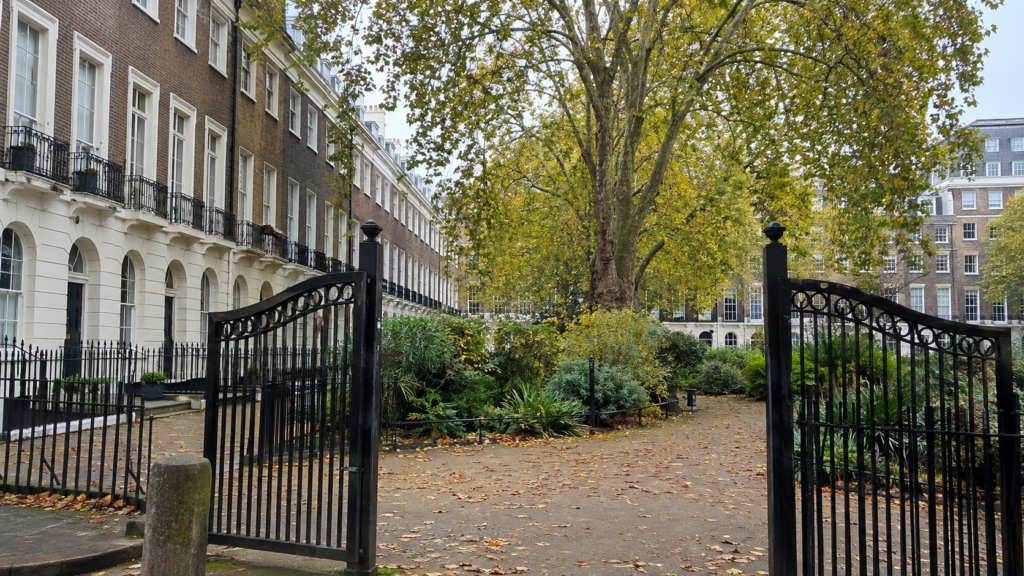
This itinerary links two of the city’s richest literary neighbourhoods — Bloomsbury and Marylebone — using four Tube lines and about twenty minutes of actual travel time. It is built for readers, not completists: you will not tick off every blue plaque in central London, but you will finish the day having stood in the rooms and streets that shaped some of the language’s most enduring books.
The Route at a Glance
- Start: Russell Square (Piccadilly line) — Bloomsbury and the Woolf/Dickens axis
- Then: King’s Cross St Pancras (short walk or one stop on the Piccadilly line) — the British Library
- Finish: Baker Street (Hammersmith & City, Circle, Bakerloo, Jubilee, or Metropolitan line) — Sherlock Holmes and Regent’s Park
- Total Tube time: roughly 20–25 minutes across the day, plus walking
- Suggested duration: a full day, 10am–5pm, with a lunch break in Bloomsbury
- Estimated cost: £35–55 per person, including museum admission and lunch (Oyster/contactless daily cap covers travel)
Stop One: Bloomsbury — Woolf, Dickens, and the Group That Rewrote the Novel
Nearest station: Russell Square (Piccadilly line)
Come up from Russell Square station and you are already inside it. The garden squares, the stucco terraces, the quiet academic hush around the University of London campus — this is the Bloomsbury that Virginia Woolf, Lytton Strachey, E.M. Forster, and the rest of the Bloomsbury Group lived, argued, and worked in during the early twentieth century. Gordon Square, a short walk north of the station, is the best starting point: numbers 46 and 50 were both Woolf residences at different points, and the square itself has barely changed in silhouette since she described it.
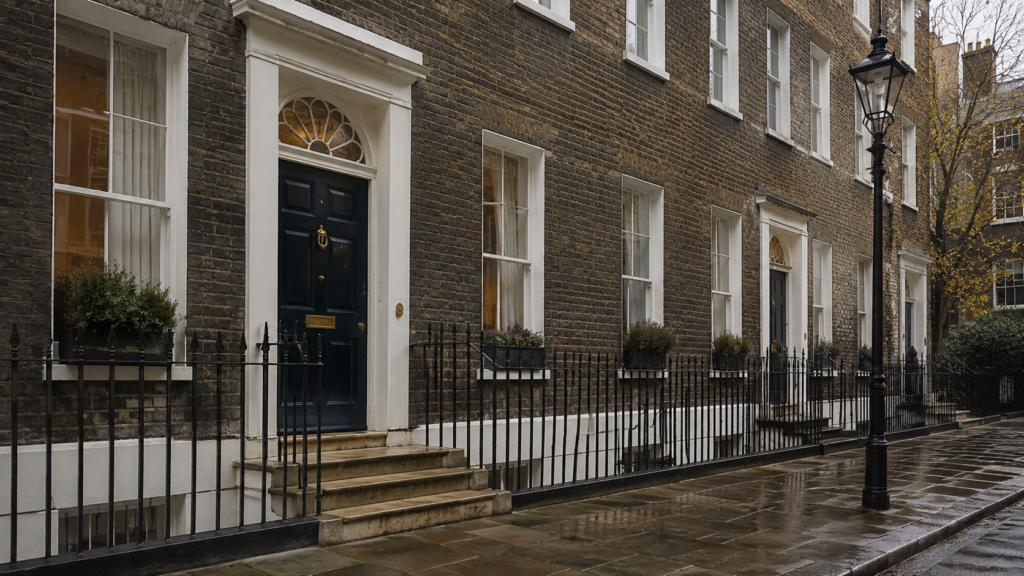
From Gordon Square, walk south-east toward Tavistock Square, where a plaque marks the site of Woolf’s home during the years she wrote Mrs Dalloway and To the Lighthouse — the original house was destroyed in the Blitz, but the square retains its literary gravity, helped along by a bust of Woolf installed in the gardens in 2004.
Ten minutes further south-east, at 48 Doughty Street, is the Charles Dickens Museum — the only surviving London home of the novelist, and the house where he wrote Oliver Twist and Nicholas Nickleby. The rooms are small, genuinely furnished with Dickens’s own possessions, and give a far more intimate sense of the writer than the grander literary house-museums elsewhere in Europe. Budget 45–60 minutes; admission is around £12–14 for adults, with online booking recommended on weekends.
For lunch, Bloomsbury has no shortage of options within a five-minute walk of Russell Square — this is a good moment to break rather than push straight on to King’s Cross.
King’s Cross & St Pancras by Tube: The Complete Local Guide
Stop Two: The British Library — Manuscripts, Not Just Books
Nearest station: King’s Cross St Pancras (one stop from Russell Square on the Piccadilly line, or a 12-minute walk)
The British Library rarely makes it onto “literary London” lists aimed at visitors, which is a genuine oversight. The permanent Treasures Gallery is free to enter and holds, on rotation, items including a Gutenberg Bible, Jane Austen’s writing desk, handwritten Beatles lyrics, and — most relevant to a literary itinerary — manuscript pages and early drafts from authors ranging from the Brontës to James Joyce. It is the kind of stop that turns a “we saw the sights” day into one that visitors actually remember.
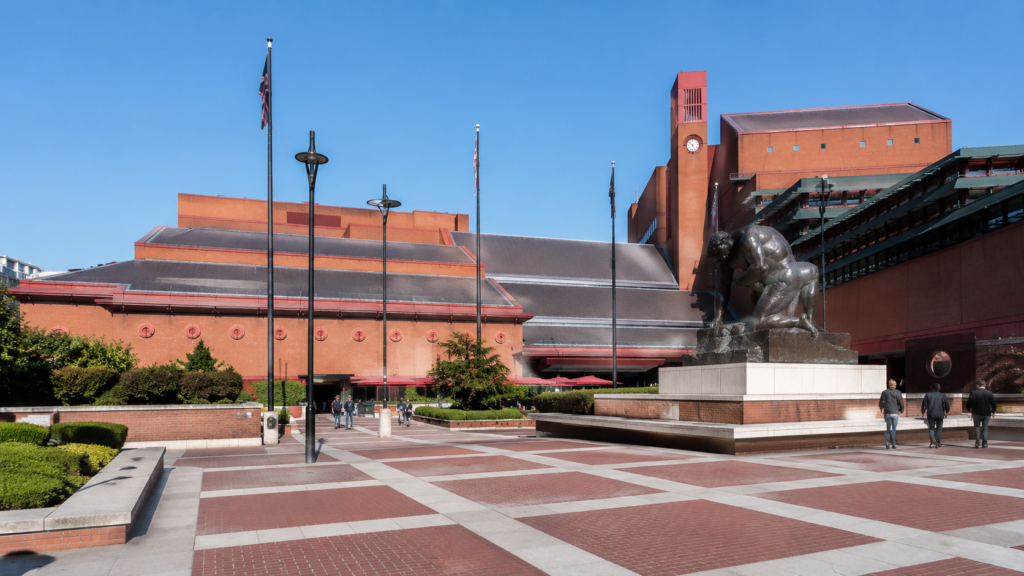
Allow 45 minutes for the Treasures Gallery alone, longer if a special exhibition is running (these are ticketed separately and worth checking in advance). The building itself, all red brick and Piano-and-Rogers-adjacent brutalism, is also a notable piece of late-twentieth-century London architecture in its own right.
St Pancras International, next door, is worth a five-minute detour even if you are not catching a train — the restored Victorian train shed and the Betjeman statue (the poet who campaigned to save the station from demolition) round out the literary theme neatly.
Stop Three: Baker Street — Sherlock Holmes and the Edge of Regent’s Park
Nearest station: Baker Street (Hammersmith & City, Circle, Bakerloo, Jubilee, or Metropolitan line)
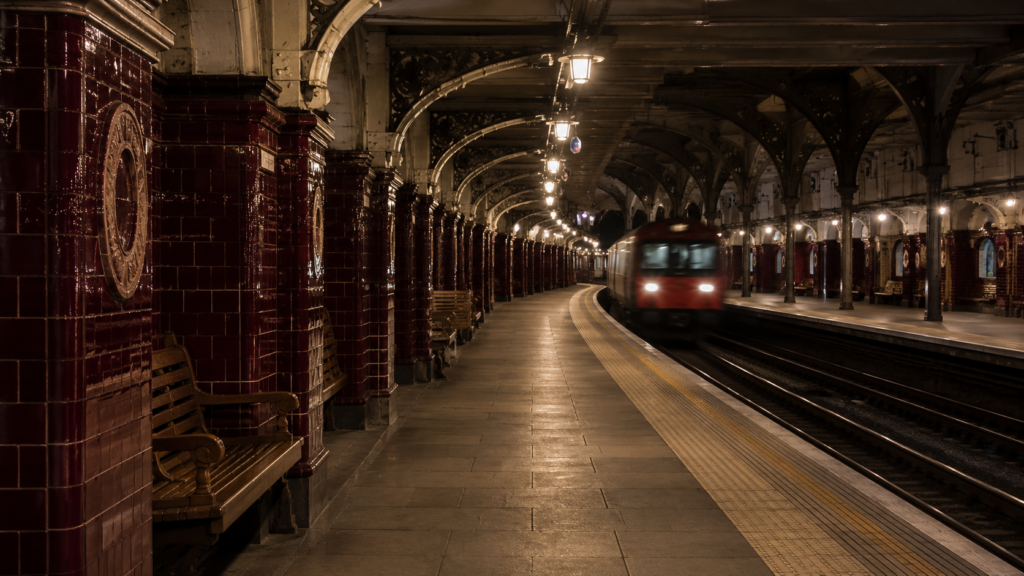
From King’s Cross St Pancras, the most straightforward route is the Circle or Hammersmith & City line direct to Baker Street — one journey, no changes, around 12 minutes. This is also a good moment to notice the station itself: Baker Street is one of the original seven stations on the world’s first underground railway, opened in 1863, and the deep maroon tiling on several platforms is a deliberate nod to that history.
The obvious pilgrimage here is the Sherlock Holmes Museum at 221B Baker Street — technically located between 237 and 241, a fact that gives Holmes enthusiasts something to argue about before they’ve even gone inside. The museum recreates Holmes and Watson’s Victorian rooms based on Conan Doyle’s descriptions, with period furnishings, a well-stocked gift shop, and actors in costume happy to pose for photos. It is unapologetically a tourist attraction rather than a scholarly archive, and it works best if you treat it that way — go for the atmosphere, not the academic rigour. Admission is around £20 for adults; booking ahead avoids the queue that regularly forms outside.
From Baker Street, Regent’s Park is a five-minute walk and makes a natural way to close out the day, particularly with a literary footnote of its own: the London Zoo within the park was the inspiration for several children’s books, and the park’s boating lake and rose gardens are simply a pleasant place to sit after a day of museums. If energy allows, Marylebone High Street — ten minutes’ walk south — has a genuinely good independent bookshop (Daunt Books’ original branch, with its long galleried Edwardian room) that makes a fitting final stop for anyone who has made it this far.
The Metropolitan Line: A Complete Stop-by-Stop Guide
Practical Notes
- Ticketing: Use contactless or an Oyster card for the day — with only three short Tube journeys, you will not come close to the daily cap, but contactless avoids the need to top up in advance.
- Booking ahead: The Sherlock Holmes Museum and any British Library special exhibitions should be booked online in advance, particularly for weekend visits. The Charles Dickens Museum is usually fine on the day outside peak summer weeks.
- Timing: Start at Russell Square by 10am to comfortably fit all three stops with a lunch break; starting later means either dropping the British Library detour or finishing later in the afternoon.
- Accessibility: Russell Square station has no lift to the platforms (it’s one of the deepest on the network); King’s Cross St Pancras and Baker Street both have step-free access from street to platform on most lines — worth checking TfL’s live status before travelling if step-free access is a requirement.
- Where to stay: Bloomsbury itself is a genuinely good base for this itinerary and for central London generally — well-connected, quieter than the West End, and walkable to King’s Cross for onward travel.
Why This Route Works
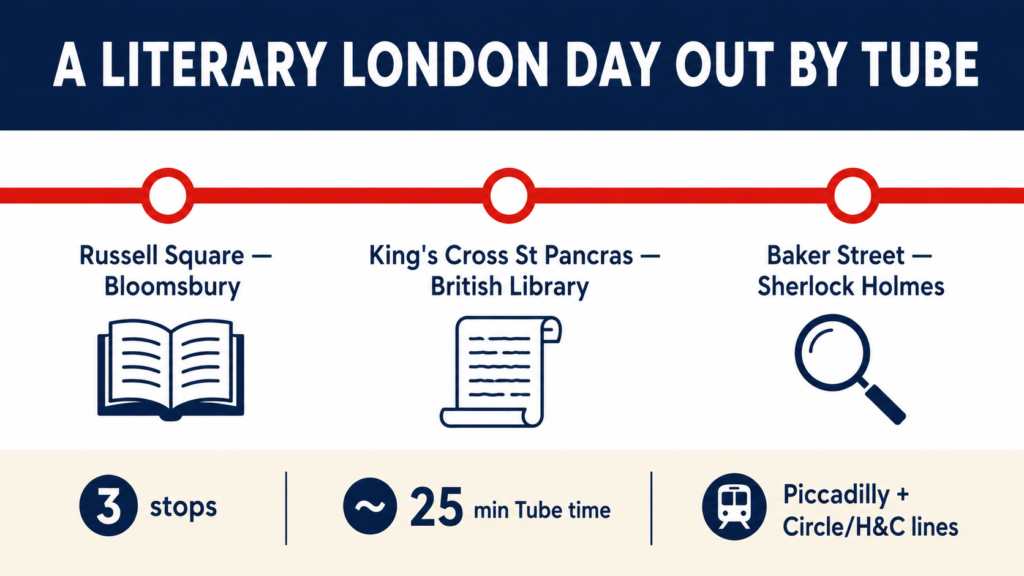
Most “literary London” content online is a list — ten addresses with a Google Maps pin and no sense of how a visitor is meant to move between them. Organising this as a single Tube-based day solves that problem: three stops, one line change, a single ticket cost, and an afternoon that tells an actual story — from the Bloomsbury Group’s quiet Georgian squares, to the nation’s literary archive, to the most famous fictional address in the English language. It is precisely the kind of transport-aware, planning-intent content that a general city guide cannot replicate, because a general city guide is not organised around how people actually get from one place to the next.