Oyster Card vs Contactless in London: Which Should You Use in 2026?
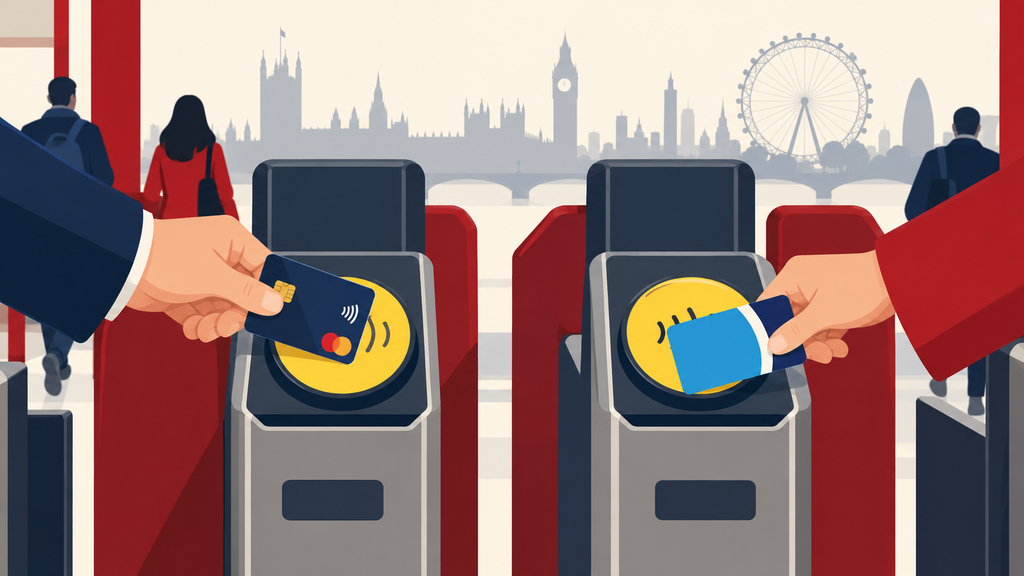
London is one of the most expensive cities in the world to visit — but getting around it doesn’t have to be. The real cost-saver isn’t a secret discount code, it’s picking the right way to pay for the Tube. Two options dominate: the Oyster card and contactless payment. Both work on almost every form of transport in the city, both cap your daily spend, and both are miles cheaper than buying paper tickets. So which one should you actually use?
Here’s the short version: for most visitors, contactless wins. Here’s why, and where the exceptions are.
What’s the Difference Between Oyster and Contactless?
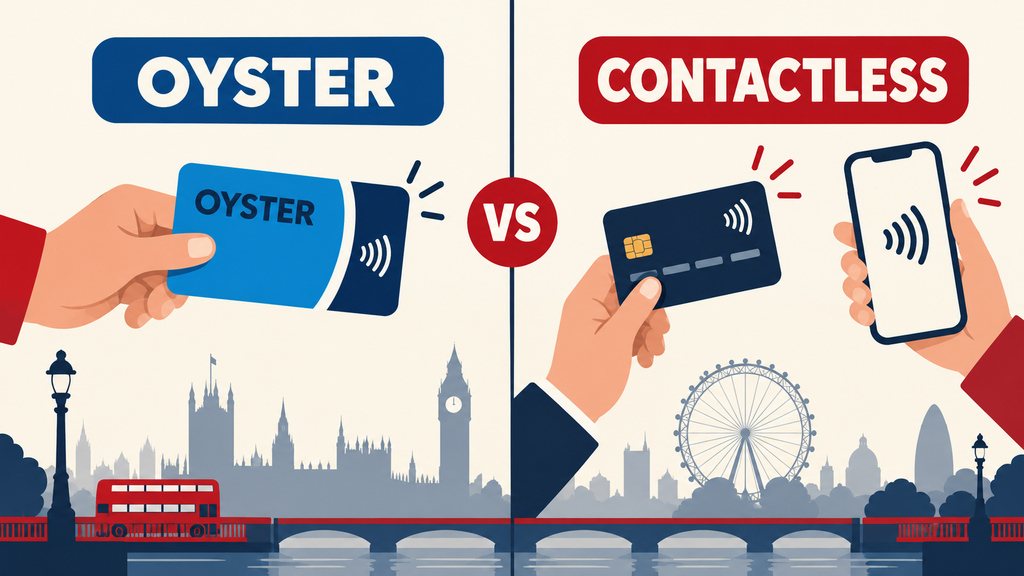
An Oyster card is a rechargeable smart card you buy in London, either at a Tube station or as a Visitor Oyster card ordered online before you travel. You load it with credit — Pay As You Go — or a Travelcard, then touch it on the yellow reader at the start and end of every journey.
Contactless means tapping a bank card, or a phone/watch with Apple Pay or Google Pay set up, directly on the same yellow readers. There’s nothing to buy, top up, or collect. It behaves exactly like Oyster Pay As You Go, with one key difference: it’s usually cheaper.
For a longer breakdown of how the whole fare system fits together — zones, caps, Travelcards — see the full Tube zones and fares guide.
Which Is Cheaper: Oyster or Contactless?
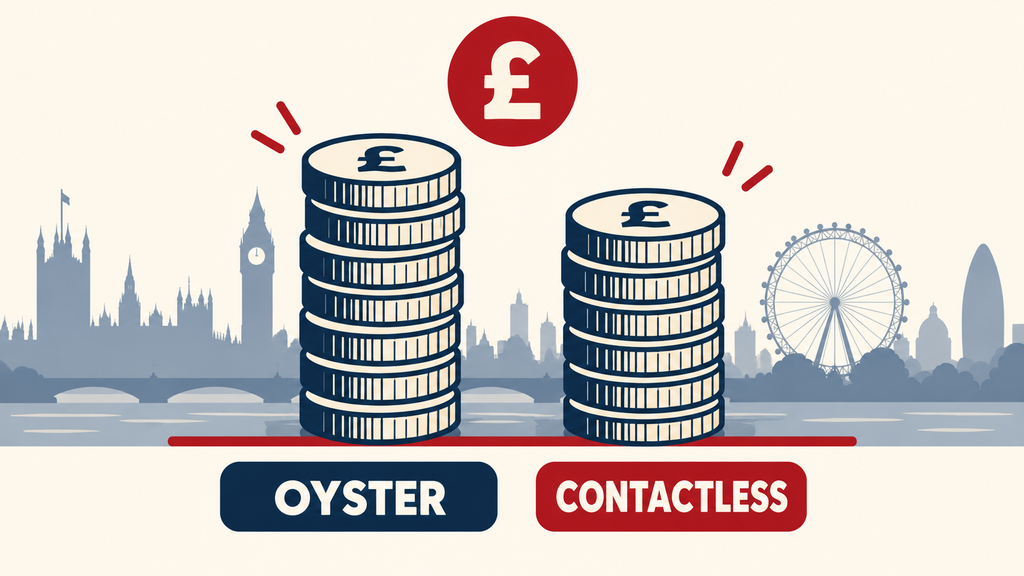
This is the question most visitors actually care about, and the answer has shifted in contactless’s favour over the past few years.
- Daily caps are usually identical or slightly better on contactless. TfL has been steadily narrowing any gap, but where one exists, it tends to favour contactless.
- Contactless caps automatically combine across days. If you’re in London for a week, contactless will automatically apply a 7-day cap equivalent across Monday–Sunday, without you doing anything. Oyster’s weekly capping works differently and is easy to get wrong if you’re not paying attention.
- No unused credit sitting on a card you’ll never use again. Load £30 onto an Oyster card and don’t spend it all, and you’re stuck getting a refund at a ticket office or through the TfL website before you fly home. Contactless has no leftover balance, because there’s nothing to load in the first place.
The exception: if you’re travelling as a family or group and want to load one card with a child-rate or Railcard-linked discount, Oyster still has the edge — contactless can’t currently carry Railcard discounts the way a registered Oyster card can. More on that below.
When Oyster Still Makes Sense
Contactless isn’t the better choice for everyone. Oyster is still worth it if:
- You don’t want to use a foreign bank card on public transport readers. Some travellers prefer not to expose a bank card to repeated taps on transport systems abroad, even though TfL’s contactless system is genuinely secure. A Visitor Oyster card sidesteps that entirely.
- You’re travelling with a Railcard. A 16–25 Railcard, Senior Railcard, or Two Together Railcard can be linked to a registered Oyster card for a discount on Pay As You Go fares. This isn’t yet available for contactless in the same way.
- You want a physical souvenir. Some of the collectible Visitor Oyster card designs are genuinely nice, and it’s a small, easy keepsake of the trip.
- Your phone or card doesn’t support contactless, or your bank charges foreign transaction fees per tap. Worth checking with your bank before you fly — some cards charge a small fee per contactless transaction abroad, which can add up over a week of Tube journeys. If that applies to you, an Oyster card avoids it entirely.
How to Avoid the Most Common Costly Mistakes
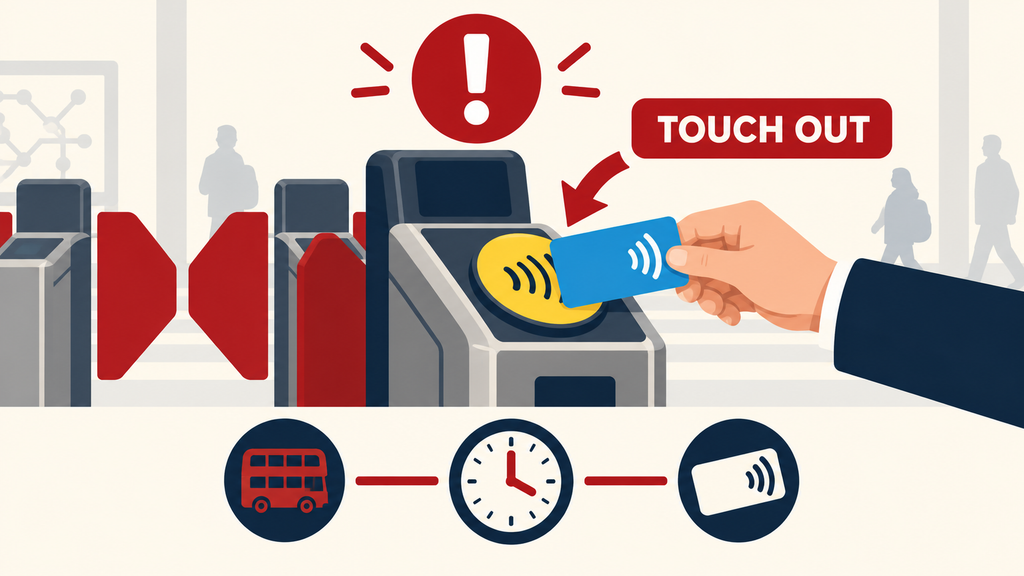
Whichever you choose, a few habits make a real difference to what you actually pay:
- Always touch in and out on the Tube, Overground, and most rail services — except buses and trams, where you only touch in. Forgetting to touch out triggers a maximum fare charge, sometimes over £9 for a journey that should have cost £2.80.
- Use the same card or device for the whole day. Mixing Oyster and contactless, or switching between two different contactless cards, breaks the daily cap calculation and you’ll be charged separately on each.
- Buses have a flat fare and don’t count toward zone-based caps in the same way, so hopping on a bus for a short journey is often the cheapest option in central London, especially in Zone 1.
- Off-peak travel is meaningfully cheaper. If your schedule allows it, avoid the 6:30–9:30am and 4:00–7:00pm weekday peak windows.
If you’re planning a trip that includes a Tube strike risk, it’s worth reading the Tube strike survival guide before you travel, since neither Oyster nor contactless will help you if the lines you need aren’t running.
Oyster and Contactless on the Rest of London’s Network
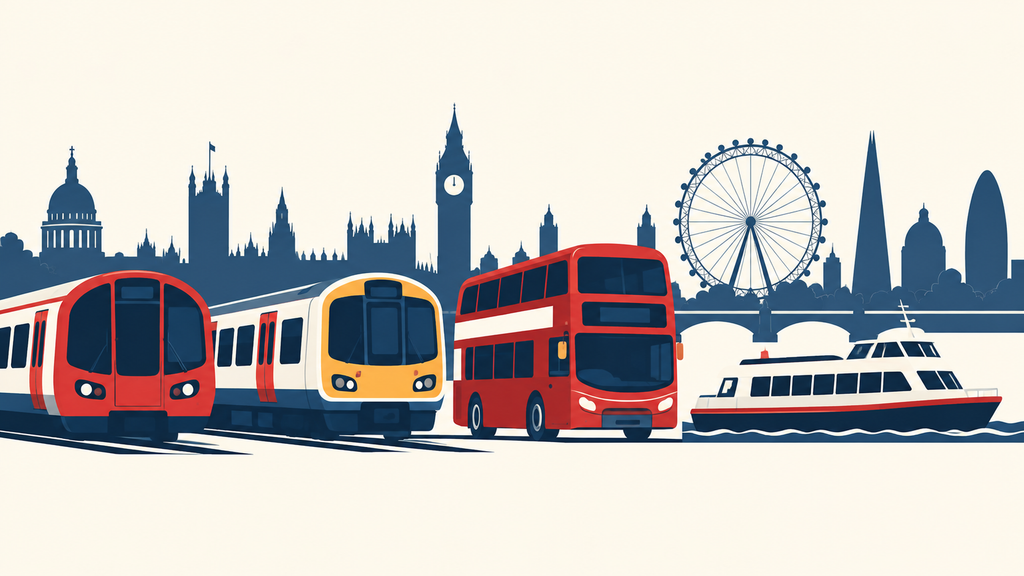
Both payment methods work seamlessly across:
- The London Underground and Docklands Light Railway (DLR)
- London Overground and most National Rail services within the zones
- The Elizabeth line — including the journey in from Heathrow, covered in detail in the Elizabeth line guide for first-time visitors
- London buses and trams, at a flat fare
- Thames Clippers river bus services, for a more scenic (and slightly pricier) way to get around
If you’re arriving from the airport, the Heathrow to central London comparison walks through how contactless and Oyster stack up against the Heathrow Express and other options.
Step-Free Access and Accessibility
Payment method makes no difference to which stations have lifts or ramps — that’s a separate consideration entirely, and one worth planning around before you travel rather than discovering at the bottom of a staircase. The step-free access guide covers which lines and stations are genuinely accessible.
The Verdict
For the vast majority of visitors — a single traveller or couple, staying under two weeks, using a UK or major international bank card — contactless is simpler, has no setup cost, and caps your spending automatically. Just check your bank’s foreign transaction policy before you go.
If you’re travelling with a Railcard, prefer not to use a bank card on transport, or want a physical card as a backup, a Visitor Oyster card is still a perfectly good choice — just budget a few minutes at the end of your trip to sort out any leftover credit.
Whichever you pick, the real money-saver is the same either way: touch in, touch out, stay on one card for the day, and travel off-peak when you can.
Planning the rest of your trip? Start with the complete Tube zones and fares guide, or jump straight to our full London itinerary for first-time visitors