How to Navigate London When There’s a Tube Strike: A Practical Survival Guide
Nothing derails a carefully planned London day faster than opening the TfL app and seeing that dreaded word: strike. If you’ve just landed in London, or you’re a Londoner trying to get to work, a Tube strike can feel like the whole city has ground to a halt.
It hasn’t. London is one of the most transport-dense cities on earth, and the Underground is only one part of a much bigger network. This guide covers exactly what to do — before, during, and after a strike — so you can still get where you’re going, without wasting hours stuck at a closed station entrance.
Why London Tube Strikes Happen
Strikes on the Underground are usually called by unions such as the RMT (National Union of Rail, Maritime and Transport Workers) or ASLEF, typically over pay, working conditions, staffing levels, or planned changes to ticket offices and station staffing. They can affect the whole network, a handful of lines, or just specific grades of staff (station staff versus drivers, for example), which is why some strikes shut everything down and others cause only partial disruption.
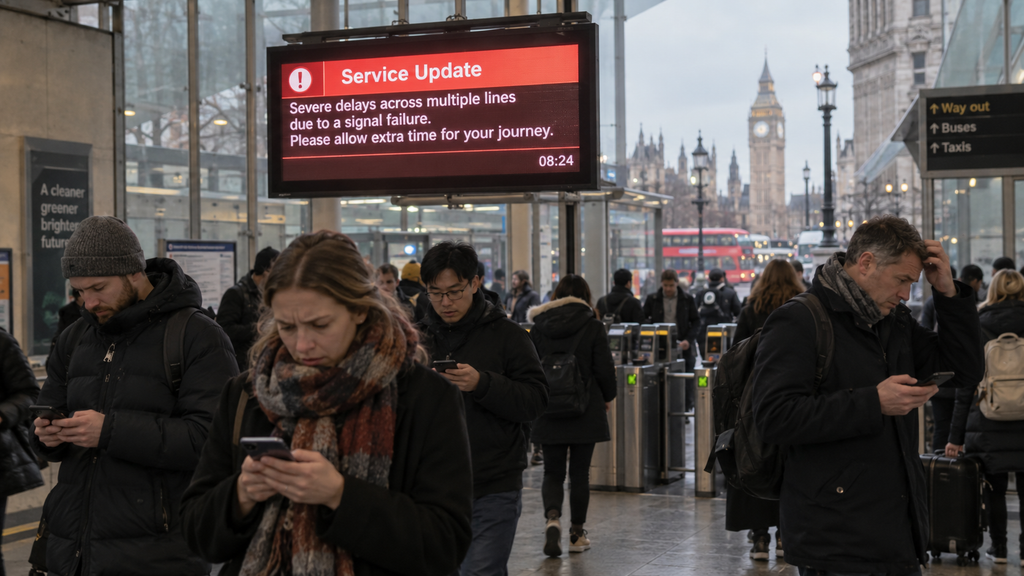
Strikes are almost always announced in advance — sometimes weeks ahead — which means the single most useful thing you can do is check before you leave, not after you’re already stuck on a platform.
Step 1: Check Before You Travel
Don’t rely on memory or a headline you saw a week ago. Strike action is sometimes called off at the last minute, and partial strikes can change which lines are affected day to day. Before you leave your hotel or flat, check:
- The TfL website and TfL Go app — the single most reliable source, updated in real time with live line status.
- @TfLTravelAlerts on X (Twitter) — often faster than the app for early-morning updates.
- BBC London News or a local London news site — useful for context on why the strike is happening and how long it’s expected to last.
If you’re travelling with an international SIM or roaming plan, download the TfL Go app before your trip — it works with limited signal and gives you live line status without needing a full browser search.
The Complete Guide to London’s Tube Zones, Fares & Oyster Card in 2026
Step 2: Know What Usually Keeps Running
This is the part most visitors don’t realise: a Tube strike is rarely a total shutdown of London transport. Several other networks are run by different operators and staffed differently, so they often continue operating close to normal:
- The Elizabeth line — operated separately from the core Underground network and frequently unaffected, or only partially affected, by Tube-specific strikes.
- London Overground — a different operating structure again, and often running a fuller service during Underground strikes.
- The DLR (Docklands Light Railway) — driverless and separately staffed, so it’s usually one of the most reliable options during a Tube strike.
- National Rail services — services run by companies like Thameslink, Southeastern, and Great Northern often continue and can substitute for Tube journeys across central London (for example, using Thameslink between St Pancras and London Bridge).
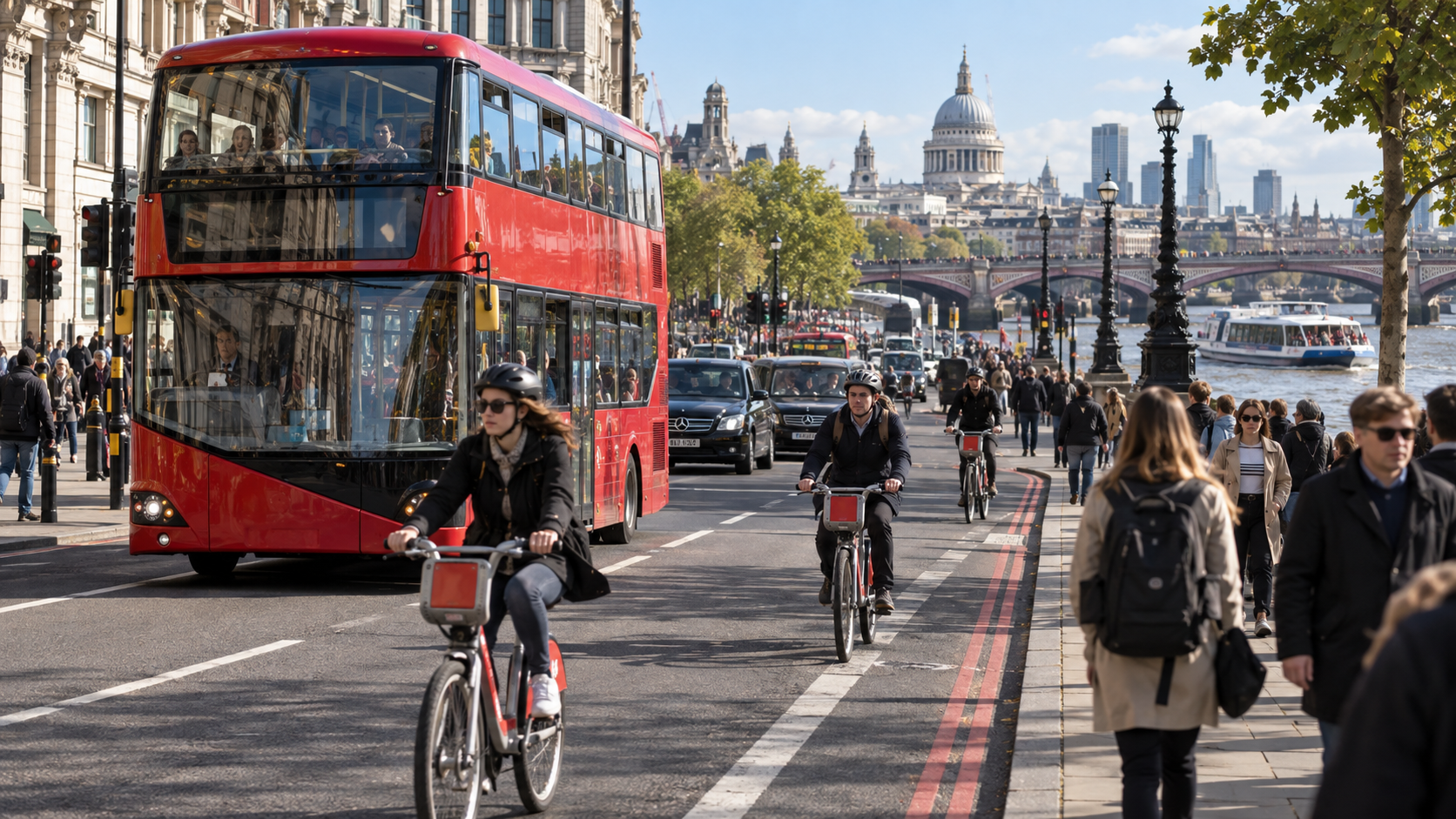
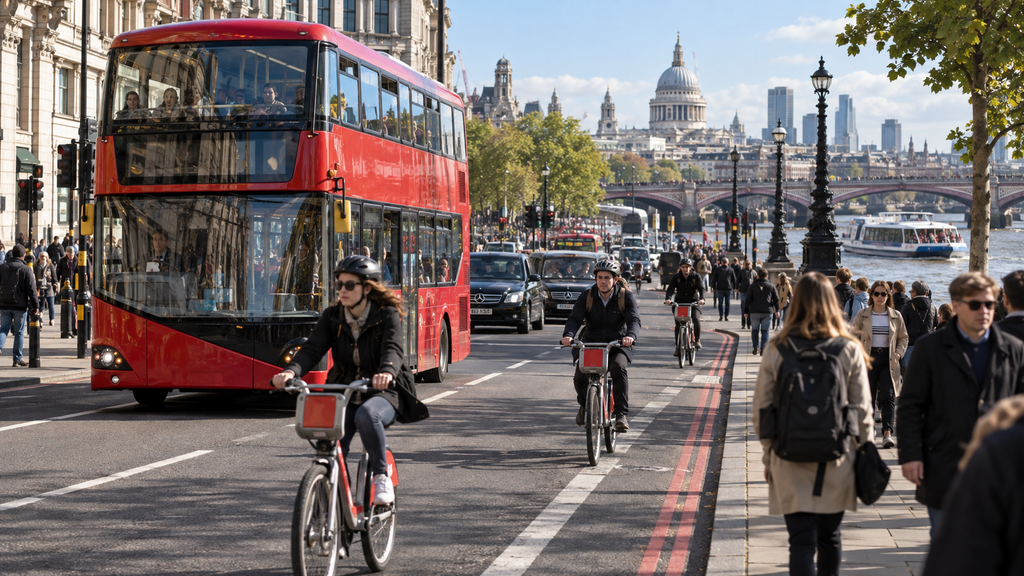
- London’s bus network — buses keep running, though expect them to be significantly busier and slower than usual, especially in central London during peak hours.
Step 3: Build a Backup Route

Once you know which lines are down, think in terms of alternative modes rather than alternative Tube lines — trying to Tube your way around a Tube strike rarely works.
Buses. London’s bus network is extensive and a genuinely good option during a strike, if you build in extra time. Google Maps and Citymapper both adjust bus routing automatically once they detect a Tube strike, so let the app do the route-planning rather than trying to work it out from memory.
Walking. Central London is more walkable than it looks on the Tube map, which famously distorts distances. Bank to Liverpool Street, Leicester Square to Covent Garden, or Westminster to Waterloo (via bridge) are all under 20 minutes on foot — often faster than waiting for a rerouted bus.
Santander Cycles (the “Boris Bikes”). A genuinely underused option during strikes. Docking stations are dotted across central London, and a short-term hire is inexpensive for a single journey across town.
River buses (Thames Clippers). Often forgotten, but a legitimate way to move east–west through the city — useful for journeys like Westminster to Greenwich or the Tower of London to Canary Wharf, and pleasant enough that it doesn’t feel like a compromise.
Taxis and ride-hailing apps. Black cabs and services like Uber are the most expensive option, but during a strike, surge pricing and heavier traffic mean this should usually be a last resort rather than a first instinct — save it for time-sensitive journeys like catching a flight or a show.
Step 4: Adjust Your Expectations, Not Just Your Route
A few practical mindset shifts make strike days far less stressful:
- Build in 50% more travel time than you normally would, particularly for anything time-sensitive like a flight, a theatre booking, or a restaurant reservation.
- Avoid peak hours if you can. If your schedule is flexible, travelling between 10am and 3pm avoids the worst of the rush-hour crush on alternative transport.
- Reconsider your day’s plan, not just your route. If you had planned to cross the city twice in a day, consider clustering your activities in one area instead — this is a good moment to lean into a single neighbourhood rather than a scattered itinerary.
- Check both ends of your journey. A strike affecting station staff can mean some stations are open for interchange only, or closed entirely, even on lines that are technically “running.”
What About the Airport?
If you’re travelling to or from Heathrow, Gatwick, Stansted, or London City during a Tube strike, don’t assume you’re stranded:
- The Elizabeth line and Heathrow Express are usually unaffected by Underground-specific strikes and remain the most reliable way to reach Heathrow.
- Gatwick Express and National Rail services to Gatwick generally run independently of Tube strike action.
- Stansted Express is unaffected for the same reason.
- Always check your specific route rather than assuming — occasionally strikes affect signalling staff or infrastructure shared across networks, though this is uncommon.
Build in extra time regardless, since roads into and out of London are typically busier on strike days as more people switch to cars, taxis, and buses.
Quick Reference: Strike Day Checklist
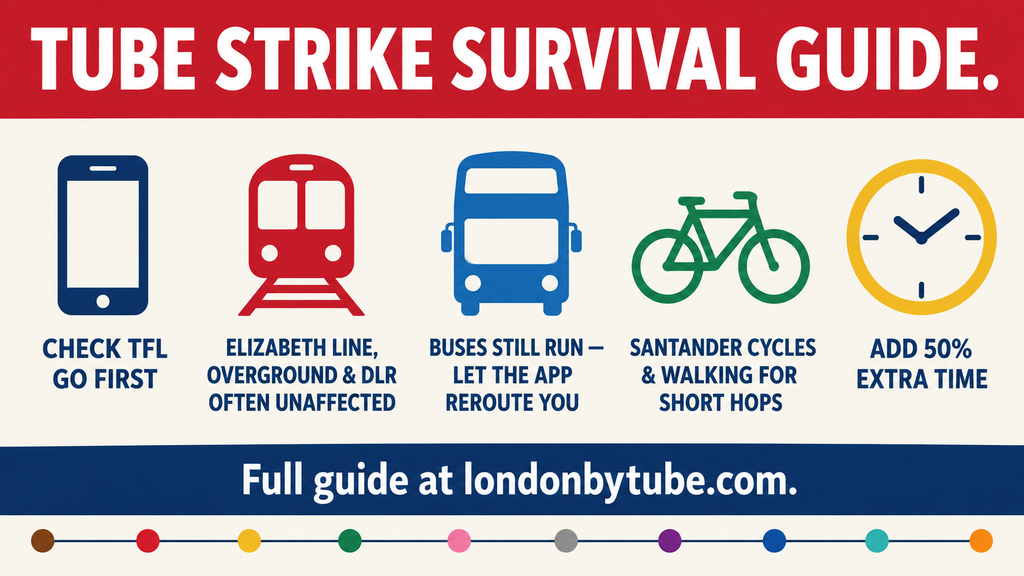
- Check TfL Go or the TfL website before you leave
- Follow @TfLTravelAlerts for real-time updates
- Check if the Elizabeth line, Overground, or DLR are running normally
- Let Citymapper or Google Maps auto-reroute you via bus
- Consider walking for anything under 25 minutes
- Keep Santander Cycles and river buses in mind as backup options
- Add 50% extra time to any time-sensitive journey
- Avoid the 8–9:30am and 5–6:30pm windows if your schedule allows it
The Bottom Line
A Tube strike is inconvenient, not catastrophic. London’s transport network has enough redundancy — buses, the Elizabeth line, the Overground, the DLR, National Rail, river buses, and simple walkable distances — that a bit of planning turns a stressful day into a manageable one. Check before you travel, lean on an app that reroutes in real time, and treat a strike day as a good excuse to explore one neighbourhood on foot rather than criss-crossing the city as originally planned.