Things to Do Near St James’s Park Station: The Complete Local Guide
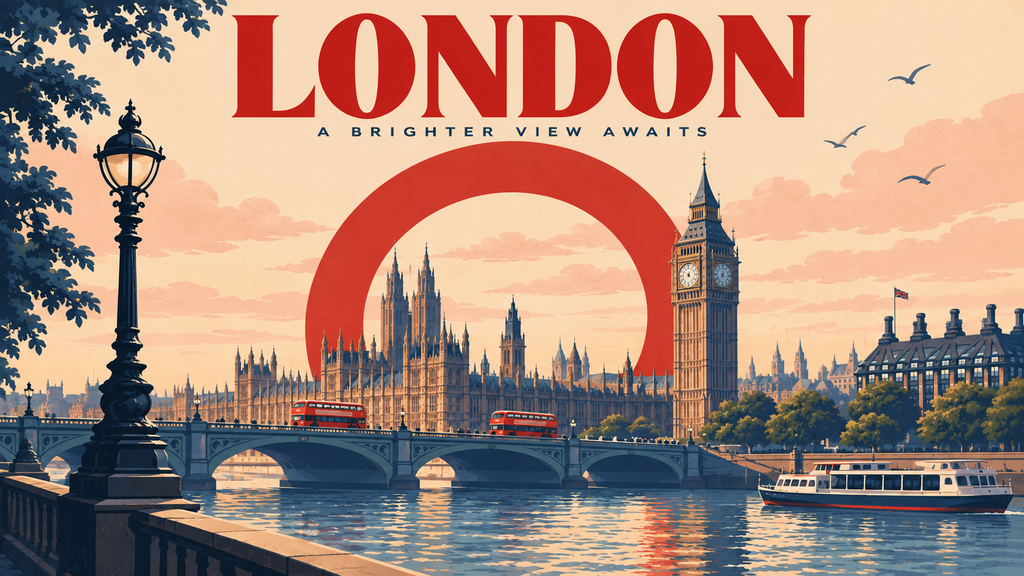
There’s a particular kind of calm that settles over you when you exit St James’s Park station and realise you’re standing at the geographical heart of London. Westminster is two minutes one way. Buckingham Palace is five minutes the other. And directly opposite the exit, one of London’s finest royal parks stretches out in front of you — almost entirely free to enjoy.
This isn’t a hidden gem. The area around St James’s Park station is as well-trodden as London gets. But that doesn’t mean most visitors do it properly — most are rushing between Big Ben and the Palace for a selfie. This guide is for people who want to slow down and actually experience the neighbourhood: the parks, the palaces, the architecture, the food, and a few things you won’t find on the average tourist itinerary.
Getting to St James’s Park by Tube
St James’s Park station sits on the District and Circle lines, making it one of the best-connected stations for a Westminster day out.
- District line: direct from Earl’s Court (10 min), Victoria (4 min), Tower Hill (15 min)
- Circle line: direct from Paddington (12 min), King’s Cross St Pancras (18 min) [LINK → King’s Cross station spotlight], Liverpool Street (20 min) [LINK → Liverpool Street station spotlight]
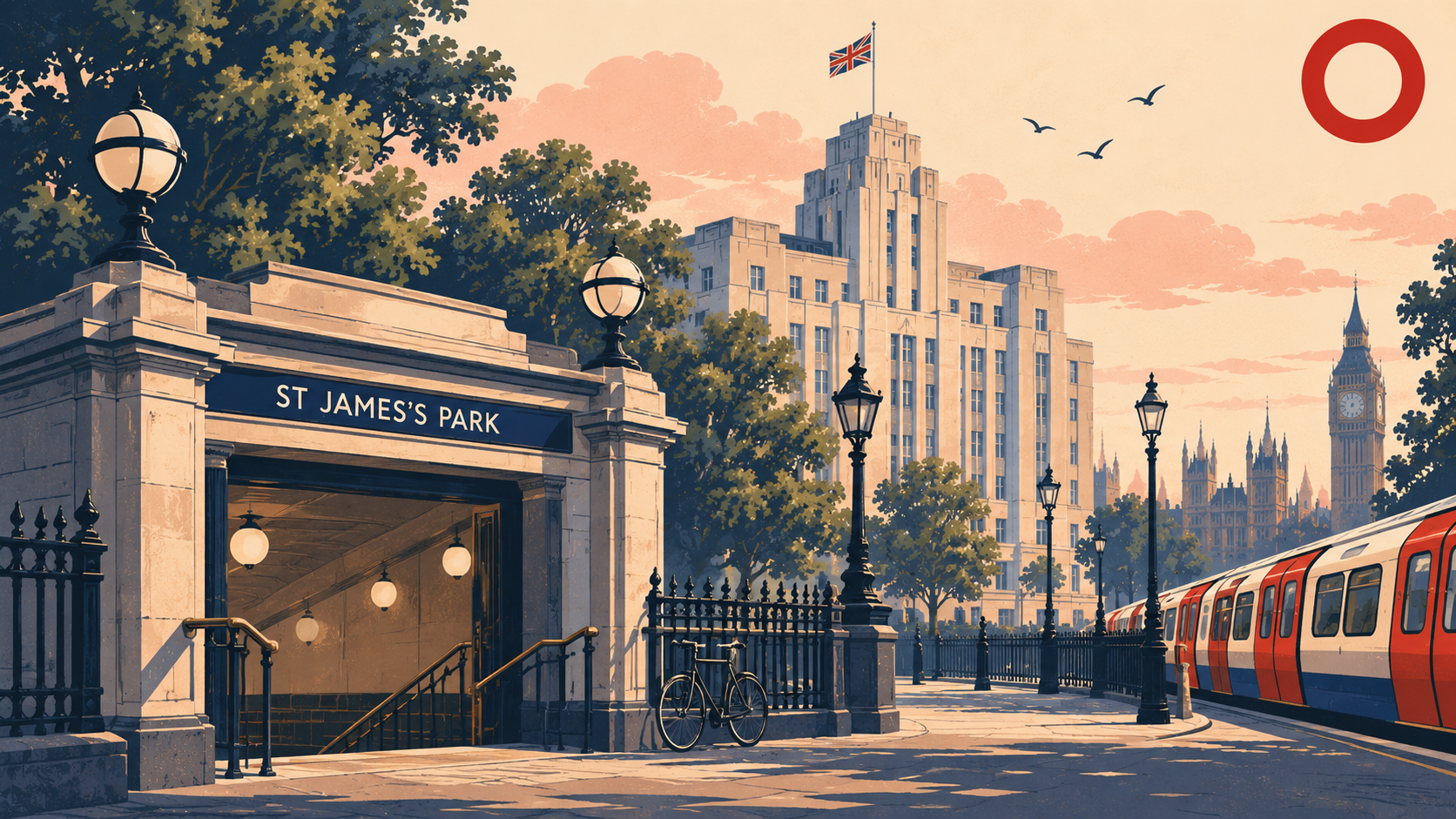
The station itself is modest — no grand Victorian canopy, no dramatic platforms — but its position is extraordinary. It sits on Broadway, directly opposite the art deco headquarters of New Scotland Yard, and within easy walking distance of virtually every major Westminster landmark.
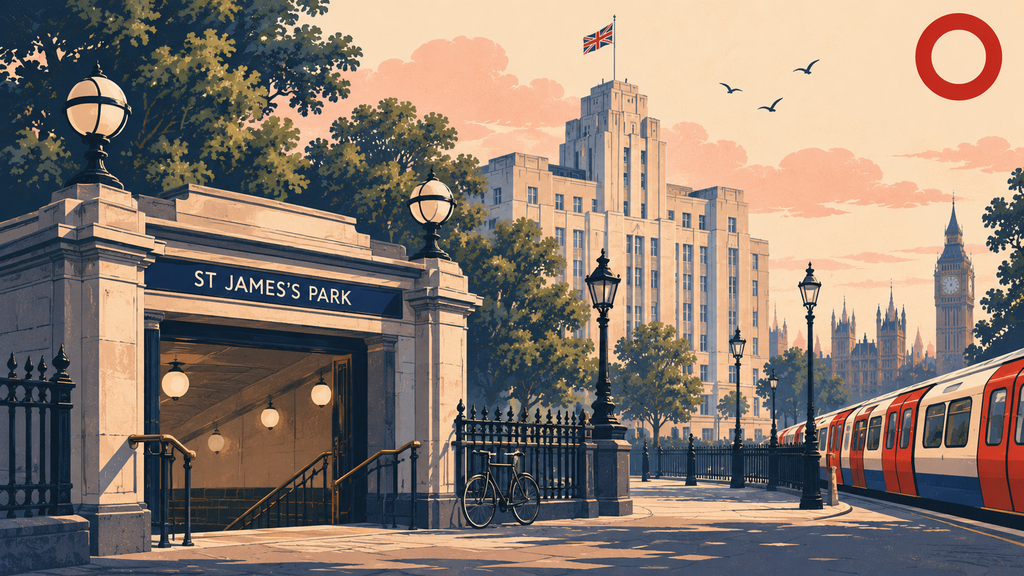
If you’re arriving from Victoria, the walk to St James’s Park is just over 10 minutes through Petty France and Queen Anne’s Gate — a genuinely pleasant route through some of the most architecturally coherent streets in SW1. Don’t automatically reach for the Tube if you’re already at Victoria.
10 Things to Do Near St James’s Park Station
1. Actually Spend Time in St James’s Park
Most visitors walk through St James’s Park on their way to somewhere else. That’s the wrong approach. This is arguably the most beautiful of London’s eight royal parks — more intimate than Hyde Park, more curated than Green Park, with a genuine wildness the flowerbeds of Regent’s Park lack.
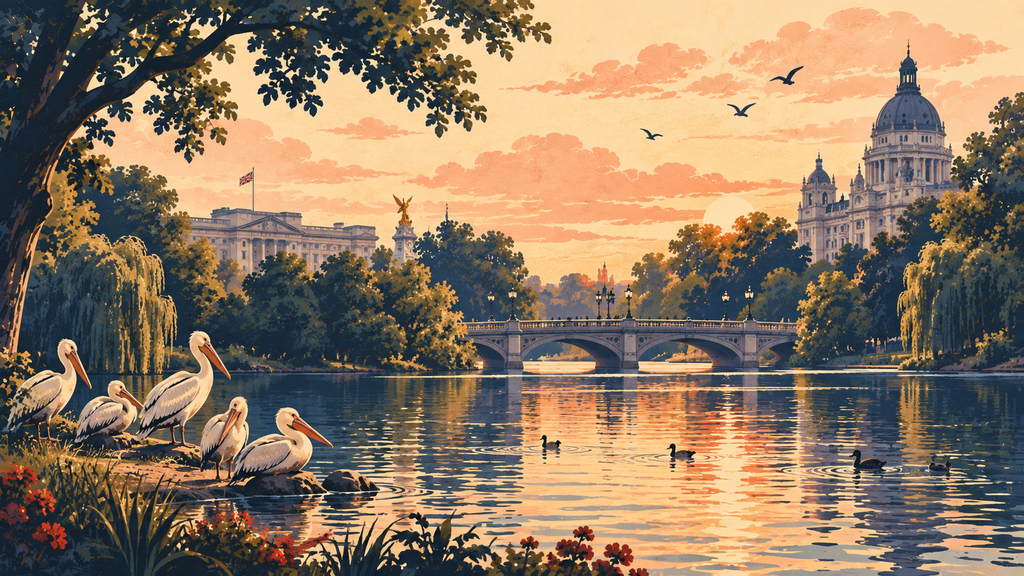
The lake is the centrepiece, home to a famously eccentric pelican colony that’s lived here since 1664, when the Russian ambassador gifted a pair to King Charles II. The pelicans are fed daily around 2.30pm near Duck Island — easy to plan around if you’re travelling with children. The view west from the bridge over the lake — Foreign Office dome on one side, Buckingham Palace on the other — is one of the finest urban vistas in London, and it’s free.
2. Visit Buckingham Palace (Beyond the Railings)
Buckingham Palace is five minutes’ walk from the station. Most people stop at the gates, but there’s more to do here. The State Rooms are open to the public late July through October — 19 lavishly decorated rooms including the Throne Room, the White Drawing Room, and the Picture Gallery, which holds works by Rembrandt, Rubens and Vermeer from the Royal Collection.
The Changing of the Guard runs most days and is one of those London spectacles people dismiss as “too touristy” right up until they see it. It costs nothing. Check the official schedule before you go — it doesn’t run daily.
3. Westminster Abbey: Book Ahead or Regret It
Westminster Abbey is an 8-minute walk and one of the places that earns the word “awe-inspiring” without irony. Every English monarch since 1066 has been crowned here. It’s the burial place of Charles Darwin, Isaac Newton, Geoffrey Chaucer, and seventeen monarchs. The Poets’ Corner — Dickens, Hardy, Tennyson, Kipling — alone is worth the entrance fee.
Queues can be punishing in summer without a pre-booked ticket. Book online. The multimedia guide is genuinely good and included in the price. Evensong services are free to attend most evenings — check the Abbey’s website for times.
4. Trafalgar Square and the National Gallery (Both Free)
Trafalgar Square is a 12-minute walk up through Horse Guards and along Whitehall. It’s London’s unofficial civic centre — where the city gathers for New Year’s, protests, celebrations, and the occasional bewildered tourist.
The National Gallery takes up the entire north side and is free, housing one of the finest collections of Western European painting anywhere. Don’t try to see it all — pick five or six rooms. Van Gogh’s Sunflowers, Van Eyck’s Arnolfini Portrait, and Velázquez’s Rokeby Venus are all here. The café is better and less overpriced than you’d expect.
5. The Houses of Parliament and a Free River Walk
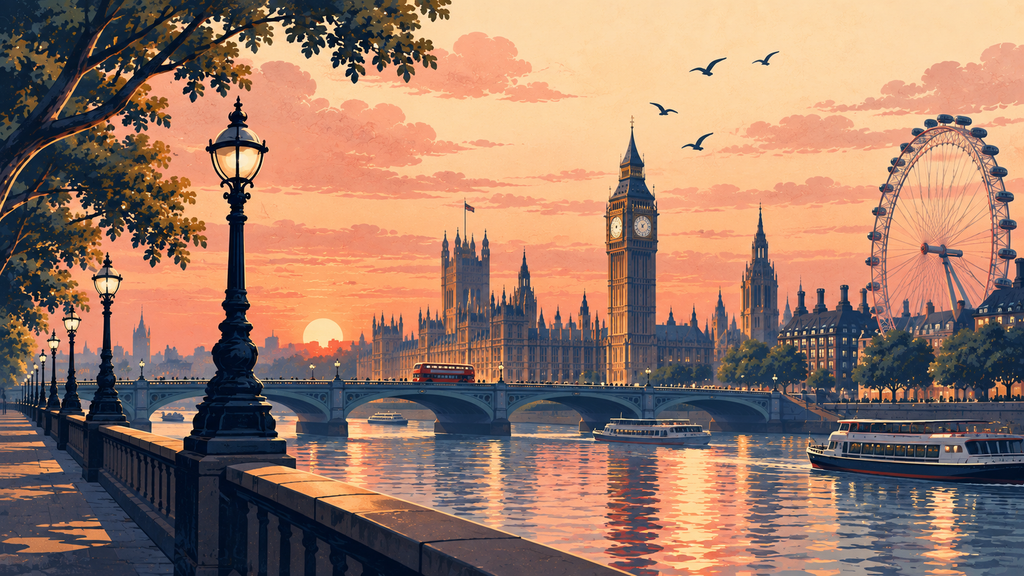
The Elizabeth Tower — universally and incorrectly known as Big Ben — is 10 minutes from the station. UK residents can apply for a free tour of the Houses of Parliament through their MP; international visitors can book paid tours of the Palace of Westminster on weekdays and weekends.
From Parliament Square, a left turn takes you down to Victoria Embankment and a completely free riverside walk with unbroken views across the Thames to the South Bank [LINK → South Bank / London Bridge station spotlight]. Continue east to Waterloo Bridge for one of the best views in London — the curve of the river, St Paul’s, Tate Modern, and the Shard all visible at once. About a kilometre, roughly 20 minutes at a leisurely pace.
6. Churchill War Rooms: London’s Most Underrated Museum
The Churchill War Rooms sit beneath the Treasury, just off Parliament Square, 6 minutes’ walk from the station. This underground complex — from which Churchill directed Britain’s war effort between 1939 and 1945 — has been preserved almost exactly as it was left in August 1945.
The Map Room, where officers tracked the war in real time, is particularly striking, and the Churchill Museum inside has a remarkable interactive timeline. Consistently one of the best-reviewed museums in London, and frequently overlooked in favour of its more famous neighbours [LINK → London Underground’s Secret History post — natural tie-in for underground/wartime tunnel content].
7. The Horse Guards: A Quieter Ceremony
The Changing of the Horse Guards on Whitehall runs 11am Monday–Saturday, 10am Sundays, and draws far smaller crowds than the Palace ceremony. Behind the building, the parade ground opens straight into St James’s Park with no barriers — a pleasant, underused shortcut between Whitehall and the park that most tourists never find.
8. Queen Anne’s Gate: One of London’s Best-Preserved Streets
Two minutes from the station, Queen Anne’s Gate is one of the best-preserved early 18th-century streets in London — original doorway canopies and ornate stonework largely unchanged since 1704. It’s a working street of civil-service offices rather than cafés, which is part of why it’s kept its character.
A short diversion down Old Queen Street and through Cockpit Steps brings you out onto Birdcage Walk with a direct view across St James’s Park — a pleasant 10-minute loop with almost no other tourists.
9. Dinner in St James’s: What’s Actually Worth It
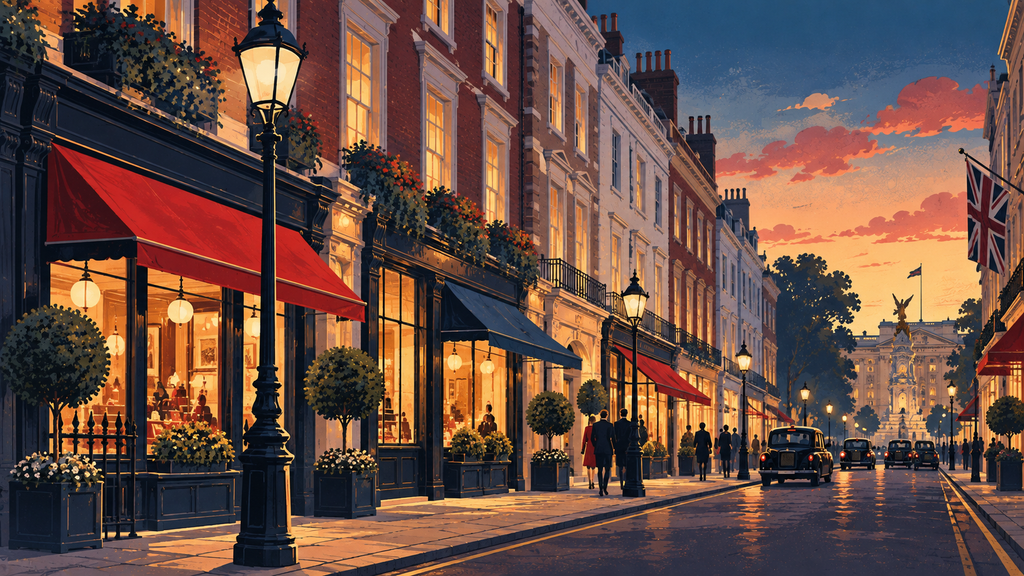
St James’s has a deserved reputation for being expensive, and a somewhat less deserved one for having nothing interesting to eat. The streets between the station and Green Park hold some of London’s finest traditional dining alongside a handful of genuinely good, more reasonable options.
For a special occasion, Wiltons on Jermyn Street has operated since 1742 — the kind of place for Dover sole and an old Burgundy. The Goring Hotel’s dining room, off Beeston Place, is where the late Queen’s family stayed the night before the coronation and serves exceptional British cooking.
For something more everyday, the café in St James’s Park itself is better than a park café has any right to be. The pubs along Strutton Ground, 10 minutes south towards Victoria, are unpretentious, affordable, and off the tourist trail.
Platform to Pub: The Best Pubs Near Tube Stations
10. Take a Thames River Cruise from Westminster Pier
Westminster Pier is a 10-minute walk via Parliament Square. From here, river services run east to Greenwich, Tower Bridge and the O2, or west to Kew Gardens and Hampton Court. This isn’t a tourist gimmick — TfL’s River Bus is a legitimate way to move around the city, and the views from the water are entirely different from anything on land.
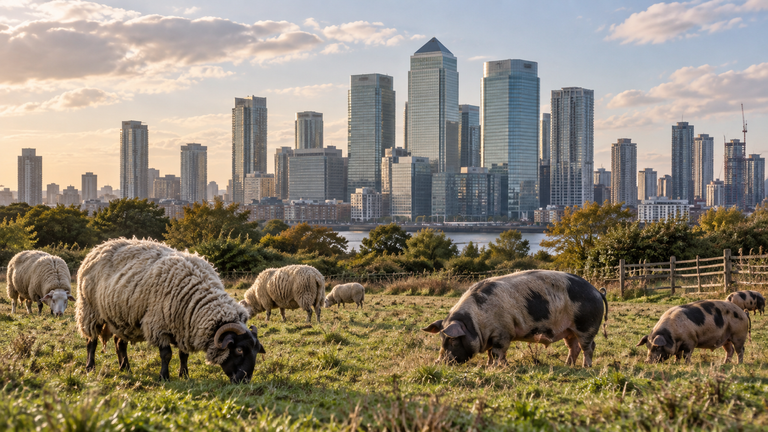
The 90-minute sightseeing cruise to Greenwich takes in the Embankment, St Paul’s, Tate Modern, Tower Bridge, and the Canary Wharf skyline. Arriving at Greenwich by river is considerably more dramatic than arriving by Tube.
Practical Information for Visiting St James’s Park Station
Getting Around From the Station
Almost everything in this guide is walkable — the distances are short and the streets are straightforward. St James’s Park and Buckingham Palace are both under 10 minutes on foot. Westminster Abbey, Parliament and the Churchill War Rooms are all under 15 minutes.
For the National Gallery and Trafalgar Square, the route via Horse Guards Parade is slightly longer than the direct route but dramatically better. Follow the signs through the Horse Guards arch, across the parade ground, and up towards the Mall.
Accessibility at St James’s Park Station
St James’s Park station is not step-free — there are stairs between street level and the platforms, and no lift access. If you need step-free access, Victoria station is four stops west and fully accessible, with a walk of around 20 minutes to Buckingham Palace.
St James’s Park itself is largely flat and accessible on foot. The Churchill War Rooms has lift access throughout. Westminster Abbey has limited step-free access — check the website before visiting.
Best Time to Visit
This part of London is busy all year, at all times of day. Summer mornings before 10am give you the parks and the Palace forecourt at their most peaceful. The Churchill War Rooms are busiest midday and in the afternoon — arrive at opening, 9.30am, if you can.
Spring (April–May) is probably the best time to visit St James’s Park specifically — the pelicans are active, the blossom is out, and the lake view is at its best. Christmas in London brings lights along Regent Street and Trafalgar Square, and the park takes on a quieter character in December that many visitors find more appealing than the summer crowds.
Where to Go Next on the Tube
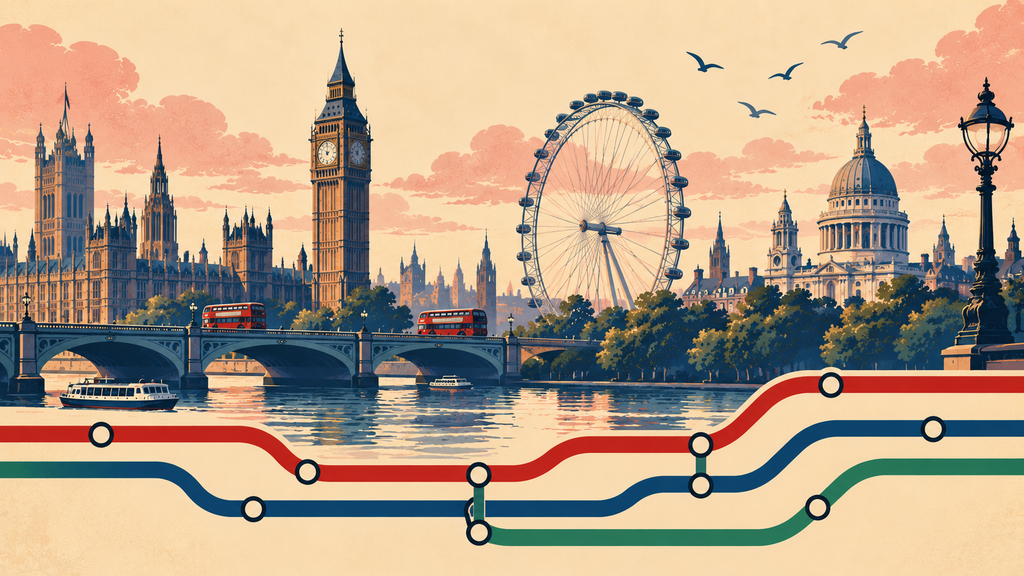
St James’s Park station sits on both the District and Circle lines, putting you within a few stops of several of London’s most rewarding neighbourhoods:
- Victoria (1 stop west) — mainline connections, the coach station, the V&A nearby
- Embankment (3 stops east) — the South Bank, Tate Modern, Borough Market, Southwark Cathedral
- Tower Hill (6 stops east) — the Tower of London, Tower Bridge, St Katharine Docks
- Notting Hill Gate (District line west) — Portobello Road Market and one of London’s most atmospheric neighbourhoods
Planning a longer trip? See our London First-Timer 3-Day Itinerary for how St James’s Park fits into a complete Tube-based visit, or check the full District line guide for everything else along the route.