Cheap London by Tube: A Free and Low-Cost Day Out Across the City
London has a reputation for being an expensive city to visit — and in plenty of ways, it is. But the reputation is only half-earned. Pair the Tube network with the city’s astonishing concentration of free museums, markets, and green spaces, and it’s entirely possible to have a brilliant, full day out in London without spending much beyond your travel fare.
This is a genuine, workable day plan — not a “free things to do” listicle padded out with attractions that turn out to have a hidden charge. Everything below is either completely free to enter or costs next to nothing, and every stop is organised by the Tube station that gets you there.
Why the Tube Makes Cheap London Possible
London’s best free attractions are scattered across the city, but they cluster naturally around a handful of Tube lines. Once you know the zones, a low-cost day isn’t about hunting for bargains — it’s about sequencing your stops so you’re not doubling back across town and burning money and time on unnecessary journeys.
A few ground rules before you set off:
- Use contactless or an Oyster card, not paper tickets — daily fare caps mean you’ll never pay more than the Zone 1–2 cap for a day of travel, no matter how many journeys you take.
- Travel off-peak where you can (after 9:30am on weekdays) for the cheaper fare band.
- Free doesn’t mean donation-free — most of the museums below rely on voluntary donations. If the day works out cheaper than expected, consider dropping a few pounds in the box.
The Route: A Free and Low-Cost Day by Tube
Morning: South Kensington — Three World-Class Museums, Zero Entry Fee
Start at South Kensington station (Circle, District, Piccadilly lines). Within a five-minute walk of each other sit the Natural History Museum, the Science Museum, and the V&A — three of the best museums in the world, and all completely free to enter (special exhibitions are the exception, and easy to skip).
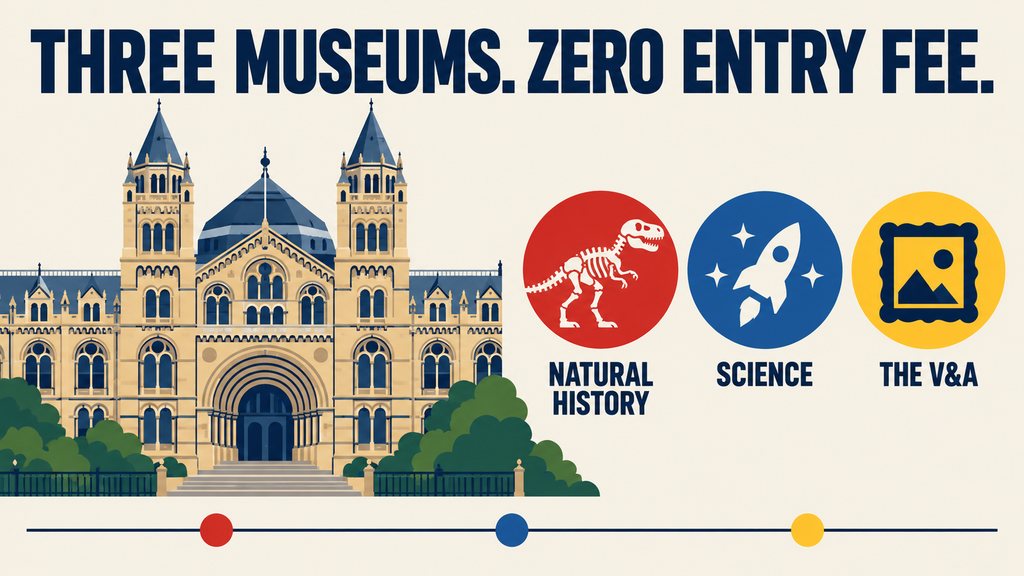
You won’t manage all three properly in one morning, so pick one as your main visit and pop into a second for an hour. The Natural History Museum’s dinosaur gallery and the Science Museum’s interactive galleries are the strongest picks if you’re short on time.
Cost: Free entry. Budget a few pounds for a coffee or snack if you want one.
Midday: Borough Market — Browse First, Buy Selectively
Take the Tube to London Bridge station (Jubilee, Northern lines) for Borough Market. Entry is free, and simply walking through one of London’s oldest food markets — cheesemongers, bakers, coffee roasters, spice stalls — is an experience in itself, even if you don’t buy a thing.
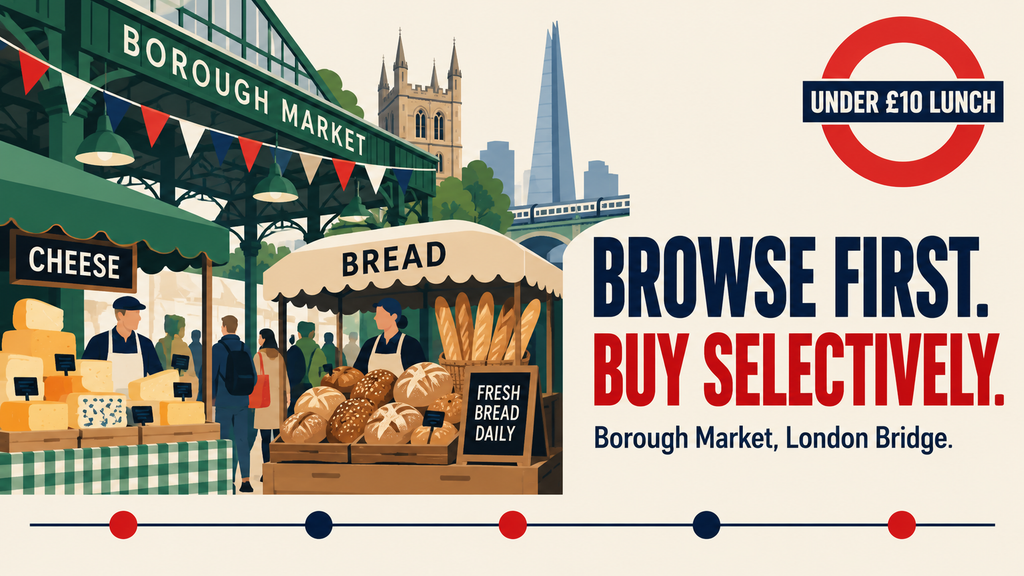
If you do want lunch, look for the market’s cheaper stalls (bread and cheese, a filled roll, a bag of dumplings) rather than the sit-down options — you can eat very well here for under £10.
Cost: Free to browse; £5–10 for a market lunch if you choose to eat.
Afternoon: The South Bank — Free Views, No Ticket Required
From London Bridge, it’s a pleasant 15-minute walk (or one stop on the Tube to Waterloo, Jubilee/Bakerloo/Northern lines) to the South Bank. Walk the riverside path towards Westminster and you’ll pass the Tate Modern (free permanent collection), the Globe Theatre exterior, and some of the best free skyline views of St Paul’s and the City across the river.
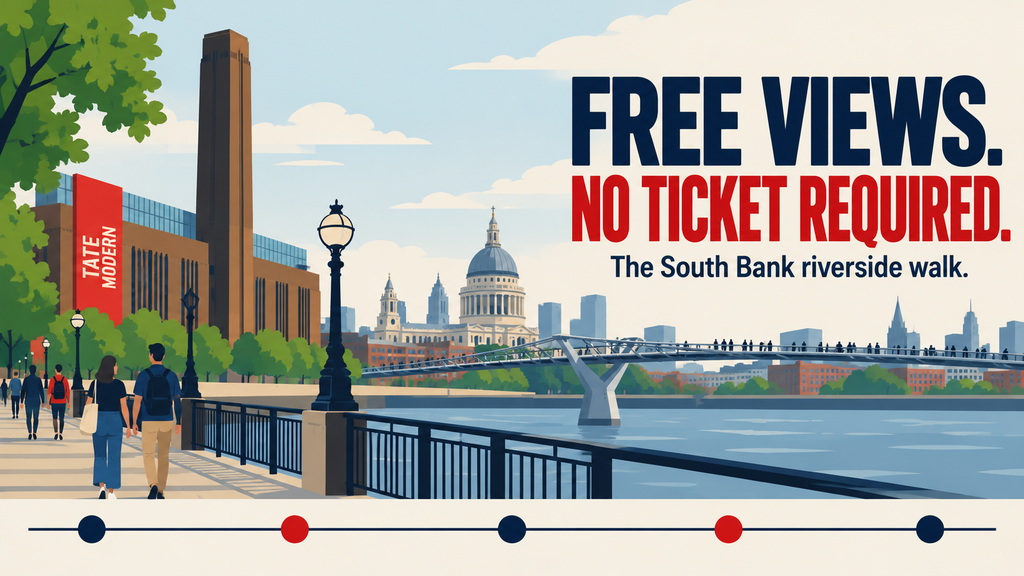
The Tate Modern is worth the stop alone — a major international modern art collection with completely free entry to its permanent galleries.
Cost: Free.
Early Evening: Hyde Park or Green Park — The Free Wind-Down
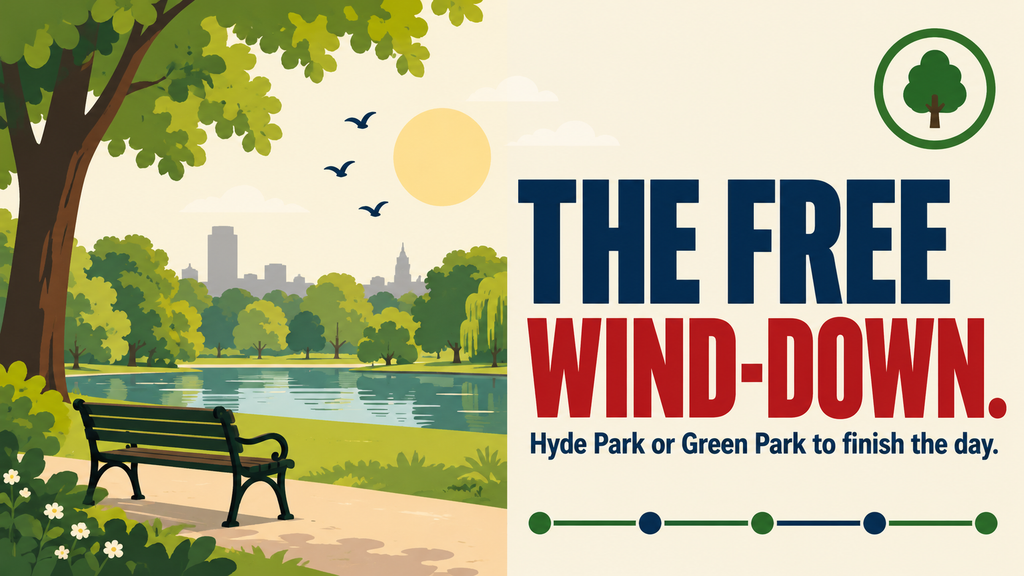
Finish the day somewhere green. Hyde Park (Marble Arch or Hyde Park Corner, Central/Piccadilly lines) or Green Park (Piccadilly, Jubilee, Victoria lines) are both free to enter and are the perfect low-cost way to end a long day of walking — a bench, some open grass, and no admission charge in sight.
Cost: Free.
What the Day Actually Costs
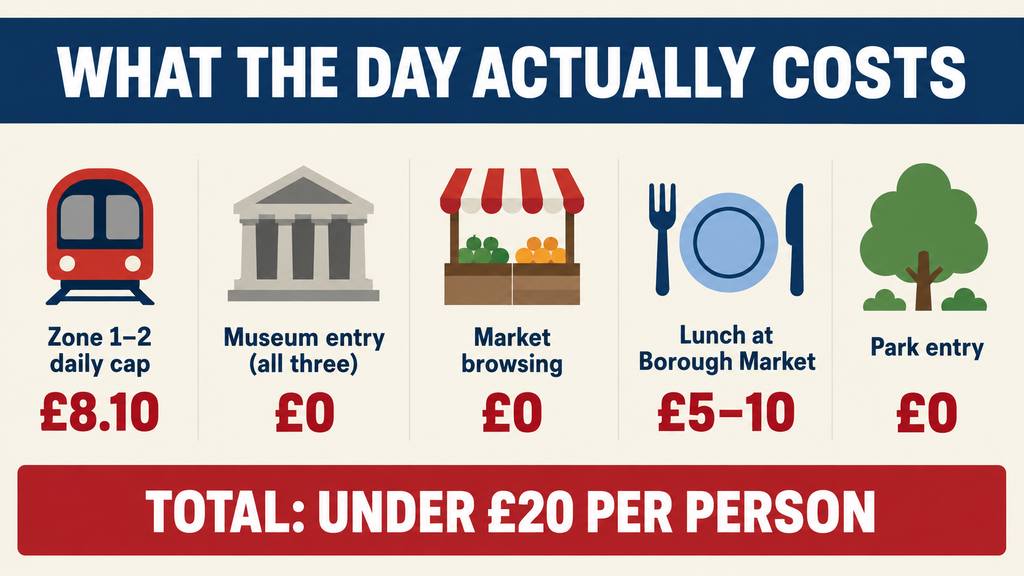
That figure assumes you’re paying for your own lunch and nothing else. Skip the market lunch and bring your own sandwich, and the day drops to little more than the cost of your Tube travel.
A Note on the London Pass
If you’re planning to visit several paid attractions during your wider trip — the Tower of London, Westminster Abbey, a river cruise — the London Pass can work out significantly cheaper than paying for each one separately. It isn’t necessary for the free day out above, but it’s worth factoring into your planning if this low-cost day is one of several during a longer visit, some of which include paid sights.
Where to Stay for a Budget-Friendly Trip
If you’re planning your whole visit around low-cost days like this one, staying in Zone 2 rather than Zone 1 will usually get you a noticeably cheaper room without adding much to your Tube costs, thanks to the daily fare cap. Areas around Zone 2 stations on the Circle, District, or Piccadilly lines put you within easy, cheap reach of everything in this itinerary. Compare budget-friendly options near these stations here.
Final Tip
The single biggest cost risk on a “free” London day is impulse spending — a paid special exhibition, an expensive coffee chain, a taxi because your feet hurt. Build in one proper sit-down break, wear comfortable shoes, and the free version of London holds up remarkably well against the version everyone assumes costs a fortune.