London Public Transport Guide for Tourists: 5 Tips for Getting Around Like a Local
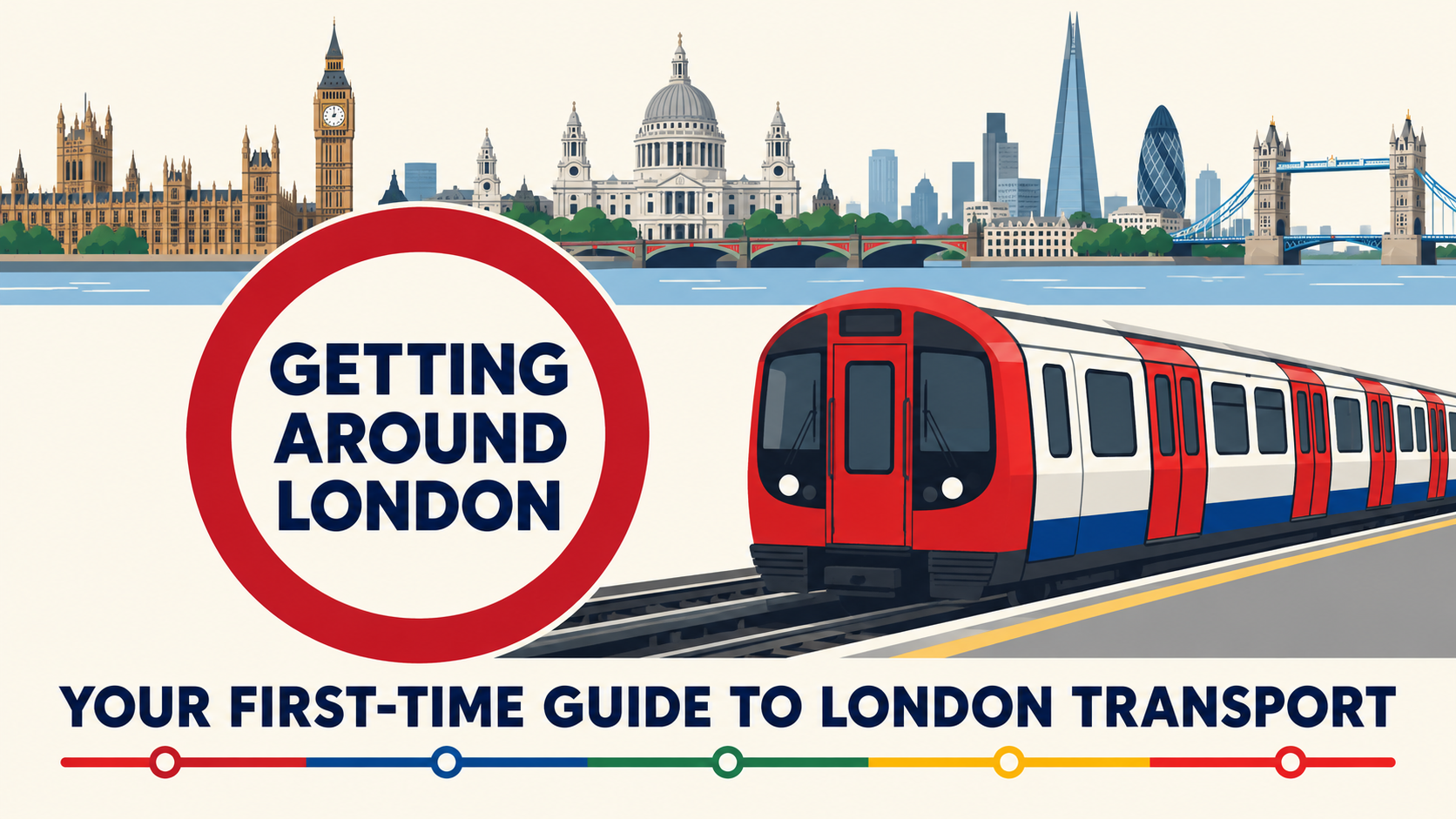
London is one of the easiest big cities in the world to explore once you understand how to move through it — and nearly everything comes down to one network: the Tube. This London public transport guide for tourists covers the five things that make the biggest difference on your first trip, from choosing between the Underground, buses and Overground, to paying the right way, to a few phrases that’ll make you look like you’ve done this before.
If you want the deeper version of any of these topics, we’ve written full guides for each — linked throughout below.
1. Plan Your Routes Before You Arrive
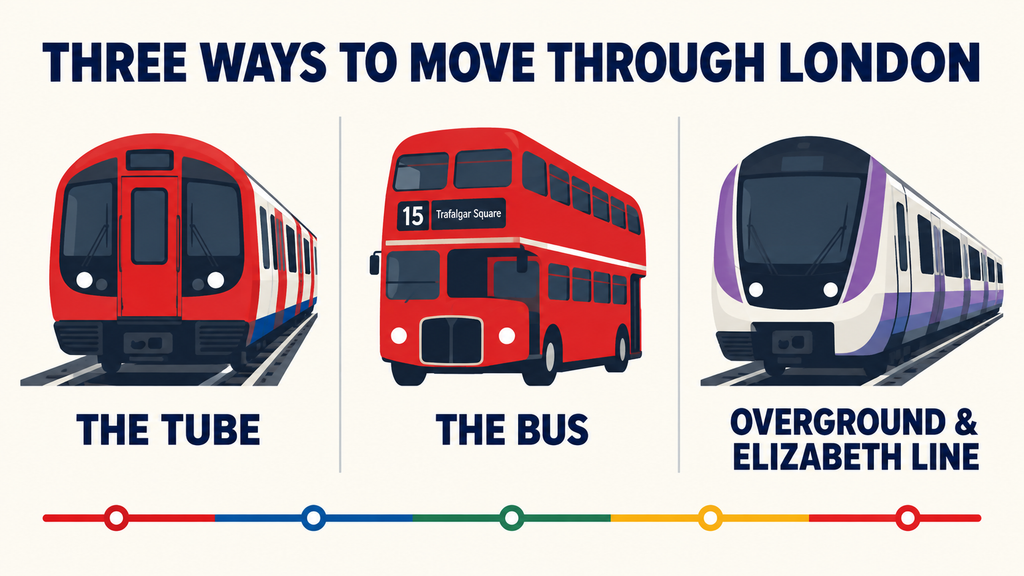
Before you land, it’s worth understanding the three main ways to get around: the red double-decker buses, the London Underground (the Tube), and the Overground and Elizabeth line, which cover the areas the Tube doesn’t reach as directly. Knowing roughly which network serves your route saves real time once you’re on the ground, especially in Zone 1 where several lines overlap at the same station.
This is also the point to start thinking about [INTERNAL LINK → “The Complete Guide to London’s Tube Zones, Fares & Oyster Card in 2026”], since your route planning and your ticket choice are really the same decision. If your trip includes a lot of east London, [INTERNAL LINK → “The Elizabeth Line Explained: Everything First-Time Visitors Need to Know”] is worth reading in advance — it’s often the fastest way between Heathrow, Paddington and Canary Wharf.
2. Get Contactless or an Oyster Card — Not Paper Tickets
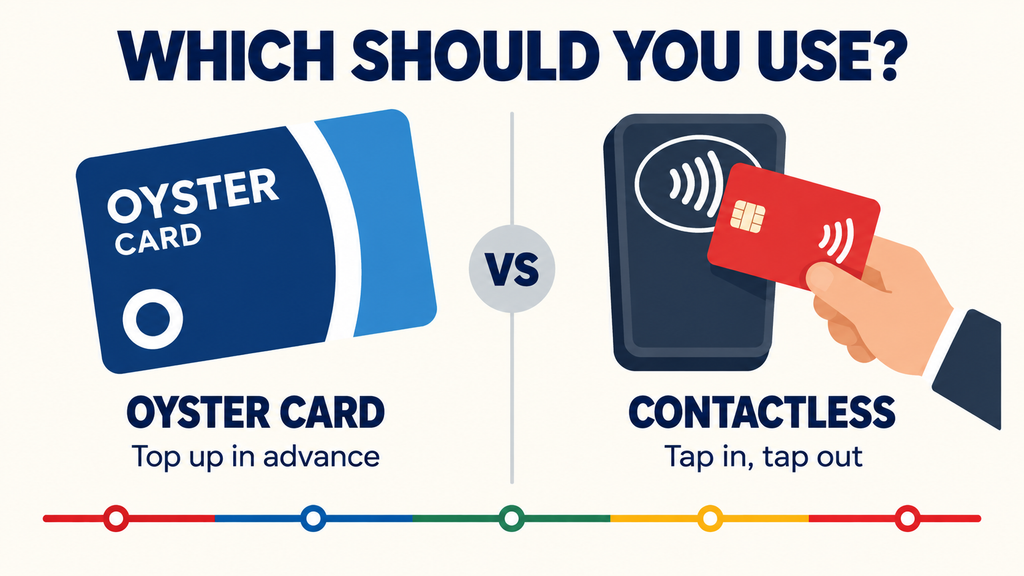
The Oyster card used to be the obvious answer, but in 2026 most visitors are better off tapping in with a contactless bank card or phone — it applies the same daily and weekly fare caps automatically, with no top-up queue and nothing to lose. An Oyster card is still worth it in specific situations (some visitors from countries with high card fees, families using Zip cards for kids), but for most people, contactless is simpler.
For the full breakdown of which is actually cheaper for your situation, see Oyster Card vs Contactless in 2026: Which Should You Use.
3. Download the Right Apps Before You Land
Transport for London (TfL) runs the official TfL Go app for journey planning and live bus arrivals, and it’s worth pairing with Citymapper or Google Maps, which are often quicker to reroute you around a closure. Load these before you arrive so you’re not relying on hotel wifi on day one.
This is also the moment to check whether your route includes any stations currently affected by engineering works or step-free access — worth a quick look at Step-Free London by Tube: A Guide to Accessible Stations and Routes if you’re travelling with a buggy, luggage, or reduced mobility, and How to Navigate London When There’s a Tube Strike: A Practical Survival Guide if your trip falls near a planned strike date.
4. Learn a Few Bits of Local Tube Lingo
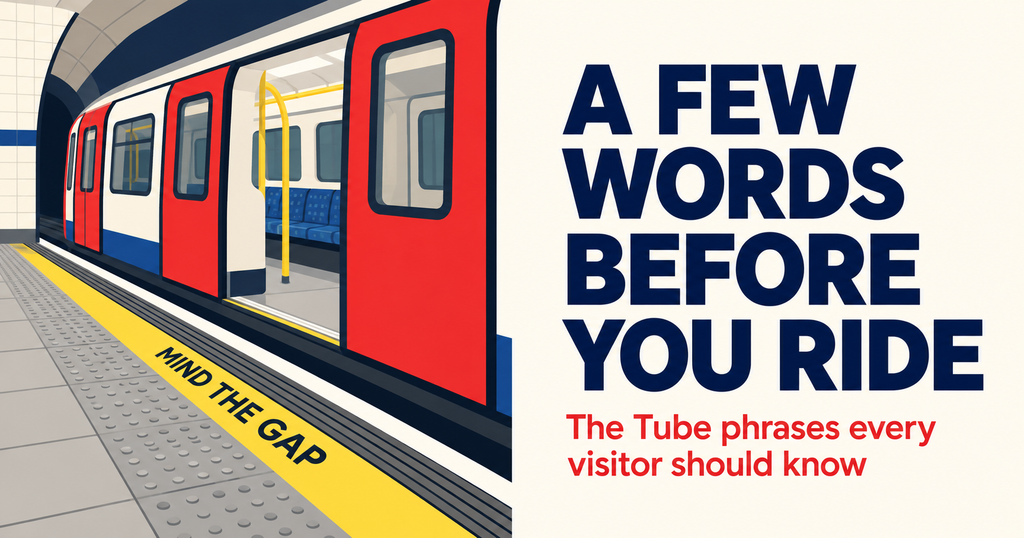
You’ll hear “mind the gap” on the Circle, District, Piccadilly and Bakerloo lines, warning you about the gap between the train and a curved platform. “Alight here” means get off. Standing on the right on escalators isn’t a suggestion — it’s the one rule Londoners will silently judge you for breaking. None of this is essential, but it’s the kind of small detail that makes a first trip feel less overwhelming.
5. Stay Alert, Especially at Interchange Stations
London’s biggest interchange stations — King’s Cross, Oxford Circus, Bank — get genuinely crowded at peak times (roughly 7:30–9:30am and 5–7pm on weekdays). Keep bags zipped and to the front on packed platforms, and if you can, shift travel outside those windows. It’s also worth building a little slack into your plans around these stations rather than treating a 4-minute interchange as guaranteed.
If your trip includes King’s Cross, our full neighbourhood guide — King’s Cross & St Pancras by Tube: The Complete Local Guide — covers what to do there beyond just passing through.

Getting Around Like a Local
Plan your route, tap in with contactless, keep TfL Go or Citymapper open, pick up a bit of Tube etiquette, and stay switched on at the busy interchanges — that’s genuinely most of what separates a stressful first day in London from an easy one. Once the basics are second nature, the Tube stops being an obstacle and starts being the fastest way to actually see the city.
Want the full route for your first trip? Read our London for First-Time Visitors: The Ultimate Tube-Based 3-Day Itinerary