The Secret Sound of London: A Guide to Busking on the Underground
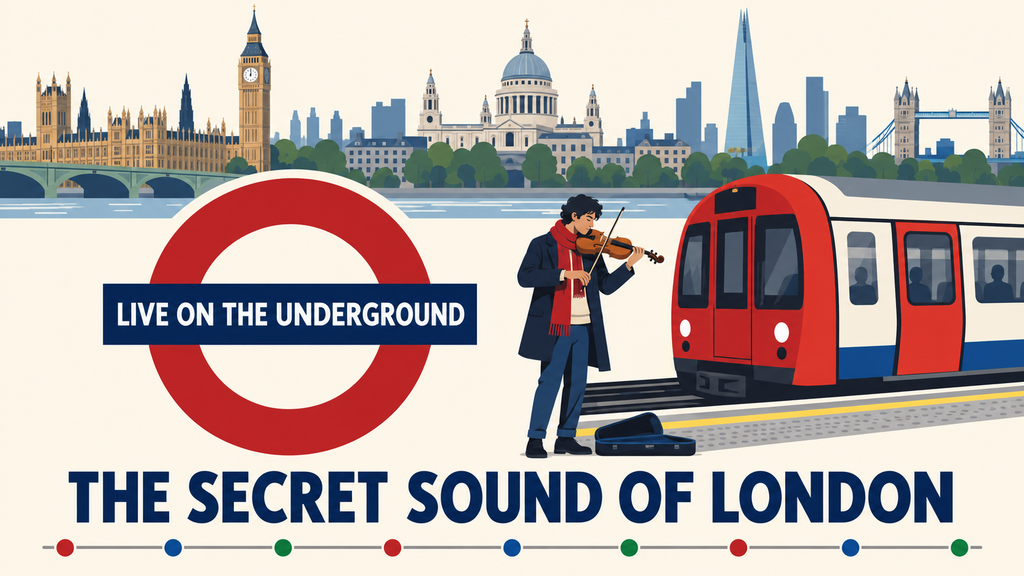
Spend enough time on the Tube and you stop noticing the announcements, the rattle of the doors, the recorded voice reminding you to mind the gap. What you don’t stop noticing is the music. London’s Underground has one of the most curated live-performance circuits in the world — and almost none of it happens by accident.
The London Underground’s Secret History
Which Stations Actually Sound Best
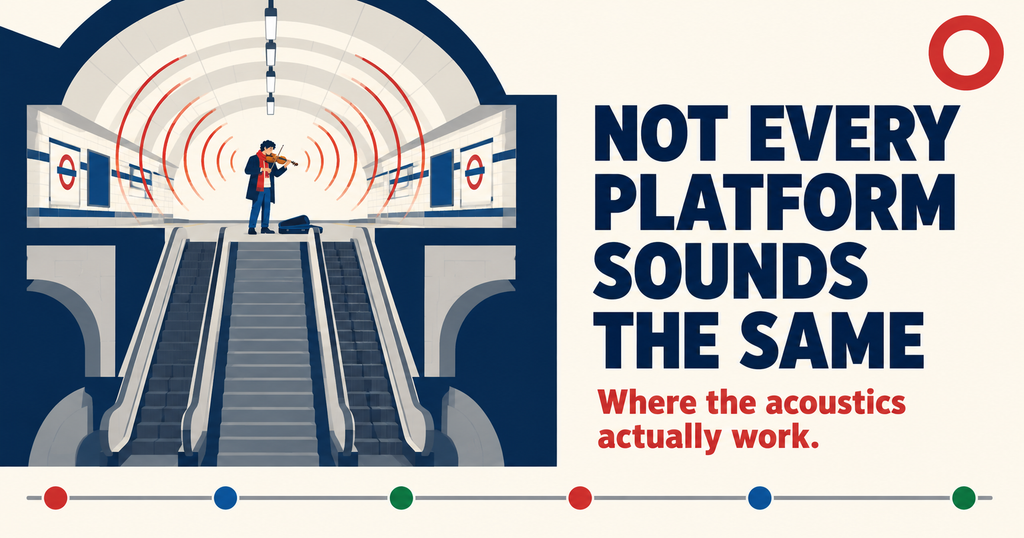
Not every platform is created equal, acoustically speaking. Westminster station, with its cavernous, exposed-concrete escalator shafts, has a natural reverb that suits classical and choral performers — it’s one of the few pitches where a solo cellist can genuinely fill the space. The South Bank entrance at Waterloo trades acoustics for footfall: it’s less about the sound and more about the sheer volume of people passing through, which makes it a favourite for performers who thrive on a crowd. King’s Cross St Pancras‘s long, tiled tunnels create a natural amplification effect that string instruments in particular seem to love. And Leicester Square has become an unofficial proving ground — Theatreland’s foot traffic means a strong pitch there can genuinely put a performer in front of an industry audience.
The Busking Licence: Rules of the Underground
Here’s what most visitors don’t realise: you can’t just turn up and play. Performing on the Underground requires an official TfL busking licence, awarded through a competitive audition process — which is exactly why the standard is consistently so high. Licensed performers carry a visible permit and are assigned to one of 39 official pitches across the network, each allocated on a rota system so performers don’t compete for the same spot at the same time.

Beyond the Tube: Street Performance Hotspots
Step above ground and the scene widens considerably. Covent Garden’s cobbled piazza has launched genuine careers, with designated pitches hosting everything from opera singers to circus performers. The South Bank walkway along the Thames is prime weekend territory, with the Shard, the Eye, and St Paul’s as a backdrop most performers would pay for. Portobello Road leans folk and vintage, especially on market days, and rewards an unhurried wander rather than a fixed itinerary.
The Changing Seasons of Street Music
London’s busking scene has a rhythm of its own, tied to the calendar as much as the Tube map. Summer draws performers into parks and open squares; the festive period brings out carol singers and seasonal instrumentalists in force. On wet days, the action shifts underground and into covered market halls — which means the performer you see in January is rarely the one you’d catch in July. If you’re planning a trip around a particular kind of performance, timing your visit matters as much as choosing your station.

Etiquette for Enjoying Buskers in London
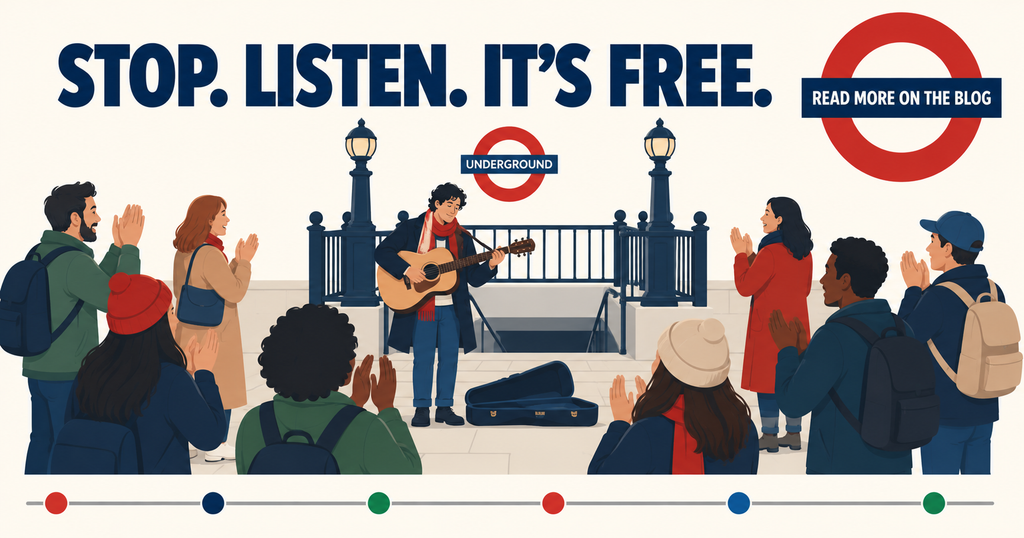
If a performance stops you in your tracks, the unwritten rule is simple: show it. That doesn’t have to mean money, although tips are always welcome — a moment of real attention, applause, or a share on social media matters more than people think. Buskers rely on visible engagement to draw a crowd in the first place, so stopping to listen isn’t just polite. It’s actively part of how the whole system works.
A Cultural Legacy Worth Protecting
Busking in London isn’t a modern novelty — it’s a tradition that stretches back to medieval street performance, and today’s licensed Tube musicians are the latest link in a very long chain. Next time you’re rushing for a train or wandering along the Thames, it’s worth the thirty seconds to stop and listen. It’s one of the few genuinely free things London still does exceptionally well.