London Underground Transfers: A Local’s Complete Guide
Mastering London Underground transfers is the single biggest skill that separates a stressful Tube trip from a smooth one. Whether you’re visiting for the first time or you’ve done this a dozen times before, knowing exactly where and how to change lines will save you time, cut down on wrong turns, and make the whole network feel far less intimidating.
This guide walks through the busiest interchange stations, the tickets that make transfers painless, and what to do if you end up going the wrong way (it happens to everyone).
Why the Tube Feels Overwhelming at First
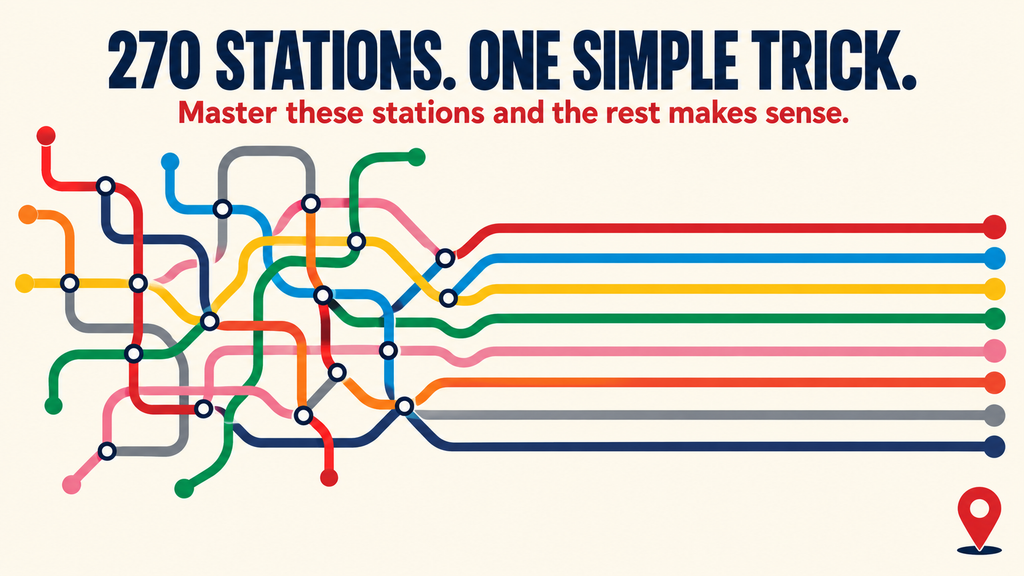
The London Underground is made up of 11 lines and around 270 stations, and at first glance the map can look like a plate of spaghetti. Add in rush-hour crowds, unfamiliar ticket gates, and platforms that split by direction rather than by line, and it’s easy to see why so many visitors find their first few transfers confusing.
The good news: almost all of that complexity comes down to a handful of key stations doing most of the work. Learn those, and the rest of the network starts to make sense.
London Tube Zones & Fares Guide
Before You Go: Tickets and Timing
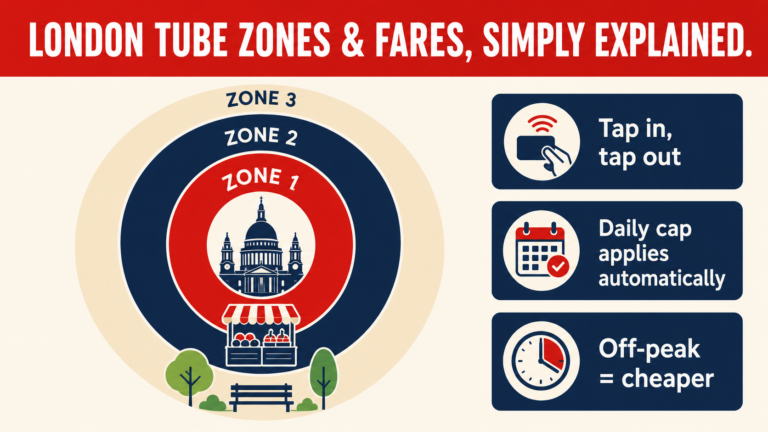
You’ll move through transfers far more easily if your ticketing is sorted before you set off. Contactless bank cards and Oyster cards both work at every gate and automatically cap your daily spend, so there’s no need to plan a “perfect” ticket type in advance.
It’s also worth timing your journey around peak hours (roughly 7:30–9:30am and 5–7pm on weekdays) if you can. Interchange stations are where crowding is worst, and a transfer that takes 90 seconds at 11am can take five minutes at 8:30am.
Oyster Card vs Contactless guide.
The Key Interchange Stations to Know
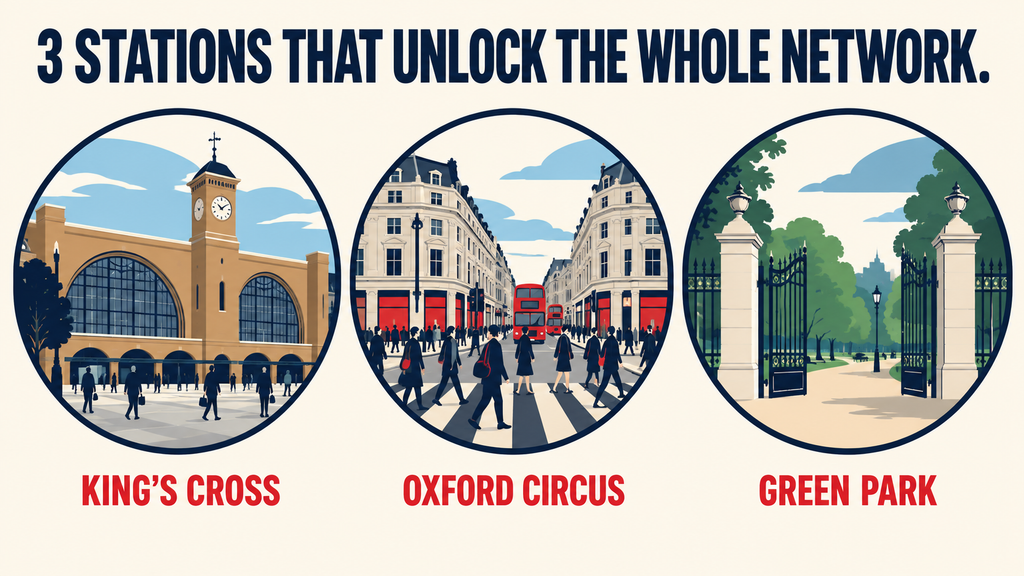
A small number of stations act as the real hubs of the network. Knowing these will make almost every journey easier.
King’s Cross St Pancras
The busiest interchange on the network, connecting six lines as well as national and international rail. It’s also worth a stop in its own right — the area above ground has changed dramatically over the last decade.
King’s Cross & St Pancras station spotlight.
Oxford Circus
The meeting point of the Central, Bakerloo, and Victoria lines, right in the middle of the West End. It’s busy at almost any hour, but well signposted, and it’s a natural jumping-off point for shopping and theatre.
Internal link opportunity → link to your Oxford Circus station spotlight.
Green Park
Connects the Jubilee, Piccadilly, and Victoria lines, and sits a short walk from Buckingham Palace — a useful interchange to know if your day includes any of the big central London sights.
Five Tips for Seamless Transfers
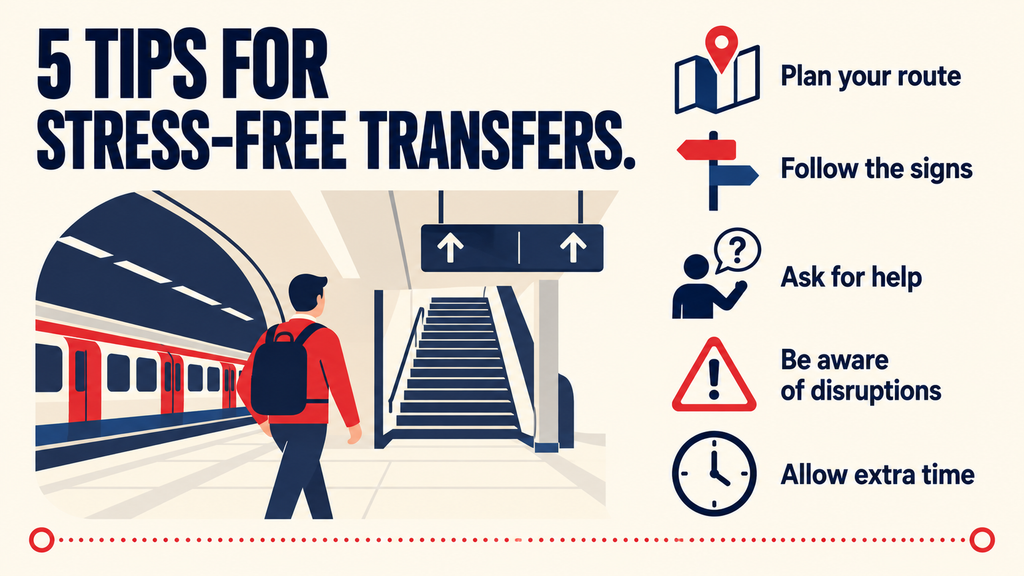
- Plan the route before you go. Citymapper and Google Maps both show real-time platform and transfer information.
- Follow the coloured signage. Every interchange is signposted by line colour and direction — look up, not down.
- Ask TfL staff if in doubt. They’re used to the question and would rather help than watch someone circle a station twice.
- Watch the gap, not just your phone. Platform edges at interchange stations can be uneven; mind the gap boarding and alighting.
- Build in a buffer for busy hubs. King’s Cross and Oxford Circus in particular are not the place to cut a connection close.
What to Do If You Get Off at the Wrong Stop
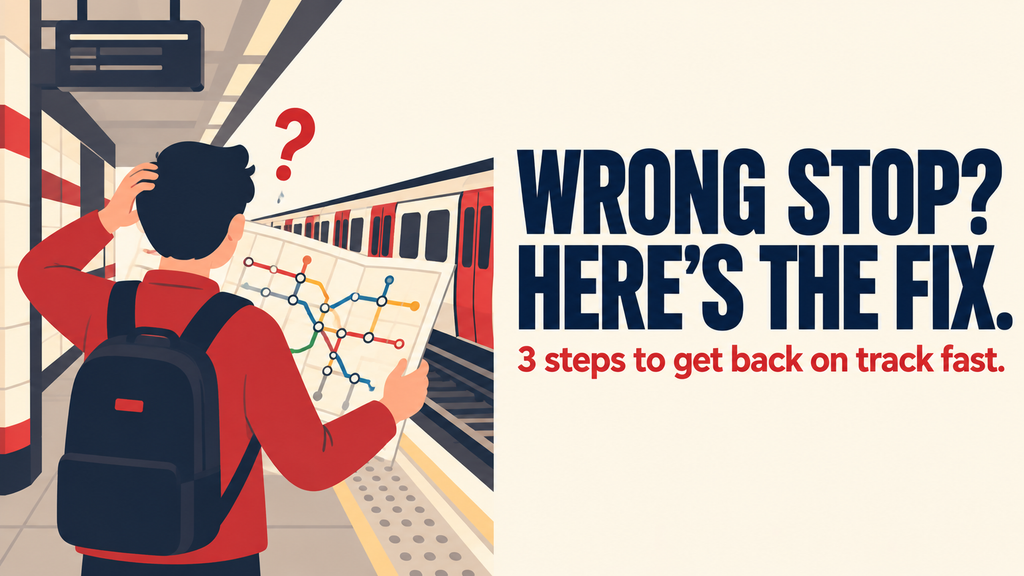
It happens to Londoners as often as visitors. If you end up somewhere unexpected:
- Stay on the platform and check the map before moving — most wrong turns are one stop, not ten.
- Look for a staffed help point or a member of TfL staff in a red or blue uniform.
- Reopen your maps app and let it recalculate — it will usually route you back in under a minute.
Accessibility and Step-Free Transfers
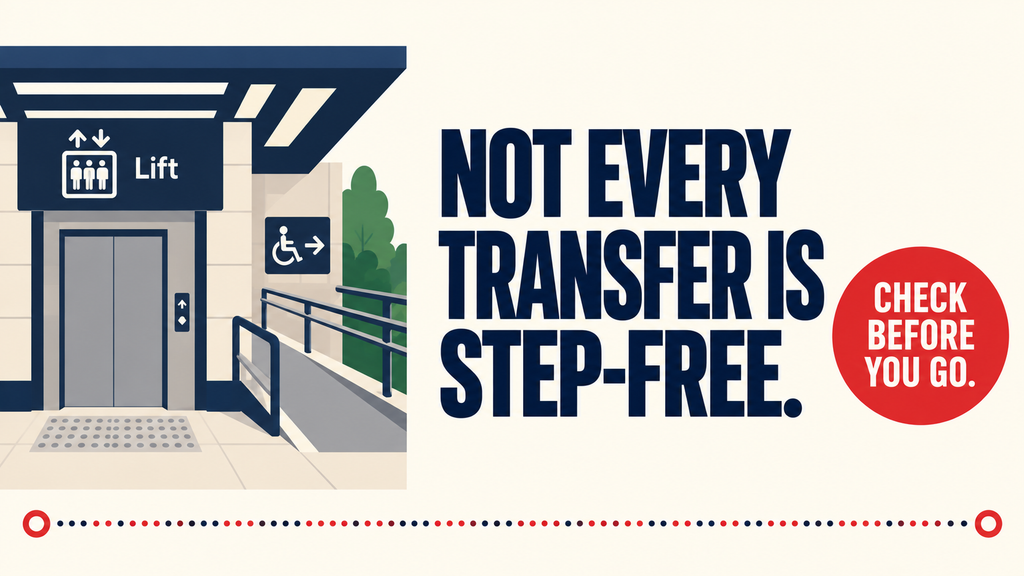
Not every station has step-free access from street to platform, and even fewer have step-free access between platforms at an interchange — this is worth checking in advance if you’re travelling with a buggy, heavy luggage, or a mobility need.
Internal link opportunity → link “step-free access” to your Step-Free London by Tube guide.
TfL’s own TfL Go app shows live lift status and step-free routes station by station, which is worth having open if accessibility is a factor in your journey.
Make the Most of Waiting Time
A transfer with a short wait isn’t dead time. Several interchange stations — Baker Street, Westminster, and Covent Garden among them — have genuinely interesting architecture and history worth a glance while you wait. It’s also a good moment to double-check opening times or book a ticket for wherever you’re headed next.
London First-Timer 3-Day Itinerary
Coming From the Airport?
If your first Tube transfer of the trip starts at Heathrow, it’s worth planning that leg specifically — the options and journey times differ more than people expect.
Heathrow to Central London by Tube guide.
Final Thought
Transfers are the one part of using the Tube that genuinely gets easier with a little preparation. Learn the handful of stations doing most of the work, sort your ticket before you travel, and build in a little patience for the busiest hubs — and the rest of the network stops feeling complicated almost immediately.