The Most Beautiful London Underground Stations (A Line-by-Line Guide)
There are 272 stations on the London Underground. Most are functional, a handful are forgettable, and a surprising number are genuinely extraordinary. Here are the ones worth slowing down for — and which lines will take you there.
The London Underground is 163 years old. That is a long time to accumulate architectural ambition, and the network has — from Victorian Gothic to Art Deco to brutalist concrete to contemporary glass. Most visitors treat the Tube as a means to an end: something to endure between attractions. That is a mistake. Several of the most remarkable interiors in London are underground, accessed for the price of a standard single, and almost entirely ignored by the millions of passengers who pass through them every year.
This post will not send you on a heritage tour of stations you have seen in every travel guide. Some of the entries below are famous. Others you will only notice if you know to look up.
Aldwych — Piccadilly Line (Closed)
Before the stations that are open, let us deal briefly with the one that is not. Aldwych closed to regular passengers in 1994 and now operates as a filming location and occasional heritage open day venue. It is worth mentioning here because it is the single best-preserved example of early twentieth-century Tube station design anywhere on the network — tiles intact, enamel signs untouched, the whole place suspended in 1907. If TfL announces an open day (they do occasionally, usually for London Open House weekend in September), go. It looks exactly like what the rest of the network used to be.
Baker Street — Circle, Hammersmith & City, Jubilee, Metropolitan, Bakerloo Lines
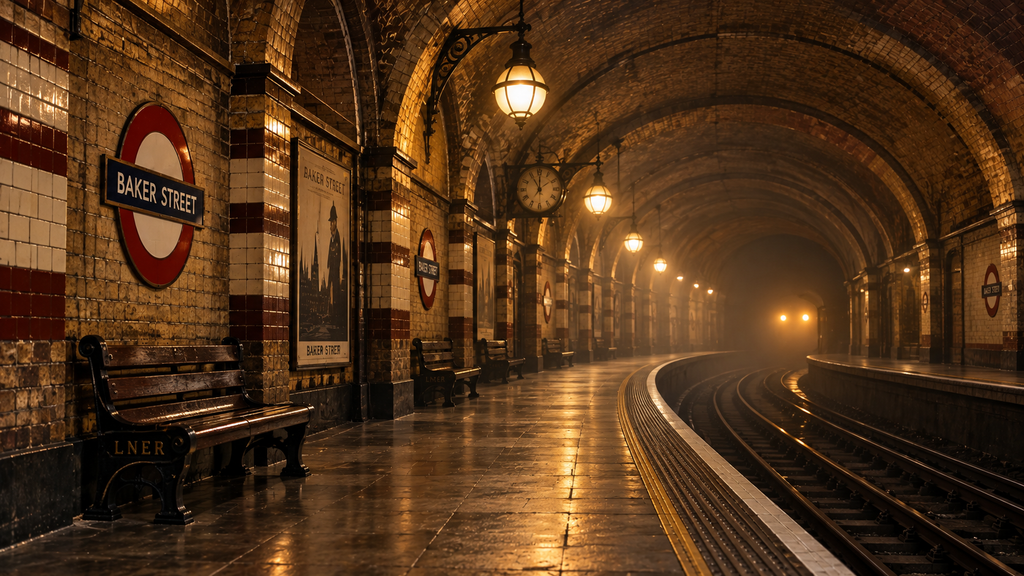
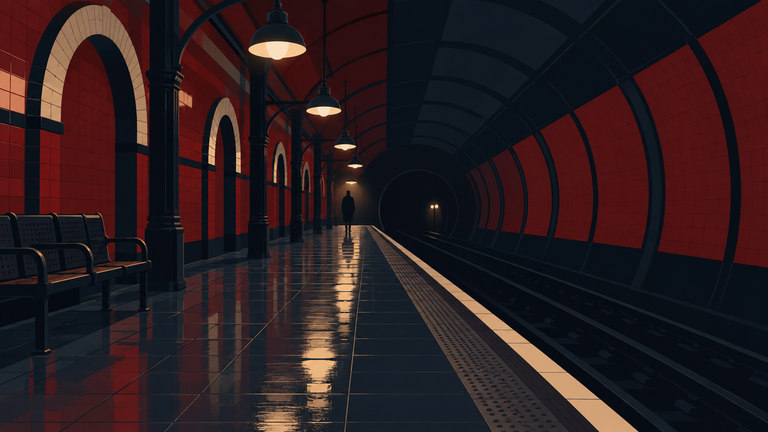
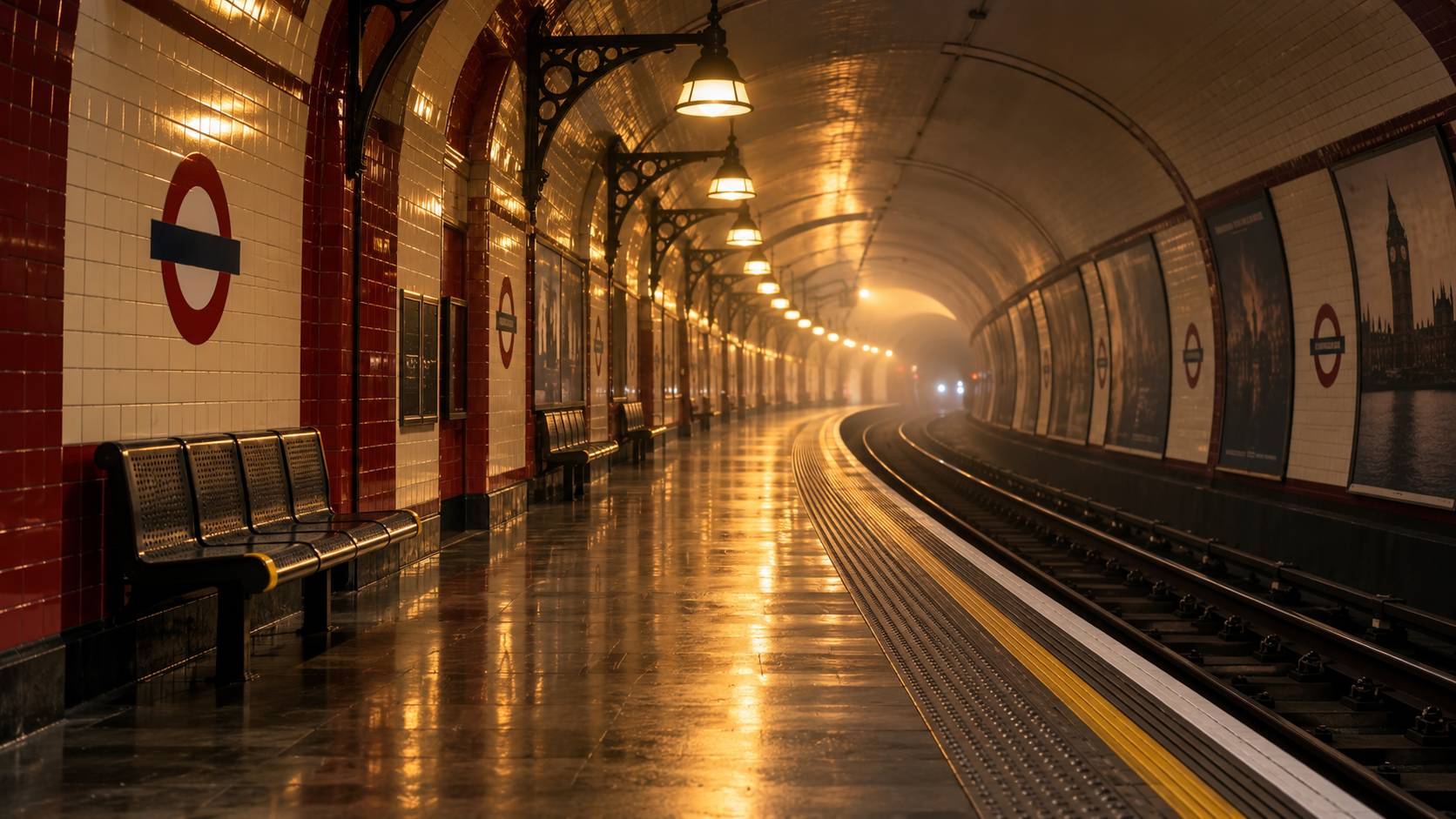
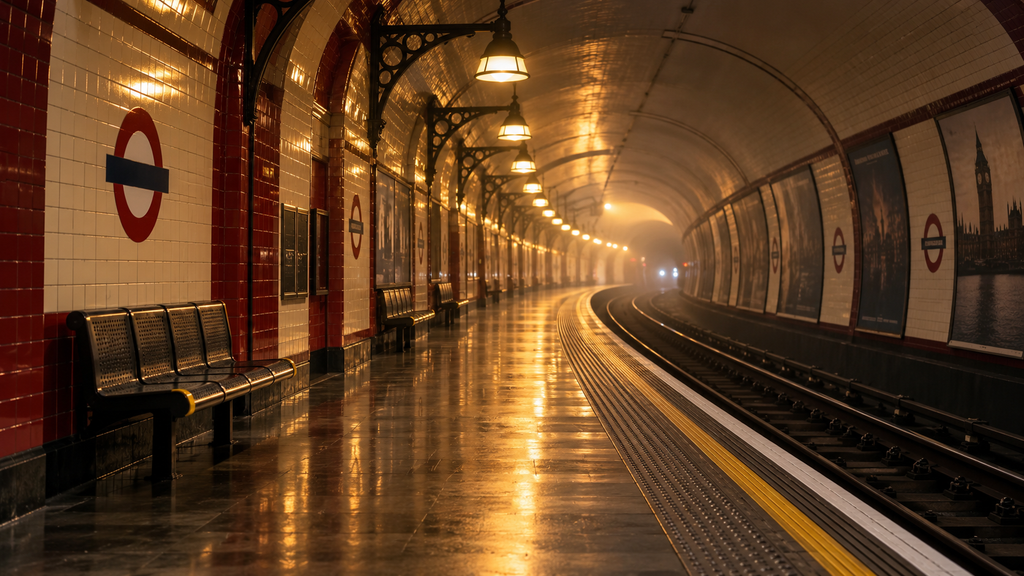
Baker Street is the oldest station on the London Underground, opened in 1863, and the original below-street sections retain their Victorian brickwork in a way that no other station on the network does. The arched, brick-vaulted platforms on the original Metropolitan Railway section — now served by the Circle and Hammersmith & City lines — are the closest you will get to understanding what the Underground looked like at the beginning. Gas lighting has been replaced with electric, but the bones of the 1863 station are visible if you take the time to stand still and look. The decorative Sherlock Holmes motifs, added later as a nod to the fictional address nearby, are charming rather than intrusive.
Line tip: Take the Metropolitan line if you are combining this with a journey outward. The older section of the platform is most visible from the far end toward Farringdon.
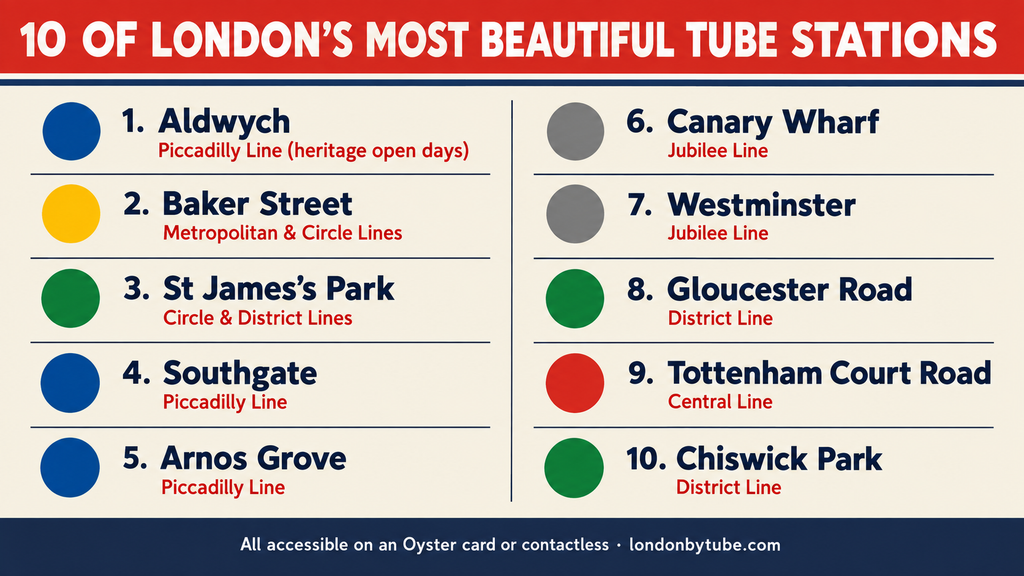
St James’s Park — Circle and District Lines
One for the architectural detail enthusiasts. St James’s Park station was rebuilt in 1929 to a design by Charles Holden — the same architect responsible for several of the most beautiful stations on this list — and the building above ground is a clean, modernist Portland stone block that still feels fresh nearly a hundred years later. Below street, the platform-level tiling and signage have been carefully maintained. The station sits directly beneath the headquarters of London Underground, which has always struck us as appropriate.
Southgate — Piccadilly Line
Southgate is the one that surprises people. It sits at the end of a residential stretch of North London that few tourists have any reason to visit, and it looks like nothing else on the network. Charles Holden designed it in 1933 as part of a remarkable run of stations along the extended Piccadilly line — a drumlike circular building in brick and glass, topped with a cantilevered concrete canopy that projects outward like the brim of a hat. The circular booking hall below has a central column that opens into a domed ceiling. The proportions are perfect. English Heritage has listed it for good reason.
If Southgate is going to require a detour, combine it with a visit to nearby Arnos Grove, another Holden station with a remarkable circular booking hall that influenced a generation of public architecture.
Line tip: Piccadilly line, Zone 4. Allow 35 minutes from central London.
Arnos Grove — Piccadilly Line
The one that made Southgate possible. Arnos Grove (1932) came first and was the proof of concept for Holden’s circular drum idea. The booking hall is the architectural set piece: a large cylinder of brick and glass lit from a continuous band of windows at the top. On a clear morning, the light inside is extraordinary. Pevsner described it as one of the best buildings of the 1930s in Britain. It is a Tube station in Zone 3 that most Londoners have never visited.
Canary Wharf — Jubilee Line
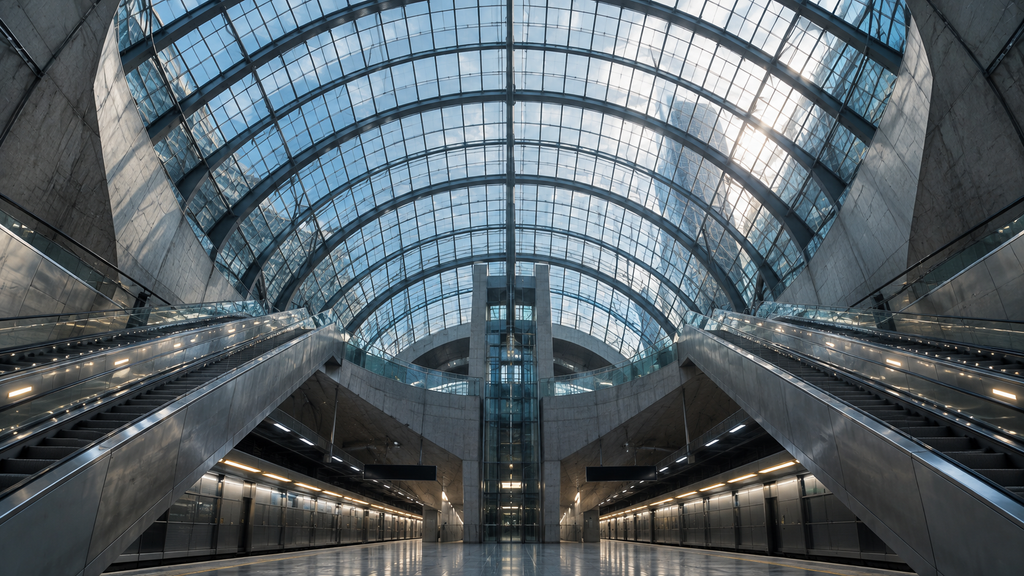
The Jubilee line extension, completed in 1999, was one of the most ambitious public infrastructure projects of the twentieth century — and the architecture reflects that ambition. Each station on the extension was designed by a different architect and given a genuine brief to produce something distinctive. Canary Wharf, designed by Norman Foster, is the largest and most dramatic.
You arrive underground to find yourself inside what appears to be an enormous glass leaf: a vaulted steel and glass structure 300 metres long and 25 metres high at its apex. The effect, walking up the escalators from platform level to the DLR interchange above, is of passing through a cathedral designed by an engineer. The commercial development around the station has changed the area considerably since 1999, but the station itself has dated extraordinarily well.
Line tip: Jubilee line, Zone 2. The best views of the vault are from the escalators.
Westminster — Jubilee Line (and Circle/District)
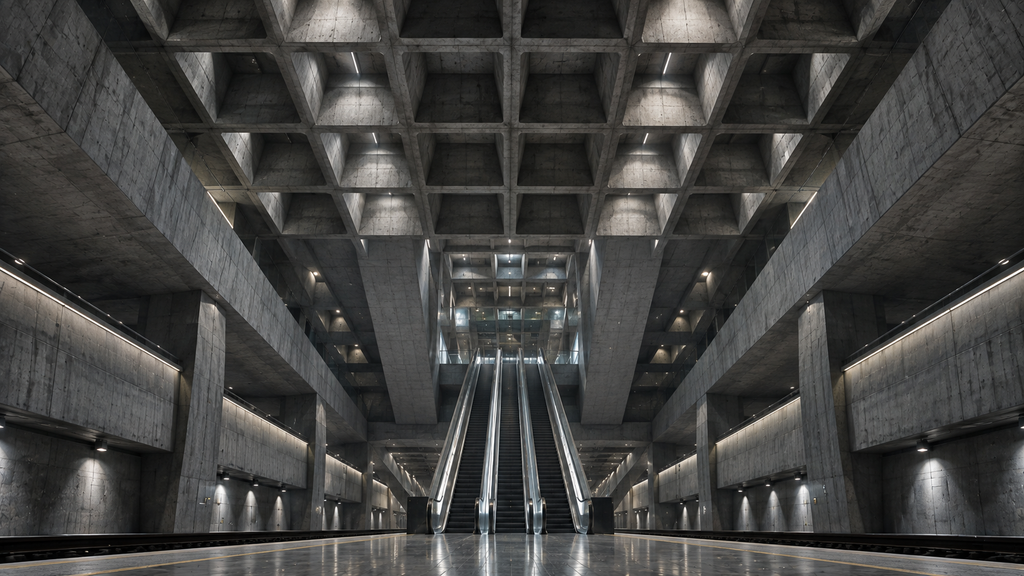
If Canary Wharf is the cathedral, Westminster is the machine. Michael Hopkins designed the Jubilee line platforms here as an inverted structure — the bare concrete of the ceiling is actually the underside of the House of Commons car park, supported by enormous coffers that double as the architecture. The scale is vertiginous: the platforms sit eleven stories below street level, and the exposed structural elements read not as something unfinished but as something deliberately, beautifully raw. The escalator shaft has been compared to the inside of an Escher print.
Take the Jubilee line platforms rather than the older Circle and District platforms, which are functional but unremarkable by comparison.
Gloucester Road — Circle, District and Piccadilly Lines
Gloucester Road has a ghost. The disused platforms behind the active ones — part of the original District Railway structure from the 1860s — are visible from the westbound District and Circle platforms, and TfL occasionally uses them for art installations. The active station itself has some of the finest surviving Victorian platform tiling on the network, and the ironwork on the canopy above the platforms is worth a moment of attention.
The best approach: stand at the far end of the westbound platform and look through the gate in the fence at the empty platforms behind. On a quiet morning, the effect is quietly eerie.
Tottenham Court Road — Central and Northern Lines
Tottenham Court Road was completely rebuilt for the Elizabeth line and reopened in 2022. The result, particularly at the new Elizabeth line entrances on Dean Street and the new below-ground concourse, is the most contemporary architectural set piece on this list. The scale is significant — this is one of the busiest interchange stations on the network — but the detailing repays attention. The existing Tube platforms also retained the Eduardo Paolozzi mosaic tiles installed in the 1980s during an earlier rebuild: vivid, cacophonous, entirely unlike anything else underground.
Chiswick Park — District Line
Chiswick Park is easy to miss on any list of beautiful stations because it is not dramatic. It is a 1932 Holden design of considerable quietness: a simple brick booking hall with clean geometry, a platform canopy that gets the proportions exactly right, and a general sense of a station that has been carefully maintained rather than periodically improved into ugliness. It is the ideal example of what the Underground was trying to achieve on the surface lines in the 1930s, and it has been largely left alone.
Worth a visit if you are travelling to or from Chiswick for any reason — it adds nothing to your journey time and rewards the small act of looking up.
A Note on the Stations That Did Not Make This List
Several famous stations are conspicuously absent. King’s Cross St Pancras is one of the network’s most important interchanges but not one of its most beautiful. Paddington is historically significant but has been rebuilt too often to retain any coherent character. Oxford Circus is beloved and completely unremarkable architecturally.
The stations on this list reward attention because they were designed by people who believed that public transport infrastructure deserved architectural ambition. In 2026, when Tube travel is increasingly disrupted by closures, strikes, and the ongoing pressures of maintenance on a 160-year-old network, the stations that have survived in something close to their original form are worth treating as destinations in their own right.
Plan Your Visit
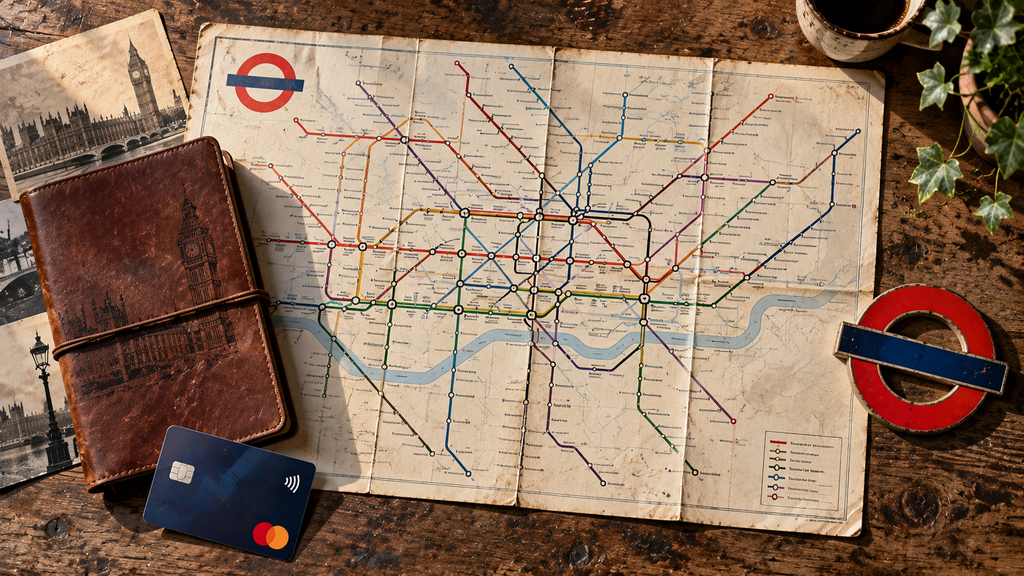
All the stations above are accessible on an Oyster card or contactless bank card. For Zone 4 stations like Southgate and Arnos Grove, check your Travelcard zone coverage before travelling. TfL’s website has real-time service updates — always worth checking before a specific journey, particularly on weekends when engineering works are common.
The best times to appreciate Tube station architecture are early weekday mornings (before 8am) or mid-afternoon on weekdays, when platform traffic is light enough to stop and look without obstructing other passengers.
More from London By Tube: