The Metropolitan Line: A Complete Stop-by-Stop Guide
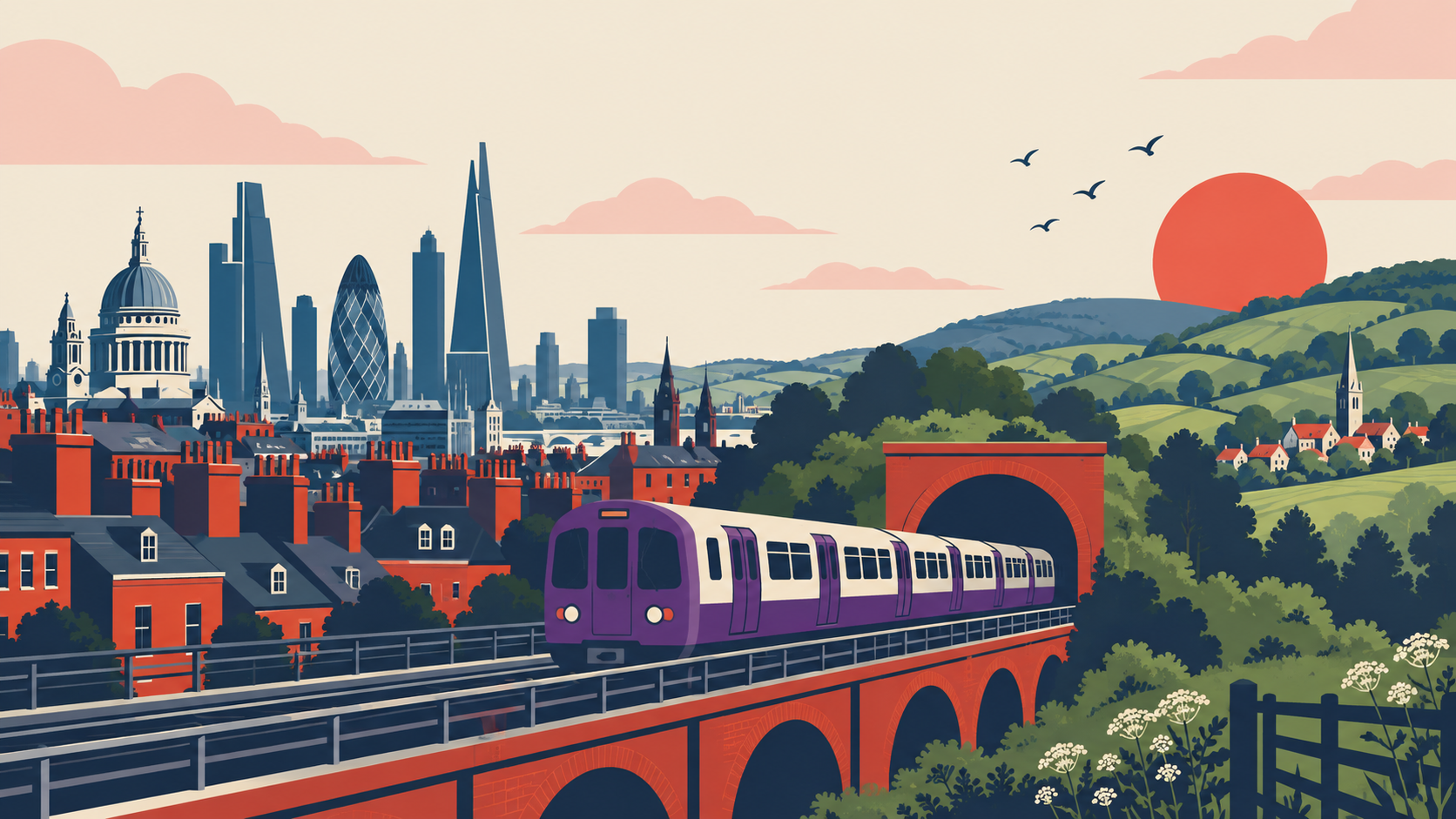
The Metropolitan line is one of London’s most rewarding journeys — and one of its most underrated. Opened in January 1863 as the world’s first underground railway, it stretches 41 miles from Aldgate in the City of London all the way to Amersham in the Chiltern Hills, passing through historic neighbourhoods, leafy suburbs, and eventually open countryside — all on a single Oyster tap.
Unlike most Tube lines, the Metropolitan has four separate branch termini: Aldgate, Watford, Uxbridge, and Chesham/Amersham. Services split at various points, so always check which branch your train is heading to before boarding at central stations.
Metropolitan Line: Quick Facts

Zones and Fares: What You Need to Know
The Metropolitan line is one of the few Tube lines that ventures beyond Zone 6 — Chorleywood, Chalfont & Latimer, Chesham, and Amersham are all in Zones 7–9. If you’re heading to the outer stations, a standard Oyster or contactless card will cover you, but the fare will be higher than a central London journey.
A Day Travelcard for Zones 1–6 covers the vast majority of the line including Watford and all stations to Harrow-on-the-Hill. For Chesham and Amersham specifically, you’ll need a Zone 1–9 Travelcard or pay the point-to-point fare. Contactless is accepted on all Metropolitan line services, including the outer stations.
Key zone breakdown:
- Zones 1–2: Aldgate to Finchley Road
- Zone 3: Wembley Park, Preston Road, Northwick Park
- Zone 4: Harrow-on-the-Hill, North Harrow, Pinner
- Zone 5: Northwood, Croxley (Watford branch)
- Zone 6: Rickmansworth, Chorleywood (Watford branch); Hillingdon, Uxbridge (Uxbridge branch)
- Zones 7–9: Chalfont & Latimer, Chesham, Amersham
💡 Tip: If you’re visiting Amersham or Chesham as a day trip, the off-peak point-to-point fare is often cheaper than a full-day Travelcard. Check the TfL journey planner before you travel.
The Route: Station by Station
Zone 1 — The City and Inner London
Aldgate
The eastern terminus of the Metropolitan line sits in the heart of the City of London, moments from Petticoat Lane Market, the medieval Leadenhall Market, and the boundary of the old Roman city walls. It’s also a short walk from Whitechapel and Brick Lane — useful if you’re combining a City visit with East London exploration. Worth a stop if: you’re exploring the City on foot or heading to Spitalfields.
Liverpool Street
One of London’s busiest interchange stations, Liverpool Street connects the Metropolitan line with the Elizabeth line, Central line, Circle line, Hammersmith & City line, and National Rail services to East Anglia. The area around the station has been transformed in recent years — Broadgate Circle has excellent restaurants, and the Old Spitalfields Market is a five-minute walk east. Worth a stop if: you’re interchanging for the Elizabeth line or exploring Shoreditch and Spitalfields.
Moorgate
Useful for the Museum of London (now relocated to West Smithfield) and the Barbican Estate — one of London’s great brutalist landmarks, home to the Barbican Centre’s world-class arts programme. The area rewards wandering: the medieval Guildhall, St Giles Cripplegate, and the remnants of the Roman city wall are all within a few minutes on foot. Worth a stop if: you have a ticket for the Barbican or want to explore the City’s hidden medieval layers.
King’s Cross St. Pancras
A genuine hub of the Metropolitan line, King’s Cross St. Pancras connects with six other Tube lines, the Elizabeth line, and National Rail services including the Eurostar. The newly regenerated King’s Cross neighbourhood — Coal Drops Yard, Granary Square, and the surrounding canal basin — is one of London’s most interesting recent developments. Harry Potter fans will want to find Platform 9¾ at King’s Cross station. Worth a stop if: you’re arriving from outside London, heading to the British Library, or exploring the canalside.
Euston Square
Don’t confuse this with Euston (a separate station on the Victoria and Northern lines). Euston Square is the closest Tube stop to University College London and the Wellcome Collection — one of London’s most thought-provoking free museums, exploring the intersection of medicine, science, and art. Worth a stop if: you’re visiting the Wellcome Collection or UCL.
Great Portland Street
Exit here for Regent’s Park, one of London’s most beautiful royal parks and home to Queen Mary’s Gardens (12,000 rose plants), the Open Air Theatre, and London Zoo. The park is walkable in minutes from the station. The surrounding Marylebone area has excellent independent restaurants and the famous Marylebone High Street. Worth a stop if: you want a proper London park experience without the crowds of Hyde Park.
Baker Street
The original Metropolitan line station, opened in 1863, and still one of the most atmospheric on the network. Baker Street is the spiritual home of the line’s history — and the literal home of Sherlock Holmes, whose museum at 221B is a short walk away. Madame Tussauds is directly adjacent. Baker Street is also a key interchange for the Jubilee, Circle, and Hammersmith & City lines. Worth a stop if: you’re visiting the Sherlock Holmes Museum, Madame Tussauds, or heading into Marylebone village.
🔗 Book Madame Tussauds tickets in advance via GetYourGuide — skip the queue and save up to 20%
Zone 2 — Northwest Inner London
Finchley Road
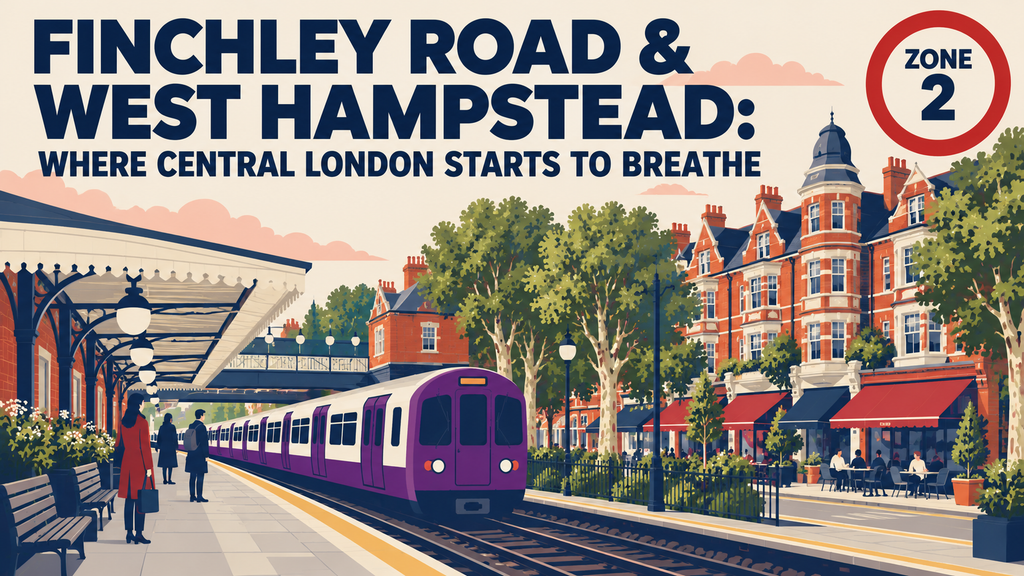
An interchange with the Jubilee line and the last purely central London stop before the Metropolitan line begins to feel suburban. The O2 Centre (a large leisure and retail complex) is directly above the station. Finchley Road is also a useful jumping-off point for Swiss Cottage and the Hampstead area. Worth a stop if: you’re heading to Hampstead Heath via Swiss Cottage (Jubilee interchange).
West Hampstead
The neighbourhood between Finchley Road and Kilburn is one of north London’s more desirable residential areas — good independent cafés, restaurants, and a characterful high street. Not a major tourist stop, but worth knowing if you’re staying in the area.
Zone 3 — Outer Northwest London
Wembley Park
Home to Wembley Stadium (capacity 90,000 — the largest stadium in the UK) and the OVO Arena Wembley. If there’s no event on, stadium tours are available and offer remarkable behind-the-scenes access. The London Designer Outlet adjacent to the station provides discounted shopping from major brands. On event days, Wembley Park station gets extremely busy — allow extra time. Worth a stop if: you have tickets for a match, concert, or stadium tour.
Preston Road
A quiet residential stop with little of tourist interest, but useful for Uxendon Hill Open Space if you want a green escape without the crowds.
Northwick Park
Close to the large Northwick Park Hospital and the University of Westminster’s Harrow campus. Not a tourist stop.
Zone 4 — Harrow and Beyond
Harrow-on-the-Hill
One of the Metropolitan line’s most atmospheric stops. Harrow-on-the-Hill is a genuinely distinct place — elevated above the surrounding suburbs, dominated by the famous Harrow School (founded 1572, alumni include Winston Churchill and Lord Byron), and lined with Georgian architecture and old-fashioned pubs. The view from the top of the hill across Greater London is genuinely impressive on a clear day. The Harrow Museum, housed in a 15th-century tithe barn, covers local history. Worth a stop if: you want a half-day excursion that feels completely different from central London.
North Harrow
A quiet residential stop. The parade of shops on the high street has a few good independent cafés.
Pinner
Pinner is one of the Metropolitan line’s hidden gems — a remarkably well-preserved medieval village high street that feels utterly out of place so close to London. The 14th-century parish church of St John the Baptist overlooks a street of timber-framed buildings, and the annual Pinner Fair (held in May) has taken place on the high street since 1336. Worth a stop if: you want a proper English village atmosphere within an hour of central London.
The Watford Branch (Zones 5–6)
At Harrow-on-the-Hill, some Metropolitan line services continue northwest on the Watford branch rather than towards Uxbridge or Amersham. Not all trains run this branch — check the destination board.
Northwood
Comfortable suburban territory with access to the ancient Ruislip Woods — a Site of Special Scientific Interest covering over 700 acres. More popular with cyclists and walkers than tourists.
Northwood Hills
A quiet residential stop with a pleasant local high street.
Rickmansworth
Rickmansworth (or “Ricky” to locals) is a market town on the River Colne with a pleasant town centre and easy access to the Colne Valley Regional Park. The nearby Aquadrome is a popular spot for kayaking and windsurfing. Worth a stop if: you want access to open water and green space.
Croxley Green / Watford
The Watford branch terminates at Watford, which has a large shopping centre and good transport connections onward. The branch is mostly used by commuters.
The Uxbridge Branch (Zone 6)
From Harrow-on-the-Hill, Metropolitan line services also run southwest towards Uxbridge, sharing track with the Piccadilly line. Check the train’s destination carefully.
Ruislip
A pleasant suburb with access to Ruislip Lido — a surprisingly lovely reservoir with a miniature railway, sandy beach, and woodland walks. Ruislip Manor and South Ruislip have their own stops on the branch.
Hillingdon
A useful stop for Hillingdon Cycle Circuit and the nearby Colne Valley Park.
Uxbridge
The western terminus, Uxbridge is a large market town with a good shopping centre, the Intu Uxbridge mall, and reasonable transport links. Brunel University is nearby. Worth a stop if: you’re visiting Brunel University or connecting to west London destinations.
The Chesham & Amersham Branch (Zones 7–9)
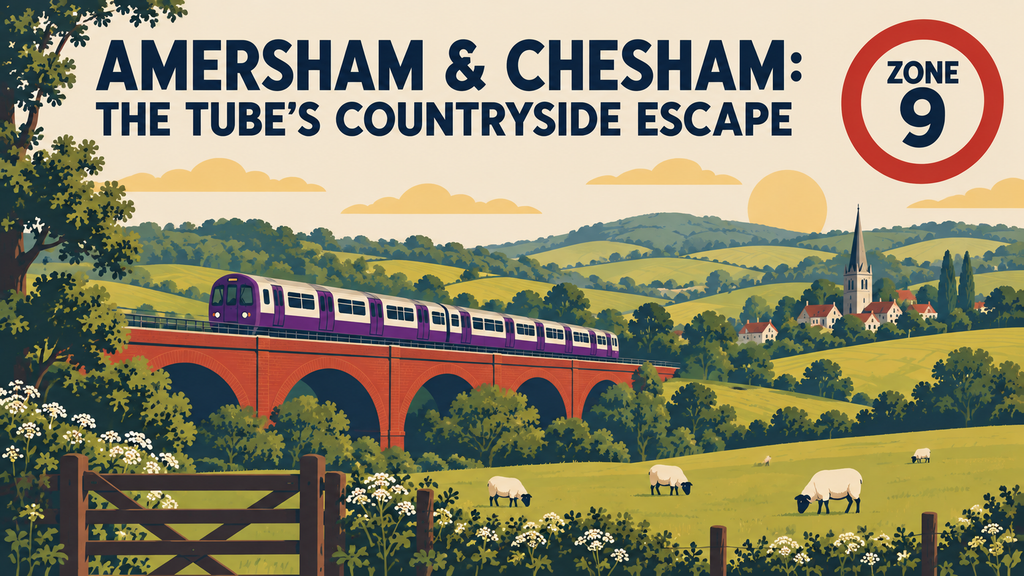
This is where the Metropolitan line genuinely earns its “escape from London” reputation. After Harrow-on-the-Hill, services continue through the green belt and into the Chilterns Area of Outstanding Natural Beauty. The line beyond Chorleywood is overground, and the views across open farmland are a genuine pleasure.
Chorleywood (Zone 6)
Chorleywood is a desirable commuter village on the edge of the Chilterns. The common is attractive and the village centre has good independent shops and pubs. The nearby Chess Valley is excellent walking territory.
Chalfont & Latimer (Zone 6/7)
The junction where the Amersham and Chesham branches split. Chalfont St Giles village — a short bus ride from the station — is one of the prettiest in Buckinghamshire, with a 14th-century church and the cottage where John Milton completed Paradise Lost. The Milton’s Cottage Museum is open to visitors. Worth a stop if: you’re walking the Chess Valley or visiting Milton’s Cottage.
Chesham (Zone 7)
Chesham is the end of the branch line and one of the most remote stations on the entire Underground network — it’s 24 miles from central London. The town has a pedestrianised high street with independent shops and the Chesham Museum, which covers the town’s brush-making heritage. The Chess Valley Walk begins here — a 10-mile riverside trail through some of the finest Chiltern countryside. Worth a stop if: you want a proper countryside walk or a very quiet day away from the city.
Amersham (Zone 9)
The true end of the line, Amersham is one of the most satisfying day trips on the entire Tube network. The town is split into Old Amersham (the historic market town, a 15-minute walk from the station) and New Amersham (a more modern town around the station). Old Amersham is the draw — a high street of genuine Tudor and Georgian architecture, independent shops, and traditional pubs. The Amersham Museum is housed in a 15th-century building. Chiltern walking trails begin from the edge of town.
🔗 Looking for accommodation in the Chilterns? Browse hotels near Amersham via Booking.com
Don’t miss in Amersham:
- The Market Hall on the high street (built 1682)
- The Crown Hotel, which featured in Four Weddings and a Funeral
- St Mary’s Church, dating from the 13th century
- The Chiltern Way long-distance footpath, accessible from the edge of town
Practical Tips for the Metropolitan Line
Navigating the Branches
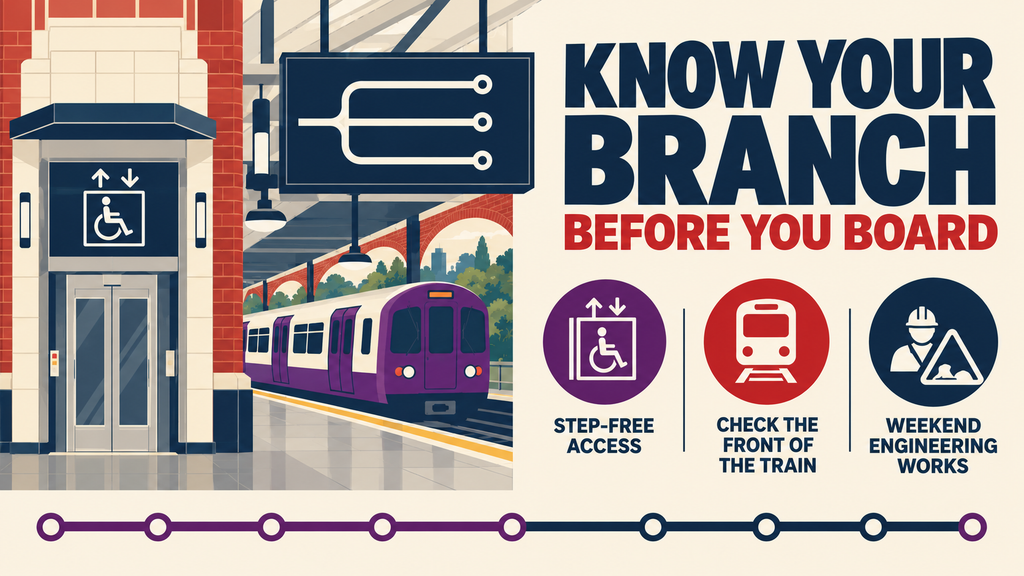
Always check the destination board before boarding at central stations. From Baker Street, trains split towards Aldgate (City branch), Watford, Uxbridge, or Amersham/Chesham. The front of every train displays its destination clearly, and the TfL app will show you which branch your specific service is running on.
Step-Free Access
Step-free access from street to platform is available at many Metropolitan line stations, but not all. Key step-free stations include King’s Cross St. Pancras, Baker Street, Wembley Park, Harrow-on-the-Hill, Uxbridge, and Amersham. Check the TfL accessibility guide before travelling if step-free access is important for your journey.
🔗 Full step-free access information is available on the TfL website
Weekend Engineering Works
The Metropolitan line, particularly on the outer branches, is subject to weekend engineering works, especially between October and April. Always check the TfL website or app before travelling on weekends. When engineering works are running, TfL replacement buses cover the affected sections — journey times are significantly longer.
Best Times to Travel
- Central stations (Baker Street, King’s Cross): Avoid 08:00–09:30 and 17:00–18:30 Monday to Friday.
- Wembley Park: Avoid event days entirely if you’re not attending — the station becomes extremely crowded before and after large events.
- Outer branches (Chesham, Amersham): Weekend mornings (09:00–11:00) are ideal — quiet trains, good light for walking, and markets often running in town centres.
- Spring and summer are the best seasons for the Chiltern stations — the countryside walking is at its finest and the villages at their most attractive.
Oyster, Contactless, or Travelcard?
- Oyster or contactless: The most flexible option for most visitors. The daily fare cap applies, so if you’re making multiple journeys in a day, you won’t pay more than the equivalent Travelcard.
- Day Travelcard (Zones 1–6): Good value if you’re making five or more Zone 1–6 journeys. Covers the majority of the Metropolitan line.
- Zone 1–9 Travelcard: Only worth it if you’re specifically travelling to Chesham or Amersham as part of a day with other central London journeys.
What to Do Along the Metropolitan Line: Top Picks
History and heritage:
- Sherlock Holmes Museum, Baker Street (Zone 1)
- Barbican Centre and Roman city wall, Moorgate (Zone 1)
- Harrow School, Harrow-on-the-Hill (Zone 4)
- Milton’s Cottage, Chalfont St Giles (Zone 6/7)
- Old Amersham Market Hall and Tudor high street (Zone 9)
Parks and nature:
- Regent’s Park and Queen Mary’s Gardens, Great Portland Street (Zone 1)
- Ruislip Lido and woodland walks, Ruislip (Zone 5/6)
- Chess Valley Walk, Chesham to Chorleywood (Zones 6–7)
- Chiltern Hills walking from Amersham (Zone 9)
Culture and entertainment:
- Wellcome Collection, Euston Square (Zone 1)
- London Zoo, Great Portland Street (Zone 1)
- Barbican Centre, Moorgate (Zone 1)
- Wembley Stadium tours and events, Wembley Park (Zone 3)
Markets and shopping:
- Old Spitalfields Market, Liverpool Street (Zone 1)
- Granary Square and Coal Drops Yard, King’s Cross (Zone 1)
- London Designer Outlet, Wembley Park (Zone 3)
- Pinner village shops and Pinner Fair, Pinner (Zone 4/5)
The Metropolitan Line and ‘Metroland’
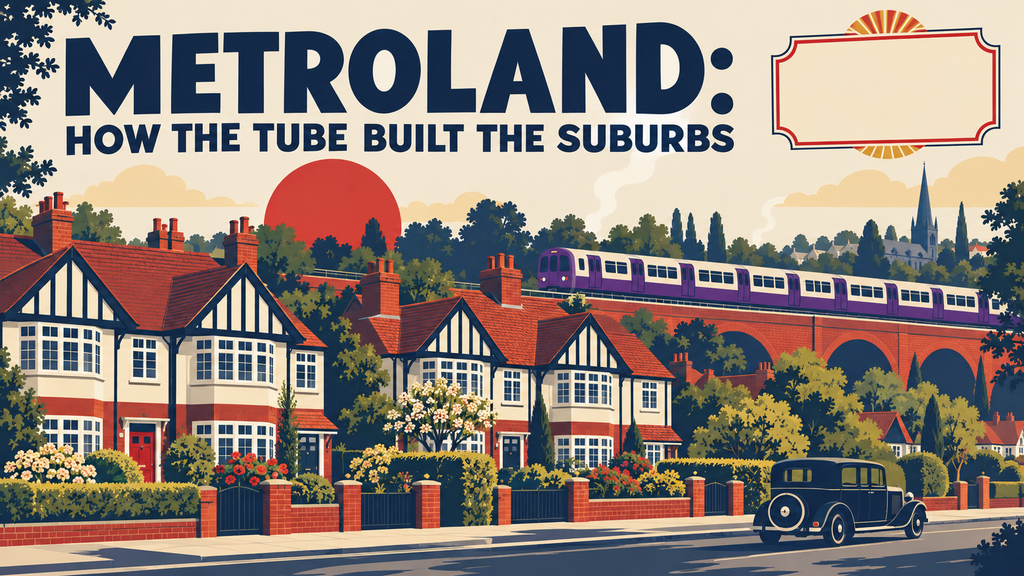
One thing that makes the Metropolitan line genuinely different from any other line on the network is its history as a driver of suburban development. From the 1880s onwards, the Metropolitan Railway actively marketed the countryside beyond London as “Metroland” — encouraging Londoners to buy new homes in the suburbs being built along the line, then commute into the city by train.
The result was a string of distinctive interwar suburbs across Harrow, Pinner, Rickmansworth, and beyond — a style of English suburban living that became its own cultural touchstone, celebrated by the poet John Betjeman and lampooned by everyone else. The architecture of these stations — many designed by Charles Holden or in the Metropolitan Railway’s own refined style — is some of the most distinctive on the Underground. Baker Street’s original 1863 platform facades and Chiltern Court (the grand mansion block above Baker Street station) are particularly worth looking at.
Frequently Asked Questions
Does the Metropolitan line go to Heathrow? No. For Heathrow, take the Piccadilly line (direct from central London) or the Elizabeth line. The Metropolitan line goes west to Uxbridge, not southwest to Heathrow.
How long does it take to travel the whole Metropolitan line? The full journey from Aldgate to Amersham takes approximately 75–80 minutes, depending on the service. It is one of the longest journeys available on the London Underground network.
Is the Metropolitan line good for tourists? Absolutely. Baker Street, King’s Cross, and Moorgate are all key tourist hubs. For visitors wanting to escape central London, the line also offers one of the best day trips available — to Amersham, Chesham, or Pinner — without ever leaving the Tube network.
Can I use my Oyster card on the Metropolitan line? Yes, everywhere on the line. Contactless bank cards are also accepted. For journeys to Zone 7–9 stations (Chesham, Amersham), a higher fare applies — check the TfL fare calculator before travelling.
What’s the difference between the Metropolitan and Elizabeth line? The Elizabeth line (purple-pink) runs east-west through central London and is a newer, faster service. The Metropolitan line (dark purple) is older and runs northwest. They share some stations (including Liverpool Street and Farringdon) but serve different destinations.
Related Reading
- The Piccadilly Line: A Complete Guide — shares several Zone 1 stations and the Uxbridge branch with the Metropolitan line
- The Bakerloo Line: A Complete Guide — shares Baker Street as a key interchange
- Best Pubs Near Tube Stations — including our picks along the Metropolitan line
- London Underground Guide for Visitors with Disabilities — step-free access and accessibility tips across the network
- Ghost Stories of the London Underground — the Metropolitan line’s 160-year history comes with its share of legends
Last updated: April 2026. TfL service information, fares, and station accessibility can change — always check the official TfL website before travelling.
More from London By Tube: