The Complete Central Line Guide
Every Stop, What to Do, and How to Get the Most Out of London’s Busiest Tube Line
The Central line is London’s backbone. Stretching from Epping in the far northeast to Ealing Broadway and West Ruislip in the west, it covers more of the city than any other Underground line — and passes through more of what visitors actually want to see. Oxford Circus. Tottenham Court Road. St Paul’s. Stratford. The Central line is where London happens.
It’s also, famously, the hottest line on the network. Bring water.
This guide covers all 49 stations, grouped by the areas they serve, with honest notes on what’s worth your time at each stop. Whether you’re riding the whole line end-to-end or just using it to get between a handful of landmarks, this is everything you need to know.
Practical note: The Central line runs 24 hours on Friday and Saturday nights (Night Tube). On other nights, last trains run around midnight. Check TfL’s journey planner for real-time service updates before you travel — strikes, closures, and signal failures are a fact of London life.
→ See our Metropolitan line guide for connections at key interchange stations.
The Central Line at a Glance
Colour: Red (hard to miss)
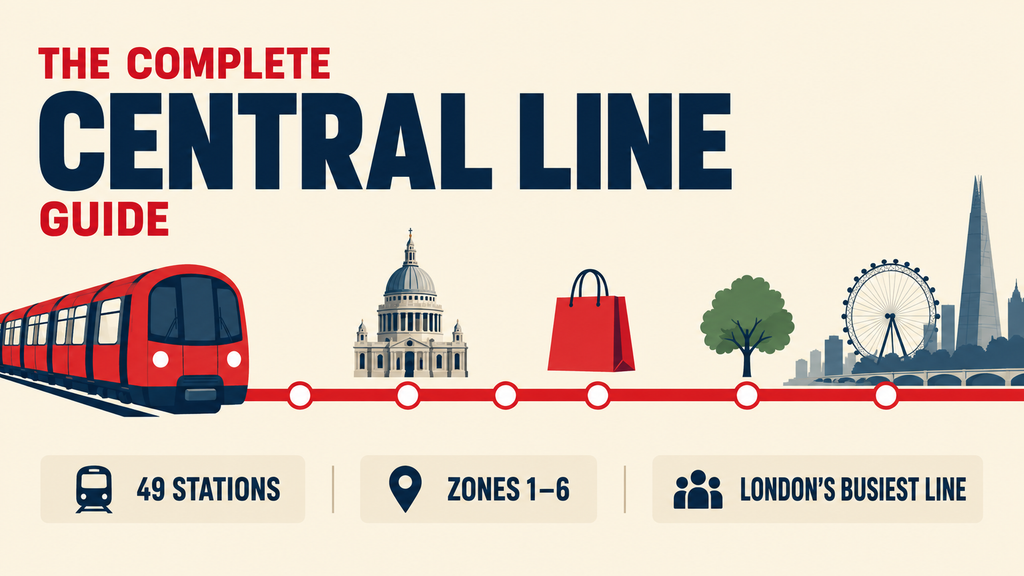
Stations: 49
Zones: 1–6 (most tourist stops are in Zones 1–2)
Termini: Epping (northeast) / West Ruislip and Ealing Broadway (west)
Key interchanges: Liverpool Street, Stratford, Mile End, Bank, Oxford Circus, Bond Street, Paddington (Elizabeth line), Shepherd’s Bush
Step-free access: Bank, Bethnal Green, Epping, Hainault, Loughton, Newbury Park, Roding Valley, Stratford, Theydon Bois, Woodford, and several western stations. Central London stations are largely inaccessible — see our step-free access guide for full details.
Money-saving tip: If you’re spending a day on the Central line, an Oyster card or contactless bank card is your cheapest option. Daily caps mean you won’t pay more than a day Travelcard equivalent, even if you hop on and off all day. See our Oyster vs contactless guide to check what’s right for your trip.
The Central Spine: West End to City (Zones 1–2)
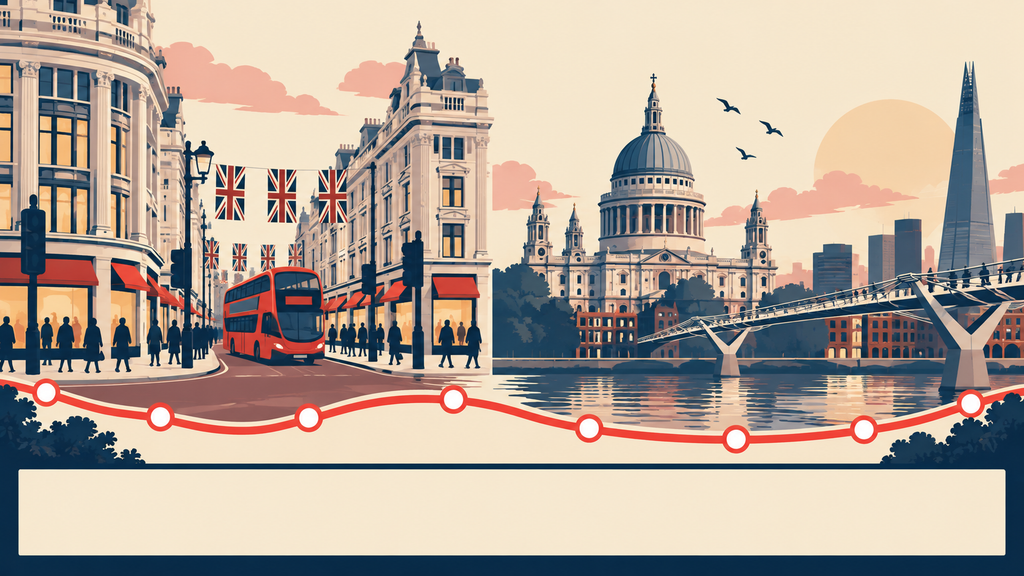
This is the stretch most visitors will use most often. Every station between Queensway and Liverpool Street has something worth stopping for — the challenge is knowing which ones to prioritise.
🔴 Notting Hill Gate · Central, Circle & District lines · Zone 2
The junction for Portobello Road, one of London’s most atmospheric street markets. Visit on a Saturday for the full antiques and vintage experience; weekdays are quieter but the food stalls and independent shops are worth the detour year-round. Notting Hill itself is compact, photogenic, and extremely easy to navigate on foot.
- Portobello Road Market (Saturday for antiques, daily for food)
- Electric Cinema — one of London’s oldest and most characterful cinemas
- Holland Park is a 15-minute walk north — formal Japanese gardens, peacocks, and far fewer tourists than Kensington Gardens
→ Read our full station spotlight: What to do near Notting Hill Gate →
🔴 Queensway · Central line only · Zone 1
Queensway is the gateway to Kensington Gardens and Hyde Park — cross the road and you’re in. It’s also one of the few streets in central London that genuinely stays busy late, with restaurants and fast food running until midnight. Less polished than the surrounding area, which is part of the appeal.
- Kensington Gardens — the Diana Memorial Playground, the Serpentine Gallery, and the Long Water
- Hyde Park — open water swimming at the Lido (Serpentine), concerts in summer, winter ice skating
🔴 Bond Street · Central & Elizabeth lines · Zone 1
Shopping. That’s Bond Street. If you’re looking for Selfridges (five minutes on foot), Oxford Street retail, or the quieter luxury of South Molton Street, this is your stop. The Elizabeth line connection here also makes it a useful interchange for Heathrow and Paddington journeys.
- Selfridges — worth a visit even if you’re not buying
- South Molton Street — pedestrianised, independent, and considerably less frantic than Oxford Street
- The Wallace Collection is a 10-minute walk north: one of London’s finest small museums, free entry, and almost never crowded
→ See our guide to London’s free museums accessible by Tube →
🔴 Oxford Circus · Central, Bakerloo & Victoria lines · Zone 1
The busiest interchange on the network, and the one every visitor will pass through at least once. Oxford Circus sits at the crossing of Oxford Street and Regent Street — two of the most visited shopping streets in Europe. The station itself is a masterclass in controlled chaos.
For practical travel, Oxford Circus is a transfer hub as much as a destination. Head north for Fitzrovia’s restaurants, east toward Soho and Carnaby Street, south along Regent Street toward St James’s Park.
- Carnaby Street — pedestrianised, indie shops, good for a browse
- Regent Street — the architecture is as impressive as any of the shops
- Soho is a 10-minute walk east: restaurants, bars, the BFI Southbank
Affiliate tip for publishers: Viator and GetYourGuide both list walking tours that depart from Oxford Circus — these are a natural affiliate placement here, particularly for West End theatre and Soho food tours.
🔴 Tottenham Court Road · Central & Elizabeth lines · Zone 1
One of London’s most dramatically improved stations in recent years. The Elizabeth line redevelopment transformed Tottenham Court Road from a cramped Victorian interchange into something genuinely spacious — the new entrance on Oxford Street is worth seeking out just for Daniel Buren’s mosaic artwork on the concourse.
Above ground, you’re at the meeting point of Soho, Bloomsbury, and the West End theatre district. The Dominion Theatre and Shaftesbury Avenue are both minutes away.
- The British Museum is a 15-minute walk north (Bloomsbury) — free entry, book timed tickets for popular exhibitions
- Neal’s Yard — a hidden courtyard off Covent Garden, colourful buildings, independent cafés
- Shaftesbury Avenue for West End shows — book ahead; same-day returns sometimes available from theatre box offices
🔴 Holborn · Central & Piccadilly lines · Zone 1
Holborn sits between the law and the arts, which is exactly what it feels like. The Inns of Court are immediately to the south — wander through Lincoln’s Inn Fields on a weekday and you’ll find barristers in wigs and gowns going about their business as though it’s still 1850. The Sir John Soane’s Museum is here too, and it is genuinely one of the strangest and most wonderful buildings in London.
- Sir John Soane’s Museum — free, extraordinary, unlike anything else in the city. Arrive when it opens.
- Lincoln’s Inn Fields — London’s largest public square; good for lunch in fine weather
- The Old Curiosity Shop (Holborn) — claims to be the oldest shop in London, decide for yourself
🔴 Chancery Lane · Central line only · Zone 1
Largely a commuter stop, but directly adjacent to Hatton Garden, London’s jewellery quarter. The streets around Hatton Garden have been the centre of the diamond and precious metals trade since the Victorian era. Worth a wander even if you have no intention of buying anything — the independent retailers are interesting, and the Bleeding Heart Yard restaurant and bar nearby is excellent for lunch.
🔴 St Paul’s · Central line only · Zone 1
You exit onto Newgate Street and St Paul’s Cathedral fills the view. It’s been that way for 300 years. Christopher Wren’s dome is one of the most reliably affecting pieces of architecture in London — even if you don’t go inside, walking around the building is worthwhile.
- St Paul’s Cathedral — climb to the Dome for panoramic views; book tickets online to avoid the queue (and save a few pounds with the affiliate link below)
- The Millennium Bridge — pedestrian bridge to the South Bank and Tate Modern, spectacular at dusk
- One New Change — the shopping centre next door has a free rooftop terrace with direct views of the Cathedral dome
→ Book St Paul’s Cathedral tickets with GetYourGuide →
🔴 Bank · Central, Northern, Waterloo & City lines, DLR · Zone 1
Bank is one of the largest and most complex underground interchanges in the world — allow extra time when connecting here for the first time. The DLR connection goes to Canary Wharf and Greenwich; the Northern line branches north to Angel and south to London Bridge.
Above ground you’re in the heart of the Square Mile. The Bank of England Museum is free and genuinely interesting, the Royal Exchange has been converted into a luxury food court worth a visit, and the view from the junction of Threadneedle Street and Cornhill is pure London.
- Bank of England Museum — free, underrated, the gold bars are real
- Royal Exchange Grand Café — a Victorian trading hall turned upmarket dining space
- Monument to the Great Fire (5 minutes walk) — climb 311 steps for views east across the City
🔴 Liverpool Street · Central, Circle, Hammersmith & City, Metropolitan lines, Elizabeth line, National Rail · Zone 1
Liverpool Street is where the City meets East London, and the energy shift is palpable. The station is enormous, the surrounding area has changed almost beyond recognition in the last decade, and Spitalfields Market is immediately to the east.
- Spitalfields Market — covered market, good street food, excellent vintage and independent retail on Sundays
- Brick Lane — 15-minute walk east; best on a Sunday morning for bagels, vintage, and curry
- Dishoom Shoreditch (Boundary Street) — book ahead, or join the queue; either is worth it
→ Read our station spotlight: What to do near Liverpool Street →
East London: Bethnal Green to Stratford (Zones 2–3)
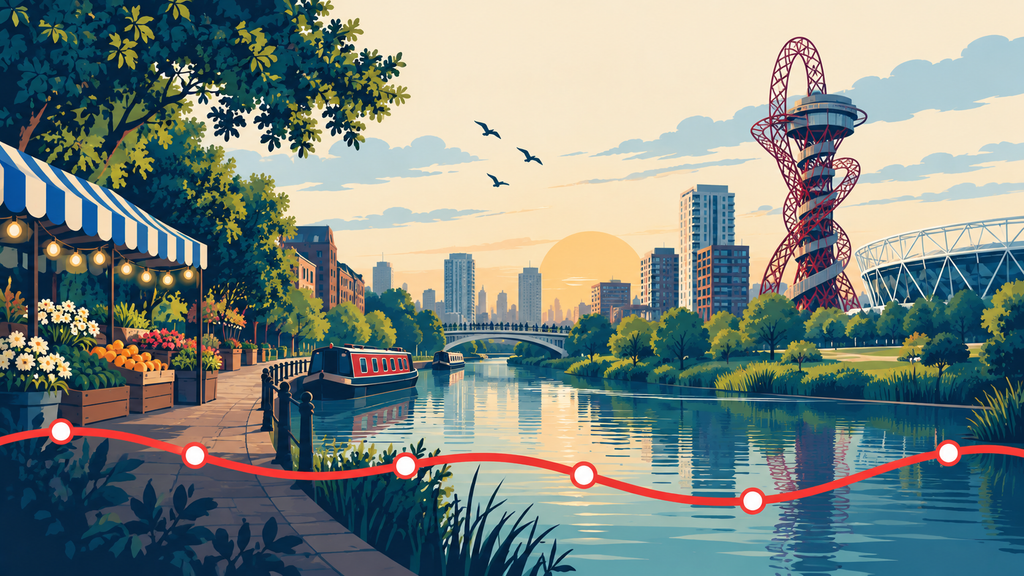
This stretch of the Central line runs through some of the most rapidly changed parts of London. Bethnal Green, Mile End, and Stratford have all shifted significantly in the last decade, and the area around Stratford — transformed for the 2012 Olympics — continues to evolve.
🔴 Bethnal Green · Central line only · Zone 2
The Museum of Childhood is immediately outside the station (free entry, worth it even without children) and the surrounding streets are some of the best in East London for independent restaurants and cafés. The Saturday market on Bethnal Green Road is low-key and good.
- V&A Museum of Childhood — free, excellent, and one of the few major museums that genuinely engages children
- Approach Tavern — Victorian pub on Approach Road, one of the best traditional boozers in E2
🔴 Mile End · Central, District & Hammersmith & City lines · Zone 2
Mile End Park runs alongside the Regent’s Canal and is one of the more pleasant green spaces in East London — quieter than Victoria Park (which is a 20-minute walk north) and with a good climbing wall. Queen Mary University of London is here too, which gives the area a younger, livelier character than nearby Stepney.
🔴 Stratford · Central & Jubilee lines, DLR, Elizabeth line, National Rail, Overground · Zone 3
Stratford is the major transport hub for East London and the gateway to the Queen Elizabeth Olympic Park — the legacy site from the 2012 Games. Westfield Stratford City is one of Europe’s largest urban shopping centres; the park beyond it is where London genuinely invested in green space for east Londoners, and the results are impressive.
- Queen Elizabeth Olympic Park — free to enter, cycling paths, the ArcelorMittal Orbit (with slide), the Aquatics Centre
- Here East — former Olympic broadcast centre, now a creative and tech campus with cafés and events
- Stratford Circus Arts Centre — mid-size venue, varied programme, worth checking what’s on
→ Read our full guide: A day in East London by Tube →
The Eastern Branches: Into Essex (Zones 4–6)
Beyond Stratford, the Central line splits. The main branch continues northeast through Leyton and Leytonstone before branching again for Hainault (via Newbury Park) or continuing to Epping. These are largely residential stations serving Essex commuters, but a few are worth knowing.
🔴 Wanstead · Central line only · Zone 4
Wanstead is one of those quietly lovely parts of outer London that most visitors never reach. Wanstead Flats — part of the wider Epping Forest — is immediately accessible from the station, and the village high street has a good range of independent pubs and restaurants.
🔴 Epping · Central line only · Zone 6
The eastern terminus sits on the edge of Epping Forest, one of the largest ancient woodlands in England and technically within Greater London’s administrative boundary. It’s genuinely wild in places — ancient pollarded hornbeams, deer, and enough trails to spend a full day on foot. The forest is a remarkable contrast to the city you left an hour ago.
- Epping Forest — free to enter, managed by the City of London Corporation
- Epping itself is a quiet market town; there’s a good pub lunch to be had before the return journey
Day trip idea: Epping Forest makes an excellent half-day escape from central London. Take the Central line to Epping (Zone 6), walk into the forest, and return from Chingford via Overground for a circular route. Total journey time from central London: around 55 minutes each way.
West London: Shepherd’s Bush to the Termini (Zones 2–6)
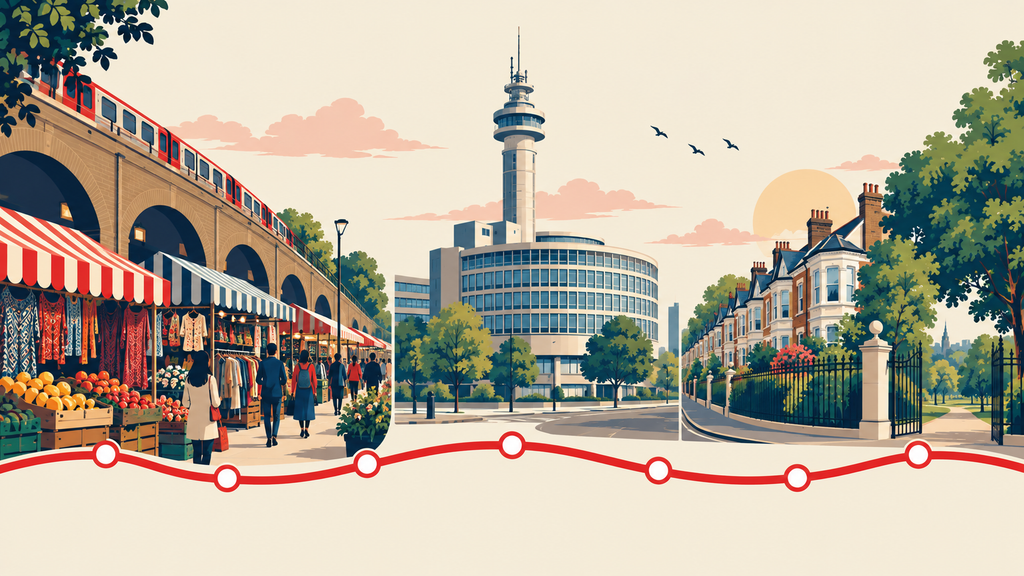
West of Notting Hill Gate, the Central line passes through the BBC’s home base, a major shopping destination, and a series of pleasant suburban neighbourhoods before splitting for West Ruislip and Ealing Broadway.
🔴 Shepherd’s Bush · Central line, Overground · Zone 2
Shepherd’s Bush Market (under the Overground viaduct) is one of the most authentic street markets in London — fruit, vegetables, Afro-Caribbean food, fabrics, and household goods at genuinely low prices. Westfield London is immediately adjacent for anyone who wants the other end of the retail spectrum.
- Shepherd’s Bush Market — Tuesday to Sunday, best on Saturday
- Bush Theatre — one of London’s best mid-scale theatres, in a converted library
- Westfield London — if shopping centres are your thing, this is one of the largest in Europe
🔴 Wood Lane · Central line, Circle & Hammersmith & City lines · Zone 2
Wood Lane’s main draw is the BBC Studios, which runs public tours of its Television Centre site — book well in advance as they’re popular. The design of the original 1960 building is striking, and the redevelopment has added apartments, a hotel, and public spaces that are worth seeing.
- BBC Television Centre Studio Tours — book via the BBC website; check our GetYourGuide affiliate link for availability
🔴 Ealing Broadway · Central line, District line, Elizabeth line, National Rail · Zone 3
Ealing Broadway is the western terminus for one branch of the Central line, and also connects to the Elizabeth line — making it an increasingly significant interchange. Ealing itself is a pleasant suburban town centre with good independent restaurants and one of the better farmers’ markets in outer London (Saturday mornings).
- Walpole Park — Victorian park adjacent to the Pitzhanger Manor museum
- Ealing farmers’ market — Saturday mornings, worth timing your visit around
How to Use the Central Line Like a Local
Beat the Heat
The Central line runs through deep-level tunnels that were bored before air conditioning was invented, and retrofitting it is a decades-long challenge. In summer months (and on warm days year-round), temperatures regularly exceed 30°C on platforms and in carriages. Carry water, avoid the rush hour crush if you can (07:30–09:30 and 17:00–19:30), and stand near the doors where air circulation is marginally better.
Which End of the Train?
At busy stations, the exits are rarely at the midpoint of the platform. At Bank, you want the front of the train heading eastbound. At Stratford, the rear carriages are often less crowded. TfL’s own Timetable app sometimes shows carriage guidance — but experienced Central line travellers learn by feel.
Understanding the Western Split
West of White City, the Central line branches. Trains alternate between West Ruislip and Ealing Broadway. Check the front of the train (and the destination board on the platform) before you board — if you want Ealing Broadway, a West Ruislip train won’t help you.
Night Tube
The Central line runs 24 hours on Friday and Saturday nights, which makes it the most useful late-night option in central London. Trains are less frequent (around every 10 minutes) and don’t serve all stations, but the core central London stops are covered. Uber surges, night buses, and expensive taxis are often avoidable with a bit of planning.
Connections Worth Knowing
At Bank: Northern line for London Bridge and Angel; DLR for Canary Wharf, Greenwich, and London City Airport.
At Liverpool Street: Elizabeth line for rapid access to Heathrow, Paddington, and Canary Wharf; National Rail for Cambridge and Norwich.
At Stratford: DLR for Greenwich and the O2; Overground for Hackney and south London.
At Oxford Circus: Victoria line for a faster route to King’s Cross and Brixton; Bakerloo for Waterloo and south London.
Three Central Line Routes Worth Building a Day Around
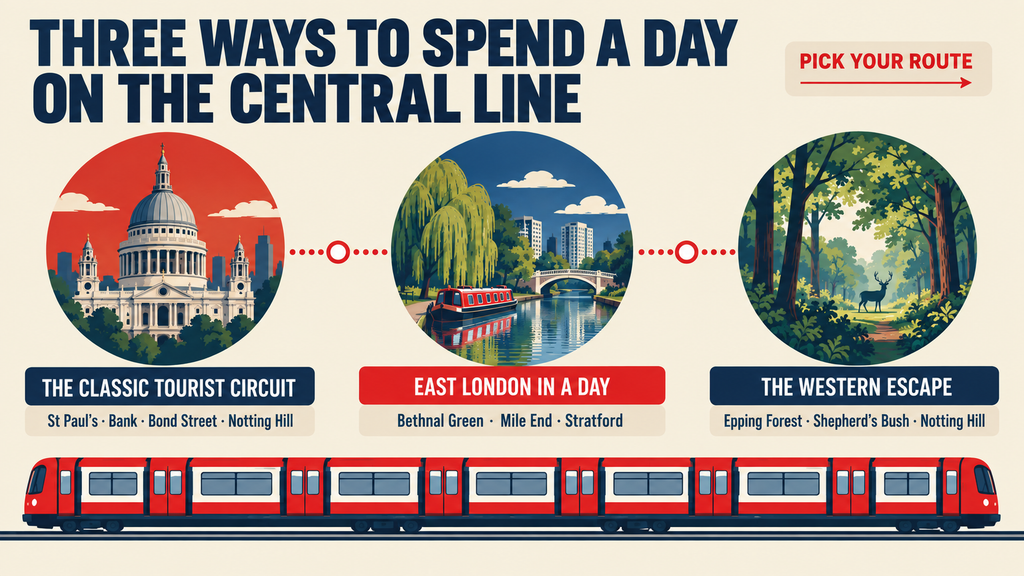
The Classic Tourist Circuit
Start at St Paul’s (Cathedral, Millennium Bridge, coffee at One New Change rooftop). Ride one stop east to Bank (Bank of England Museum, Royal Exchange). Ride back through to Bond Street (Selfridges, the Wallace Collection). Continue to Notting Hill Gate (Portobello Road, Holland Park). Return to Oxford Circus for dinner in Soho. The whole circuit takes a day and covers some of the best of what London does.
East London in a Day
Start at Bethnal Green (Museum of Childhood, coffee and a walk down the Roman Road). One stop east to Mile End (Regent’s Canal walk west toward Victoria Park). Continue to Stratford (Olympic Park, lunch at Here East). You can return via the Jubilee line or retrace via the Central line. Budget a full day.
The Western Escape
Take the Central line to Epping (around 55 minutes from Liverpool Street). Spend the morning walking in Epping Forest. Return as far as Shepherd’s Bush for lunch at the market. Head to Notting Hill Gate for the afternoon and a pub dinner on Portobello Road. The day uses the whole eastern section of the line and ends on one of London’s best pub strips.
Book your London experiences: Tours and attraction tickets on the Central line route are available via GetYourGuide and Viator — we earn a small commission if you book through our links, at no extra cost to you. We only link to things we’d recommend regardless.
Final Thoughts
The Central line is the line you can’t avoid, which means it’s worth knowing well. Learn which stations have the exits you need, which interchange points give you access to other lines, and which stations are worth stopping at rather than passing through — and you’ll cover more of London more efficiently than most visitors manage in a week.
The heat is real. The crowds are real. But so is St Paul’s from the Millennium Bridge at golden hour, and the antiques market on Portobello Road on a Saturday morning, and the deep quiet of Epping Forest after a 55-minute ride from the City. The Central line earns its status as London’s busiest Tube line.