

London Underground Guide for Travelers with Disabilities
The London Underground, affectionately known as the Tube, is the lifeblood of the city, carrying millions of passengers daily. For travelers with disabilities, navigating this vast network can seem daunting. However, Transport for London (TfL) has made significant strides in improving accessibility. This guide aims to help travelers with disabilities confidently explore London using the Underground.
Planning Your Journey
Planning your journey is the first step to a smooth travel experience. TfL offers several tools to assist in this process. Their online Journey Planner allows you to specify accessibility requirements, such as step-free access or avoiding escalators. Additionally, TfL provides detailed accessibility guides and maps highlighting accessible stations and routes. Currently, over a third of Tube stations offer step-free access from street to platform. There is a comprehensive list of these stations on the TfL website. They are also marked with a wheelchair symbol on Tube maps.
Assistance Services
When it comes to assistance, TfL offers a “Turn Up and Go” service, providing help without prior booking. For more complex journeys, you can book assistance in advance through TfL’s customer service.
At the Station

At the station, you’ll find accessible ticket machines featuring lower screens and audio assistance. Staff are trained to help with ticketing if needed. Navigation within stations is aided by tactile paving to guide visually impaired travelers, audio announcements providing real-time travel information, and large print signs and maps available at most stations. Step-free stations are equipped with lifts, and staff can provide information on alternative routes if lifts are out of service.
On the Train
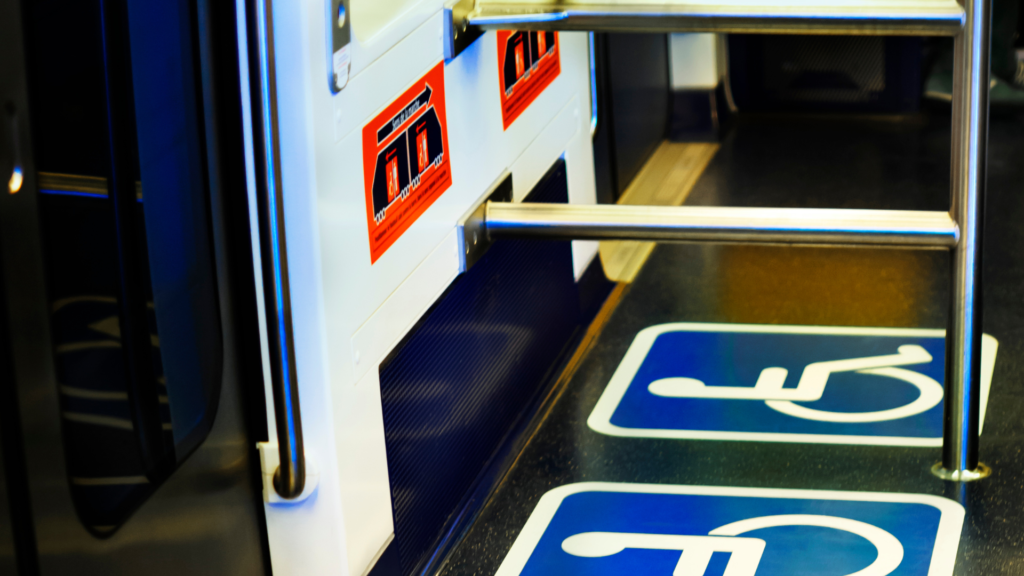
Once on the train, priority seating near the doors is clearly marked and reserved for those who need them most. Don’t hesitate to ask if you need a seat. Most trains also have dedicated wheelchair spaces, usually located near the doors and marked with the wheelchair symbol. All trains provide audio announcements and visual displays for upcoming stations and connections, ensuring you don’t miss your stop.
Catering to Specific Needs
The Underground caters to a variety of specific needs. For those with mobility impairments, ramps are available for level access between the platform and train, and staff can advise on the most accessible routes within stations. Guide dogs are welcome on all TfL services for visually impaired travelers, and tactile features on platforms help indicate platform edges. Hearing impaired travelers can benefit from induction loops installed at ticket offices and on many platforms, as well as visual information displays available on all trains and platforms. For those with hidden disabilities, TfL offers a “Please Offer Me a Seat” badge, making it easier to request a seat without having to explain your condition.
Challenges and Tips
Navigating the Tube does come with some challenges. If possible, try to avoid rush hours (generally 7:30-9:30 AM and 4:30-6:30 PM) when the network is at its busiest. The TfL Journey Planner can help you find less crowded routes. During service disruptions, check the TfL website or app for live updates, and staff can advise on alternative accessible routes. It’s worth noting that some older stations have limited accessibility, so always check in advance and consider alternative routes if necessary.
Future Improvements For Travelers With Disabilities
TfL is committed to continually improving accessibility for its travelers. There are ongoing projects to increase the number of step-free stations and plans to enhance signage and information provision across the network.
Additional Resources
- TfL Accessibility Helpline: 0343 222 1234
- TfL Accessibility Guide: [TfL Website Link]
- Useful Apps: Citymapper, TfL Go, AccessAble
Use these resources and the information in this guide and you’ll be well-equipped to navigate the London Underground, regardless of your accessibility needs. Enjoy your travels through this historic and vibrant city!
More from London By Tube:






My wife and I are planning a trip to London this fall. She is handicapped and uses a small electric scooter to move about. My question is how accessible is the tube for someone using an electric scooter? Are all stations accessible with elevators or ramps? Is there something to bridge the gap (Mind the gap!) between the platforms and the trains to allow entrance and exit from the trains? Is there areas on the trains designated for someone in a scooter/wheelchair?
My apologies if this is not the proper space to make these inquiries.
Hi Mark,
I havae attached a link to the Transport for London website where you can find out information about which stations are step free and have ramps available for boarding the trains. Hopw you ahve a great trip!
London By Tube